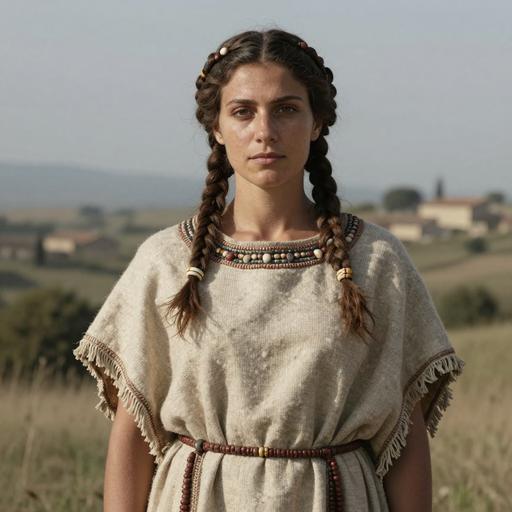
The Bronze Age Regina Margherita culture, a term invented for this narrative, is a fascinating and intricate tapestry within the broader Italian civilization between 2200 and 1000 BCE. This hypothetical civilization would presumably draw from the archaeological and historical contexts of Italy during the Bronze Age, overlapping geographically and culturally with civilizations like the Villanovan and Apennine cultures, but with unique characteristics and developments. Below, I will provide a detailed exploration of this fictional culture.
Geographical Context
The Regina Margherita culture is situated in the fertile plains and gentle hills of what is now modern-day central and southern Italy. This region, rich with natural resources such as metals (copper and tin, crucial for bronze production), fertile soils, and proximity to the sea, offers an excellent setting for a thriving Bronze Age culture. The landscape, with its rugged mountain terrains and sprawling coastlines, contributes to the diverse lifestyles and agricultural practices of its people.
Society and Social Structure
**1. Social Hierarchy:
The Regina Margherita society is stratified, with a clear hierarchy that includes:
Chieftains and Nobility: At the top of the social pyramid are powerful chieftains, often hereditary, who govern city-states or large settlements. They are responsible for defense strategies, trade negotiations, and maintaining alliances or rivalries with neighboring groups.
Warriors and Priests: Below the chieftains are skilled warriors who serve as the elite military force defending the city-states. However, alongside them stand priests and priestesses who hold significant influence, believed to be in communion with the divine. They oversee major religious ceremonies and rituals.
Artisans and Merchants: Skilled artisans, including metalsmiths, potters, and weavers, occupy an essential place due to their role in producing goods essential for trade and daily life. Merchants, meanwhile, facilitate extensive trade networks that reach far across the Mediterranean.
Farmers and Laborers: The majority of the populace consists of farmers and laborers who work the land. They are the backbone of the economy, ensuring food security and the production of raw materials.
2. Community Organization:
Community structures in Regina Margherita are centered around fortified settlements, usually located atop strategic hills (akin to hill forts) for defense. Villages and towns are organized in concentric circles with a central place that often contains religious or political buildings. Domestic structures are typically round or rectangular huts made from locally sourced materials like wood, clay, and thatch.
Economy and Trade
**1. Agriculture:
Agriculture forms the base of the Regina Margherita economy. The people cultivate grain crops such as wheat and barley, alongside legumes and fruits like olives, which are also central to their diet. Animal husbandry is common, involving cattle, sheep, goats, and pigs, providing protein, leather, and wool.
**2. Craftsmanship and Trade:
The Regina Margherita people are adept metalworkers, producing intricate bronze tools, weapons, and ornaments. Other crafts include pottery, noted for its geometric designs, as well as textiles. Their trade networks extend across the Mediterranean, exchanging goods like amber, ivory, and exotic spices with regions as far as Mycenae in Greece, the Minoan civilization on Crete, and the emerging powers around the Eastern Mediterranean.
**3. Currency and Economy:
Bartering remains predominant, though increased specialization leads to the development of proto-currency like standardized ingots or valued goods (bronze implements) facilitating trade.
Religion and Spiritual Life
The spiritual life of the Regina Margherita culture is polytheistic, involving a pantheon of gods associated with natural elements and celestial bodies. Temples and sacred sites, often located in natural surroundings like groves or near springs, play an essential role in worship. Rituals are complex, involving animal sacrifices, offerings of food or precious items, and community festivals that reaffirm social bonds.
Ancestors are revered, with elaborate burial practices indicating beliefs in an afterlife. Tombs and grave goods signify social status and are often adorned with personal items or symbols believed to aid the deceased in the afterlife.
Art and Culture
**1. Artistic Expressions:
Artistic expressions in Regina Margherita are evident in pottery, metalwork, and, occasionally, wall paintings found in wealthier dwellings. Designs are characterized by geometric patterns, animal motifs, and depictions of mythological scenes.
**2. Music and Performance:
Music and dance are integral to cultural and religious ceremonies. Instruments are varied, including primitive flutes, string instruments resembling lyres, and percussion instruments. Performances are communal, often linked to seasonal festivals or celebrating victories.
**3. Language and Literature:
While the linguistic details of this hypothetical culture are uncertain, it likely features an Indo-European language, possibly predating Italic languages like Latin. Oral traditions prevail, with bards or storytellers narrating epic tales of gods, heroes, and foundational myths.
End of Era and Transition
By the end of this era, climatic changes, technological advancements, and external influences from the Eastern Mediterranean usher in shifts in Regina Margherita society. These changes lay the groundwork for the Iron Age and the historical cultures that are more clearly delineated within archaeological records.
This detailed speculative account aims to depict a complex and nuanced Bronze Age society within Italy, through a blend of historical plausibility and narrative creativity. While fictional, it aligns with known archaeological trends of the broader Mediterranean during this timeframe.