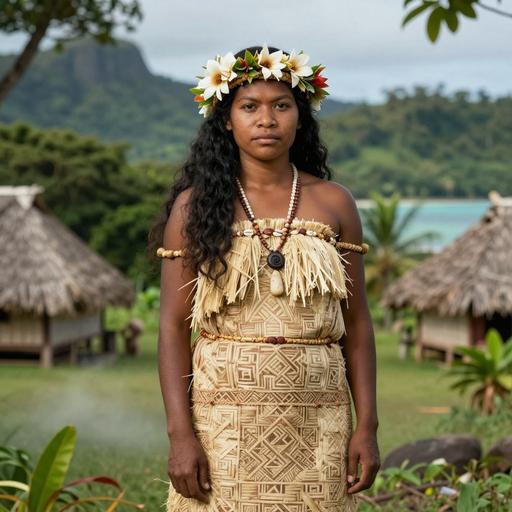
Two hundred years ago, Vanuatu was a place where the rich tapestry of Polynesian culture was interwoven with the existing Melanesian traditions. This era was characterized by significant cultural exchanges, a deep connection to the environment, and vibrant community life. Here's an extensive look into what life looked like in Vanuatu during this time:
Geographical and Environmental Context
Vanuatu is an archipelago located in the South Pacific Ocean, consisting of around 83 islands. Two centuries ago, these islands were heavily forested, with diverse ecosystems ranging from coastal areas to mountainous interiors. The environment played a critical role in shaping the lives and culture of its inhabitants, providing them with everything from building materials to food sources.
Cultural Context
In 1823, Vanuatu was primarily inhabited by Melanesian peoples, but Polynesian influences were prominent, especially in areas that had been settled or regularly visited by Polynesian voyagers. This was a period where both cultures lived in a dynamic interchange, sharing knowledge, practices, and beliefs.
Social Structure
The social structure of Vanuatu during this time was based on clans and kinship, with society being organized around extended family groups. Leadership was often hereditary, with chiefs or clan leaders wielding significant power and influence. These leaders were responsible for maintaining social order, presiding over ceremonies, and making critical decisions for the community.
Language and Communication
Vanuatu is known for its linguistic diversity, and this was true two centuries ago as well. Each island had its own language, with varying dialects within them. While Melanesian languages were predominant, Polynesian languages also existed, particularly in communities influenced by Polynesian settlers.
Economy and Subsistence
The economy was primarily subsistence-based, relying heavily on agriculture, fishing, and trade. Yams, taro, bananas, and breadfruit were staple crops grown using shifting cultivation methods. Fishing was an essential part of the diet and culture, with communities utilizing traditional techniques and materials to catch fish, crustaceans, and other marine life.
Trade and barter systems were common, both within islands and between different islands. Canoe voyages facilitated trade of goods such as shells, pigs, root crops, and intricate Polynesian and Melanesian crafts.
Material Culture
Material culture consisted of tools and artifacts made from locally sourced materials. Stone, shell, and bone were commonly used for tools. The art of canoe building was highly advanced, and canoes played a crucial role not just in transportation but also in trade and cultural exchanges.
Houses were typically constructed from timber, bamboo, and thatched with pandanus or palm leaves. These dwellings were adapted to the local climate and environment, providing shelter and communal spaces.
Spiritual Beliefs and Practices
Two hundred years ago, spiritual life in Vanuatu was rich and complex. Both Melanesians and Polynesians practiced animism, believing that spirits inhabited natural elements and ancestors played an active role in the community’s well-being. Rituals, dances, and ceremonies were integral to daily life, often directed by spiritual leaders or shamans.
Totemic symbols, carvings, and masks were used in spiritual and cultural ceremonies, which were common during significant events such as harvests, marriages, and rites of passage.
Artistic and Musical Expression
Art and music were vital aspects of cultural expression in Vanuatu. Art was expressed through carving, weaving, and tattooing, often depicting deities, ancestors, and symbolic patterns representing stories and traditions. Music involved a variety of traditional instruments such as slit-drums, bamboo flutes, and conch shells, accompanying dances that depicted stories and social roles.
Contact and Influence
Although somewhat isolated, Vanuatu was not completely untouched by outside influence. Polynesian migrations had brought about significant cultural exchanges before this period, and European explorers and traders were beginning to visit the islands more frequently by the early 19th century, altering trade dynamics and introducing new goods and ideas.
Conclusion
The Vanuatu of 200 years ago was a vibrant intersection of Melanesian and Polynesian cultures, characterized by its adaptation to the natural environment, robust social structures, and a rich tapestry of spiritual and cultural practices. It was a society that valued community, tradition, and the seamless interaction between people and their environment. This era laid much of the groundwork for the cultural heritage that would continue to evolve in the following centuries.