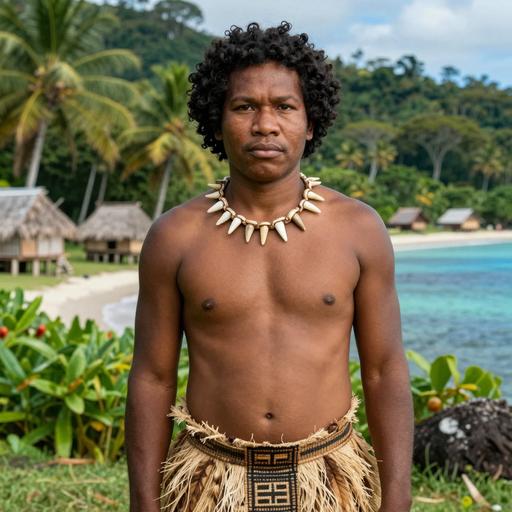
Around 3,000 years ago, the archipelago now known as Vanuatu was in the midst of significant cultural and societal transformations. During this period, Vanuatu was influenced by the Lapita people, who are well-known for their navigational skills, pottery-making, and Austronesian language roots.
Settlement and Society
Migration and Settlements:
- The Lapita culture, known for its distinctive pottery, migrated into the Vanuatu region around 3,000 years ago. This movement was part of a larger Austronesian expansion across the Pacific.
- These people arrived from the Bismarck Archipelago, near present-day Papua New Guinea, and settled on the islands, establishing villages typically along coastlines.
Village Structure:
- Villages were usually composed of small family units or extended clans, settled in communal arrangements.
- Housing was likely constructed from readily available materials like wood, bamboo, and palm leaves, designed for the tropical climate.
Social Organization:
- The society was likely organized hierarchically, with social structures revolving around kinship and clan affiliations.
- Leadership might have been exerted by elders or chiefs who had significant influence over communal decisions and resource distribution.
Culture and Technology
Pottery and Artifacts:
- The Lapita people are renowned for their pottery, characterized by intricate geometric designs stamped into the clay. This pottery serves as a crucial archaeological indicator of their presence and cultural reach.
- Other notable artifacts include shell ornaments, stone tools, and evidence of early agricultural implements.
Agriculture and Subsistence:
- Subsistence was largely based on a combination of horticulture, fishing, and gathering.
- Crops like yam, taro, and coconut were cultivated, alongside other introduced Pacific staples.
- Fishing and the collecting of shellfish were vital, providing a rich protein source. The use of nets, lines, and spears would have been common.
Navigation and Trade:
- As skilled navigators and seafarers, the Lapita people established trade routes across vast ocean distances, exchanging goods such as obsidian, pottery, and shell ornaments.
- This network fostered not only economic exchange but also cultural and genetic interchange between distant island communities.
Beliefs and Rituals
Spiritual Beliefs:
- Although direct evidence from this period is scarce, it is likely that belief systems revolved around ancestor worship and the veneration of natural elements and spirits.
- Ritual sites and certain aspects of the pottery designs may have held religious or ceremonial significance.
Mortuary Practices:
- Burial customs from later periods suggest a complex set of beliefs regarding death and the afterlife, with some indications of secondary burial practices.
- Grave goods and burial positioning might have reflected social status and belief in the continuity of the dead in an afterlife.
Environmental Interaction
Ecological Adaptation:
- The Lapita settlers had to adapt to the diverse ecological zones of the Vanuatu archipelago, which ranged from volcanic islands to coral atolls.
- This adaptability would have involved understanding local flora and fauna, as well as coping with periodic natural disasters such as cyclones and volcanic eruptions.
Environmental Impact:
- Evidence suggests that the arrival of humans led to some ecological changes, including the introduction of new plant species and possible impacts on native animal populations.
- The management of resources was critical to sustaining life on the islands, given their isolation and limited land area.
Overall, the era of Vanuatu around 3,000 years ago was marked by the gradual establishment of a unique cultural identity, influenced by both the legacy of the Lapita culture and the archipelago's geographic isolation. This period laid the groundwork for the diverse and vibrant cultures that would develop in the islands over subsequent centuries.