Menu
Currency
Main
Store
Blog

Loading Report

Preparing your ancestry journey

Connecting to ancient matches...

Preparing your report

Skip to main content
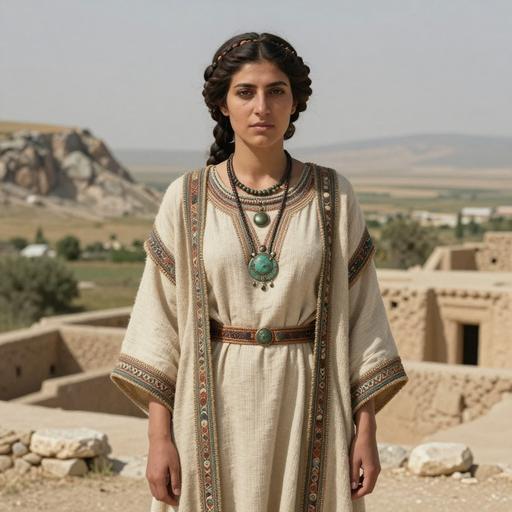
Portrait reconstruction of A woman buried in Turkey in the Early Bronze Age era
Ancient Individual

A woman buried in Turkey in the Early Bronze Age era

A woman buried in Turkey during the Early Bronze Age Turkey

A fragment of the ancient world, preserved across millennia in strands of DNA.

I2499
2836 BCE - 2468 BCE
Female
Turkey
Scroll to begin
Chapter I

Identity

The biological and cultural markers that define this ancient individual

Sample ID

I2499

Date Range

2836 BCE - 2468 BCE

Cultural Period

Early Bronze Age Turkey

Biological Sex

Female

mtDNA Haplogroup

K1-a

Y-DNA Haplogroup

N/A (Female)

Chapter II

Place

Where this individual was discovered

Country Turkey
Locality Mediterranean. Isparta. Harmanören-Göndürle Höyük
Coordinates 37.9177, 30.7084
Chapter III

Time

When this individual lived in the broader context of human history

I2499 2836 BCE - 2468 BCE
Chapter IV

Story

The narrative of this ancient life

The Early Bronze Age in Anatolia, a region that is now part of modern-day Turkey, is a fascinating period marked by significant cultural, social, and technological developments. This era roughly spans from 3000 to 2000 BCE and is characterized by the emergence of complex societies and the expansion of trade networks, metallurgy, and urbanization.

Geography and Environment

Anatolia, strategically positioned as a bridge between Asia and Europe, is characterized by a diverse geography that includes mountains, plateaus, and coastal regions. This geographic diversity contributed to the development of distinct regional cultures and economies within the broader Early Bronze Age Anatolian civilization.

Societal Structure

During the Early Bronze Age, Anatolia saw the development of increasingly stratified societies. Small villages began to transform into larger, fortified settlements, suggesting the emergence of social hierarchies and centralized authority. The presence of fortified sites like Troy and Alaca Höyük indicates concerns about defense and the protection of resources.

Economy

The economy of Early Bronze Age Anatolia was largely agricultural, supplemented by animal husbandry. The fertile lands, particularly along river valleys, were ideal for farming. Additionally, Anatolia was rich in natural resources such as metals, including copper and, later, tin, which were essential for bronze production. This metallurgical ability allowed Anatolia to engage in extensive trade networks spreading across the Near East.

Metallurgy

The era is distinguished by significant advancements in metallurgy. The introduction and refinement of bronze tools and weapons marked substantial technological progress from the previous Chalcolithic period. Anatolia's access to metal resources facilitated the production and distribution of metal goods, which became highly prized trade items.

Trade

Trade networks expanded considerably during this period. Anatolian traders exchanged raw materials and finished goods, not only within the region but also with neighboring areas such as Mesopotamia, the Aegean, and the Caucasus. The exchange of goods also facilitated cultural and technological exchanges, influencing Anatolian societies.

Settlement Patterns

Early Bronze Age settlements varied in size and complexity. Key sites such as Troy, Kültepe, and Alaca Höyük provide archaeological evidence of urbanization, including well-planned layouts and public buildings. These sites illustrate complex architectural techniques and advanced planning indicative of sophisticated societal organization.

Religion and Culture

Religious practices and cultural expressions during the Early Bronze Age in Anatolia were diverse. Archaeological findings, including figurines, pottery, and burial goods, suggest a society rich in ritual and symbolism. Cemeteries like those at Alaca Höyük reveal burial customs that included elaborate grave goods, indicating beliefs in an afterlife.

Art and Craftsmanship

Art and craftsmanship flourished, with artisans producing intricate pottery, textiles, and metalwork. Pottery from this era, such as the red-slipped and burnished wares, showcases both utilitarian and aesthetic aspects. Artistic motifs often reflected natural themes and religious symbols.

Decline and Transition

By the end of the Early Bronze Age, many of the Anatolian settlements experienced disruptions, which could be attributed to a combination of factors like climate change, internal social upheavals, or external invasions. This transition period eventually led to the Middle Bronze Age, which continued to build on the developments of the Early Bronze Age.

In summary, the Early Bronze Age in Anatolia was a dynamic era that laid the foundations for subsequent cultural and political developments. The advancements in metallurgy, trade, and societal structures established during this period had a lasting impact on the history of Anatolia and surrounding regions.

Context

Related Samples

This individual exists within a broader network of ancient samples. No ancient genome stands alone.

Sample ID Culture/Period Date Location Action
I0070 Minoan Lassithi, Greece 2400 BCE Crete. Lassithi, Greece View
I0071 Minoan Lassithi, Greece 2400 BCE Crete. Lassithi, Greece View
I0073 Minoan Lassithi, Greece 2400 BCE Crete. Lassithi, Greece View
I0074 Minoan Lassithi, Greece 2400 BCE Crete. Lassithi, Greece View
I9010 Mycenaean Greece 1400 BCE Peloponnese. Galatas Apatheia, Greece View
I9005 Minoan Lassithi, Greece 2400 BCE Crete. Lassithi, Greece View
I9006 Mycenaean Greece 1413 BCE Agia Kyriaki. Salamis, Greece View
I9033 Mycenaean Greece 1418 BCE Peristeria Tryfilia. Peloponnese, Greece View
I9041 Mycenaean Greece 1400 BCE Peloponnese. Galatas Apatheia, Greece View
I9123 Armenoi Site, Crete, Greece 1370 BCE Armenoi. Crete, Greece View
I9127 Minoan Odigitria, Greece 2210 BCE Crete. Heraklion. Moni Odigitria, Greece View
I9128 Minoan Odigitria, Greece 2210 BCE Crete. Heraklion. Moni Odigitria, Greece View
I9129 Minoan Odigitria, Greece 2210 BCE Crete. Heraklion. Moni Odigitria, Greece View
I9130 Minoan Odigitria, Greece 2210 BCE Crete. Heraklion. Moni Odigitria, Greece View
I9131 Minoan Odigitria, Greece 2210 BCE Crete. Heraklion. Moni Odigitria, Greece View
I2683 Early Bronze Age Turkey 2621 BCE Mediterranean. Isparta. Harmanören-Göndürle Höyük, Turkey View
I2495 Early Bronze Age Turkey 2560 BCE Mediterranean. Isparta. Harmanören-Göndürle Höyük, Turkey View
I2937 Neolithic Peloponnese, Greece 5477 BCE Diros. Alepotrypa Cave, Greece View
I2499 Early Bronze Age Turkey 2836 BCE Mediterranean. Isparta. Harmanören-Göndürle Höyük, Turkey View
I2937 5477 BCE Diros. Alepotrypa Cave, Greece View
Sample ID Culture/Period Date Location Action
I2683 Early Bronze Age Turkey 2621 BCE Mediterranean. Isparta. Harmanören-Göndürle Höyük, Turkey View
I2495 Early Bronze Age Turkey 2560 BCE Mediterranean. Isparta. Harmanören-Göndürle Höyük, Turkey View
I2499 Early Bronze Age Turkey 2836 BCE Mediterranean. Isparta. Harmanören-Göndürle Höyük, Turkey View
I14649 Early Bronze Age Turkey 2308 BCE Tilbe ar Höyük (Southeast. Gaziantep), Turkey View
I14792 Early Bronze Age Turkey 2454 BCE Oylum Höyük (Southeast. Kilis), Turkey View
I14794 Early Bronze Age Turkey 3000 BCE Oylum Höyük (Southeast. Kilis), Turkey View
I14797 Early Bronze Age Turkey 3000 BCE Oylum Höyük (Southeast. Kilis), Turkey View
I14798 Early Bronze Age Turkey 3000 BCE Oylum Höyük (Southeast. Kilis), Turkey View
I16580 Early Bronze Age Turkey 3000 BCE Oylum Höyük (Southeast. Kilis), Turkey View
I4481 Early Bronze Age Turkey 2881 BCE Tatika (Southeast. Şırnak. Güçlükonak. Koçtepe köyü), Turkey View
I4614 Early Bronze Age Turkey 3093 BCE Tatika (Southeast. Şırnak. Güçlükonak. Koçtepe köyü), Turkey View
I4615 Early Bronze Age Turkey 3263 BCE Tatika (Southeast. Şırnak. Güçlükonak. Koçtepe köyü), Turkey View
I4616 Early Bronze Age Turkey 2871 BCE Tatika (Southeast. Şırnak. Güçlükonak. Koçtepe köyü), Turkey View
I4619 Early Bronze Age Turkey 2859 BCE Tatika (Southeast. Şırnak. Güçlükonak. Koçtepe köyü), Turkey View
I5733 Early Bronze Age Turkey 2885 BCE Yassıtepe (Aegean. Izmir), Turkey View
I5735 Early Bronze Age Turkey 3100 BCE Yassıtepe (Aegean. Izmir), Turkey View
I5740 Early Bronze Age Turkey 2851 BCE Devret Höyük (Black Sea. Amasya. Suluova. Kanatpınar), Turkey View
I5741 Early Bronze Age Turkey 3340 BCE Devret Höyük (Black Sea. Amasya. Suluova. Kanatpınar), Turkey View
I5742 Early Bronze Age Turkey 3092 BCE Devret Höyük (Black Sea. Amasya. Suluova. Kanatpınar), Turkey View
I5743 Early Bronze Age Turkey 3081 BCE Devret Höyük (Black Sea. Amasya. Suluova. Kanatpınar), Turkey View
I5744 Early Bronze Age Turkey 3000 BCE Devret Höyük (Black Sea. Amasya. Suluova. Kanatpınar), Turkey View
I7073 Early Bronze Age Turkey 2902 BCE Devret Höyük (Black Sea. Amasya. Suluova. Kanatpınar), Turkey View
I7079 Early Bronze Age Turkey 2570 BCE Devret Höyük (Black Sea. Amasya. Suluova. Kanatpınar), Turkey View
I4620 Early Bronze Age Turkey 2865 BCE Tatika (Southeast. Şırnak. Güçlükonak. Koçtepe köyü), Turkey View
I16577 Early Bronze Age Turkey 3000 BCE Oylum Höyük (Southeast. Kilis), Turkey View
I4621 Early Bronze Age Turkey 2850 BCE Tatika (Southeast. Şırnak. Güçlükonak. Koçtepe köyü), Turkey View
I4478 Early Bronze Age Turkey 2900 BCE Tatika (Southeast. Şırnak. Güçlükonak. Koçtepe köyü), Turkey View
Sources

References

Scientific publications and genetic data that inform this profile.

Scientific Publication

Genetic origins of the Minoans and Mycenaeans

Authors Lazaridis I, Mittnik A, Patterson N, Mallick S, Rohland N et al.
Abstract

The origins of the Bronze Age Minoan and Mycenaean cultures have puzzled archaeologists for more than a century. We have assembled genome-wide data from 19 ancient individuals, including Minoans from Crete, Mycenaeans from mainland Greece, and their eastern neighbours from southwestern Anatolia. Here we show that Minoans and Mycenaeans were genetically similar, having at least three-quarters of their ancestry from the first Neolithic farmers of western Anatolia and the Aegean, and most of the remainder from ancient populations related to those of the Caucasus and Iran. However, the Mycenaeans differed from Minoans in deriving additional ancestry from an ultimate source related to the hunter-gatherers of eastern Europe and Siberia, introduced via a proximal source related to the inhabitants of either the Eurasian steppe or Armenia. Modern Greeks resemble the Mycenaeans, but with some additional dilution of the Early Neolithic ancestry. Our results support the idea of continuity but not isolation in the history of populations of the Aegean, before and after the time of its earliest civilizations.

Use code for 25% off Expires Jul 12