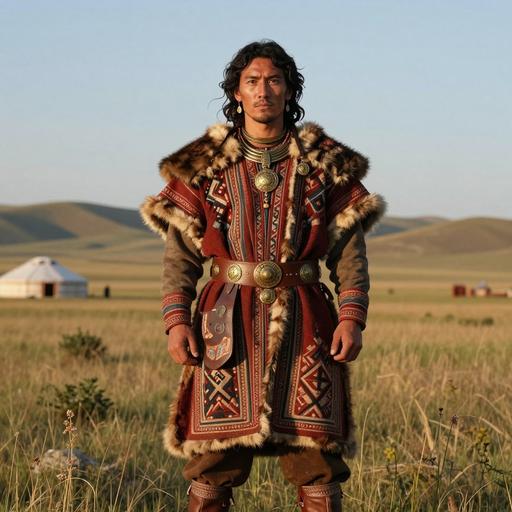
The Iron Age Saka culture in Kazakhstan, also known as the Saka culture of the steppe nomads, represents a fascinating and complex period of ancient Central Eurasian history, roughly spanning from the 8th century BCE to the 3rd century BCE. This era is marked by the emergence and development of the Saka tribes, who were part of the broader Scythian cultural sphere that extended across a vast region of the Eurasian Steppe.
Geographic and Environmental Context
The Saka people inhabited the expansive steppes of Central Asia, particularly the region that today constitutes modern Kazakhstan. The geography is characterized by wide-open grasslands, arid deserts, and mountainous areas. The environment played a crucial role in shaping the Saka's nomadic lifestyle, as they relied heavily on the availability of resources such as water and pasturage for their herds.
Social and Political Organization
The Saka were organized into tribal confederations, each led by tribal chiefs or kings. Their society was structured around clan and kinship ties, with leadership often determined by warrior skill and lineage. Social stratification was evident, with distinctions between the warrior elite, common herders, artisans, and possibly slaves. The leaders not only held military power but also had religious significance, often playing roles in spiritual ceremonies.
Economy and Subsistence
The economy of the Saka was predominantly pastoral, with herding of horses, cattle, sheep, and goats forming the backbone of their subsistence strategy. The Saka were expert horsemen, and the horse held a central place in their economic and cultural life. Additionally, they engaged in limited agriculture, trade, and seasonal migration to take advantage of different environmental zones.
Material Culture and Art
Saka material culture is renowned for its beautiful and intricate metalwork, especially in gold and bronze. They produced a variety of objects, including jewelry, weapons, and horse gear, often adorned with animal motifs in the \Scythian Art" style. This style is characterized by dynamic representations of animals and mythical creatures, reflecting both the natural world and their spiritual beliefs.
Burial Practices and Archaeological Evidence
Saka burial practices provide significant insights into their culture and beliefs. They constructed elaborate kurgans (burial mounds), some of which have been excavated in locations like Issyk and Berel in Kazakhstan. These kurgans housed the remains of prominent individuals, accompanied by an array of grave goods, including weapons, horse tack, and richly decorated clothing. The presence of sacrificed horses in these burials points to the importance of these animals in both life and death.
Religion and Beliefs
The Saka practiced a form of animism, worshipping natural phenomena and revered animals. They likely engaged in shamanistic practices, with spiritual leaders facilitating communication with the spiritual realm. Evidence of their religious beliefs can be seen in the iconography of their art and the symbolism in their burial practices.
Interactions and Influences
As part of the larger Scythian cultural milieu, the Saka had interactions with neighboring cultures and civilizations, including the Achaemenid Persian Empire to the south, the Chinese states to the east, and other nomadic groups to the north. These interactions were sometimes peaceful and trade-based, but also included instances of conflict and warfare, as evidenced by historical accounts and archaeological finds.
Legacy
The Saka culture left a lasting impact on the cultural and historical landscape of Central Asia. Their legacy can be seen in the enduring nomadic traditions, the continued significance of horse culture, and the rich archaeological record that inspires both scholarly research and cultural heritage initiatives in Kazakhstan today.
In summary, the Iron Age Saka culture of Kazakhstan represents a dynamic and influential period of nomadic history, characterized by rich material culture, complex societal structures, and vibrant interactions with neighboring cultures. Their contributions to the development of the steppe nomadic lifestyle have left an indelible mark on the history and culture of Central Asia."