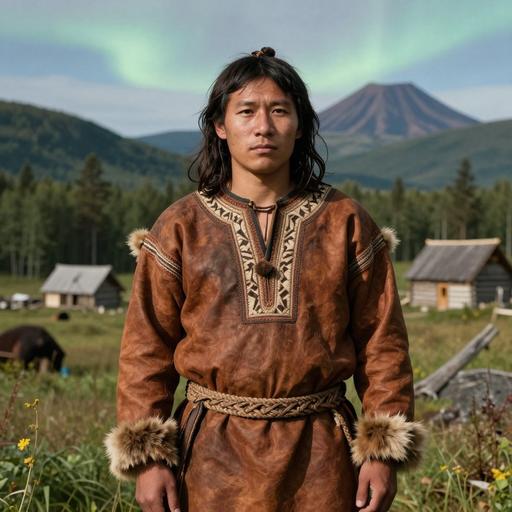
The Itelmens, indigenous people of the Kamchatka Peninsula in the Russian Far East, have a rich culture deeply intertwined with the natural environment. While the specific timeline of 450 CE is challenging to document with precision due to the lack of written records from that era, we can extrapolate based on archaeological findings, oral traditions, and historical accounts to create a comprehensive view of Itelmen life during that period.
Geographic and Environmental Context
The Kamchatka Peninsula is characterized by its rugged terrain, a mix of volcanic mountains, fertile valleys, and an extensive coastline. The climate is largely subarctic, with long, cold winters and short, mild summers. This environment heavily influenced the Itelmens' way of life, shaping their seasonal activities, diet, and social structures.
Social Structure and Lifestyle
Settlement Patterns
The Itelmens of 450 CE likely lived in small, semi-nomadic communities. Their settlements were typically located along riverbanks or coastal areas to take advantage of abundant fish resources. Villages were composed of a few extended families, with each household constituted by a separate dwelling.
Dwellings
Itelmens constructed semi-subterranean homes known as \zemlyanki," which were partially dug into the ground to provide insulation against harsh winter conditions. These earth-covered structures were reinforced with wood and grass, featuring a central fire pit for heating and cooking.
Social Organization
Itelmen society was organized along kinship lines, with extended families forming the basic social units. Leadership was likely informal, based on age, wisdom, and experience rather than hereditary positions. Elders played a crucial role in maintaining traditions and passing down knowledge through oral storytelling.
Economic Activities
Subsistence Strategies
The Itelmens were predominantly hunter-gatherers, relying on the diverse resources of their environment. Their diet was centered around fish, particularly salmon, which were caught using intricate weirs and traps. Hunting supplemented their diet with marine mammals, birds, and land animals such as deer and bears.
Plant Gathering
During the short growing season, the Itelmens gathered various wild plants, berries, roots, and nuts, which were crucial for supplementing their diet. They had extensive knowledge of the local flora and developed methods of food preservation to ensure supplies lasted through the winter months.
Cultural Practices
Religion and Spirituality
The Itelmen worldview was animistic, with a strong belief in the interconnectedness of nature and humans. They revered the spirits of animals, plants, and natural elements, performing rituals and ceremonies to honor these spirits and ensure harmony. Shamanistic practices were likely prevalent, with shamans acting as intermediaries between the spiritual and physical worlds.
Art and Craftsmanship
Artistic expression in the Itelmen culture was manifested in the form of functional and decorative items. They crafted intricate tools, clothing, and ornaments from natural materials such as bone, ivory, wood, and fur. Decorative motifs often had spiritual significance, reflecting their connection to the natural world.
Language and Communication
The Itelmen language, part of the Chukotko-Kamchatkan family, featured a complex system of grammar and vocabulary, attuned to their environment and lifestyle. Oral tradition was the primary means of communication and knowledge transmission, ensuring cultural continuity across generations.
Interactions with Neighboring Cultures
While the Itelmens were relatively isolated due to their geographic location, they likely engaged in some form of trade or cultural exchange with neighboring groups such as the Koryaks and Chukchi. These interactions could have included the exchange of goods, knowledge, and cultural practices.
Conclusion
While specific details about the Itelmen culture in 450 CE remain speculative, the available evidence paints a picture of a resourceful and resilient people, deeply connected to their natural environment. Their way of life was characterized by a harmonious balance between the demands of survival and the spiritual world, creating a rich cultural tapestry that continues to influence the Itelmen descendants today."