Menu
Currency
Main
Store
Blog

Loading Report

Preparing your ancestry journey

Connecting to ancient matches...

Preparing your report

Skip to main content
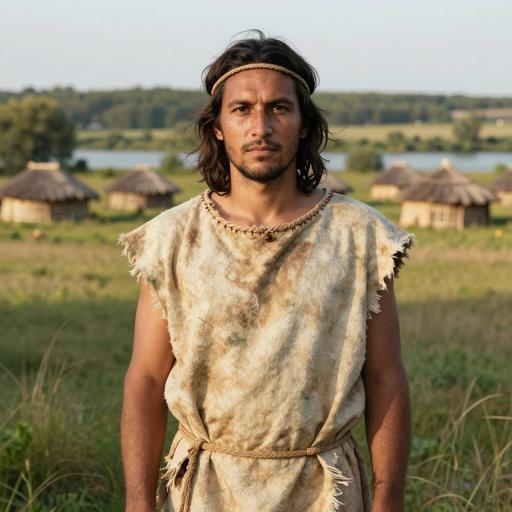
Portrait reconstruction of A man buried in Hungary in the Early Neolithic era
Ancient Individual

A man buried in Hungary in the Early Neolithic era

A man buried in Hungary during the Early Neolithic Körös Culture, Hungary

A fragment of the ancient world, preserved across millennia in strands of DNA.

KO1
5788 BCE - 5640 BCE
Male
Hungary
Scroll to begin
Chapter I

Identity

The biological and cultural markers that define this ancient individual

Sample ID

KO1

Date Range

5788 BCE - 5640 BCE

Cultural Period

Early Neolithic Körös Culture, Hungary

Biological Sex

Male

mtDNA Haplogroup

R1b1

Y-DNA Haplogroup

I-S21825

Chapter II

Place

Where this individual was discovered

Country Hungary
Locality Tiszaszőlős-Domaháza_unknown-site-2 (Jász-Nagykun-Szolnok County, Tiszafüred)
Coordinates 47.5592, 20.7212
Chapter III

Time

When this individual lived in the broader context of human history

KO1 5788 BCE - 5640 BCE
Chapter IV

Story

The narrative of this ancient life

The Early Neolithic Körös Culture, part of the broader Starčevo-Körös-Criș complex, represents a significant phase in the prehistoric development of Europe and is a critical component of the Neolithic period in the Carpathian Basin. This culture, named after the Körös River in present-day Hungary, flourished approximately between 6000 and 5500 BCE.

Geography and Environment

The Körös Culture primarily occupied the Great Hungarian Plain, an area characterized by its fertile alluvial soils, which arose from the plains and river floodplains surrounding the Danube, Tisza, and Körös Rivers. This landscape provided an ideal environment for early agricultural development, with a climate that supported diverse flora and fauna.

Social Structure and Settlements

The Körös Culture is noted for its small, semi-permanent settlements. These were often located on elevated areas to avoid seasonal flooding, often near water sources which facilitated agriculture and transportation. The social structure of these communities may have been relatively egalitarian, given the lack of evidence for significant hierarchical differentiation within settlements.

Architecture

Archaeological evidence suggests that Körös dwellings were typically rectangular or oval, constructed using a wattle-and-daub technique. The houses were built from wooden frames filled with a combination of mud, clay, and straw, supported by wooden posts. The floors were made of clay, sometimes paved with stones, and the roofs were likely thatched.

Economy and Subsistence

Subsistence was largely based on a mixed economy of agriculture and animal husbandry, which included the cultivation of emmer wheat, einkorn wheat, barley, and lentils. Domesticated animals such as cattle, sheep, goats, and pigs were integral to their economy, providing meat, milk, and other resources. Hunting and fishing supplemented their diet, exploiting local wildlife and aquatic resources.

Pottery and Material Culture

One of the defining features of the Körös Culture is its distinctive pottery, which reflects advanced ceramic techniques for its time. The pottery often features simple, geometric decorations, usually painted in white or red on a dark background. These vessels, primarily made by hand, served utilitarian purposes, but their decorative aspects highlight an appreciation for artistic expression.

The Körös people are also credited with the development and utilization of a variety of stone tools, including chipped and polished implements. Bone and antler tools are also common, reflecting the community's proficiency in using available natural resources.

Art and Symbolism

While not as elaborate as some later Neolithic cultures, Körös artifacts do suggest the presence of symbolic or artistic expression. This can be seen in the form of small clay figurines, which might have had religious or ritualistic significance, representing humans or animals, and potentially used in ceremonies or as household idols.

Burial Practices and Spiritual Life

Our understanding of Körös spiritual life is limited, but burial practices indicate some belief in an afterlife or spiritual system. Burials were typically simple, with the dead interred in shallow graves, often accompanied by small amounts of grave goods such as pottery or tools, suggesting a belief in providing for the deceased in the afterlife.

Legacy and Influence

The Körös Culture played a fundamental role in the spread of Neolithic practices and lifestyles throughout Central Europe. Their innovations in agriculture, architecture, and craftsmanship paved the way for subsequent Neolithic cultures, influencing regions far beyond the Carpathian Basin. As part of the broader Starčevo-Körös-Criș cultural complex, their interactions and exchanges with neighboring cultures contributed to the development of a more interconnected Neolithic Europe.

In conclusion, the Körös Culture represents a crucial period in the Neolithic era, marked by significant advancements in agriculture, technology, and social organization, which laid the foundation for future European societies.

Context

Related Samples

This individual exists within a broader network of ancient samples. No ancient genome stands alone.

Sample ID Culture/Period Date Location Action
I1504 Late Bronze Age Kyjatice Culture, Hungary 987 BCE Ludas-Varjú dűlő, Hungary View
I1506 The Linear Pottery Culture 5306 BCE Polgár-Ferenci hát. M3-31, Hungary View
I1503 Iron Age Pre-Scythian Culture, Hungary 983 BCE Ludas-Varju-Dulo, Hungary View
I1506 Middle Neolithic Linear Pottery Culture, Hungary 5306 BCE Polgár-Ferenci hát. M3-31, Hungary View
BR1 Early Bronze Age Makó Culture, Hungary 2195 BCE Kompolt-Kigyoser (Jász-Nagykun-Szolnok County, Karcag), Hungary View
BR2 Piliny-Kyjatice Culture 987 BCE Ludas-Varjú-dűlő (Heves County, Gyöngyös), Hungary View
CO1 Baden Culture of Hungary 3320 BCE Apc-Berekalya-1 (Heves County, Hatvan), Hungary View
IR1 Piliny-Kyjatice Culture 983 BCE Ludas-Varjú-dűlő (Heves County, Gyöngyös), Hungary View
KO1 Early Neolithic Körös Culture, Hungary 5788 BCE Tiszaszőlős-Domaháza_unknown-site-2 (Jász-Nagykun-Szolnok County, Tiszafüred), Hungary View
NE6 Middle Neolithic Linear Pottery Culture, Hungary 5211 BCE Apc-Berekalya-1 (Heves County, Hatvan), Hungary View
NE7 Late Neolithic Lengyel Culture, Hungary 4496 BCE Apc-Berekalya-1 (Heves County, Hatvan), Hungary View
I1502 2195 BCE Kompolt-Kigyoser, Hungary View
I1504 987 BCE Ludas-Varjú dűlő, Hungary View
I1497 3320 BCE Apc-Berekalya I, Hungary View
I1503 983 BCE Ludas-Varju-Dulo, Hungary View
I1507 5788 BCE Tiszaszolos-Domaháza, Hungary View
I1508 5716 BCE Berettyóújfalu-Morotva-Liget, Hungary View
I1495 4496 BCE Apc-Berekalya I, Hungary View
I1496 5211 BCE Apc-Berekalya I, Hungary View
I1502 2195 BCE Kompolt-Kigyoser, Hungary View
I1507 5788 BCE Tiszaszolos-Domaháza, Hungary View
I1496 5211 BCE Apc-Berekalya I, Hungary View
I1495 4496 BCE Apc-Berekalya I, Hungary View
I1497 3320 BCE Apc-Berekalya I, Hungary View
I1508 5716 BCE Berettyóújfalu-Morotva-Liget, Hungary View
I1506 5306 BCE Polgár-Ferenci hát. M3-31, Hungary View
I1498 5297 BCE Debrecen Tocopart Erdoalja, Hungary View
I1499 5286 BCE Garadna, Hungary View
I1505 5210 BCE Polgár-Ferenci hát. M3-31, Hungary View
I1500 5301 BCE Kompolt-Kigyoser, Hungary View
I1498 5297 BCE Debrecen Tocopart Erdoalja, Hungary View
I1499 5286 BCE Garadna, Hungary View
I1505 5210 BCE Polgár-Ferenci hát. M3-31, Hungary View
Sample ID Culture/Period Date Location Action
I1508 Early Neolithic Körös Culture, Hungary 5716 BCE Berettyóújfalu-Morotva-Liget, Hungary View
I2374 Early Neolithic Körös Culture, Hungary 6000 BCE Törökszentmiklos Tiszapüspöki Karanycs haromag 3. lh., Hungary View
I4972 Early Neolithic Körös Culture, Hungary 6000 BCE Tiszaszőlős-Domaháza, Hungary View
I2794 Early Neolithic Körös Culture, Hungary 5713 BCE Törökszentmiklós. road 4. site 3, Hungary View
I2373 Early Neolithic Körös Culture, Hungary 6000 BCE Törökszentmiklos Tiszapüspöki Karanycs haromag 3. lh., Hungary View
KO1 Early Neolithic Körös Culture, Hungary 5788 BCE Tiszaszőlős-Domaháza_unknown-site-2 (Jász-Nagykun-Szolnok County, Tiszafüred), Hungary View
I15073 Early Neolithic Körös Culture, Hungary 5835 BCE Szentpéterszeg-Körtvélyes-2 (Hajdú-Bihar County, Berettyóújfalu), Hungary View
I17931 Early Neolithic Körös Culture, Hungary 5800 BCE Dévaványa-Katonaföldek (Békés County, Gyomaendrőd, D), Hungary View
NEO130 Early Neolithic Körös Culture, Hungary 5974 BCE Dezsk (Csongrád-Csanád County, Szeged), Hungary View
NEO137 Early Neolithic Körös Culture, Hungary 5722 BCE Hödmezövasarhely Kotac (Csongrád-Csanád County, Hódmezővásárhely), Hungary View
Sources

References

Scientific publications and genetic data that inform this profile.

Scientific Publication

Genome flux and stasis in a five millennium transect of European prehistory

Authors Gamba C, Jones ER, Teasdale MD, McLaughlin RL, Gonzalez-Fortes G et al.
Abstract

The Great Hungarian Plain was a crossroads of cultural transformations that have shaped European prehistory. Here we analyse a 5,000-year transect of human genomes, sampled from petrous bones giving consistently excellent endogenous DNA yields, from 13 Hungarian Neolithic, Copper, Bronze and Iron Age burials including two to high (~22 × ) and seven to ~1 × coverage, to investigate the impact of these on Europe's genetic landscape. These data suggest genomic shifts with the advent of the Neolithic, Bronze and Iron Ages, with interleaved periods of genome stability. The earliest Neolithic context genome shows a European hunter-gatherer genetic signature and a restricted ancestral population size, suggesting direct contact between cultures after the arrival of the first farmers into Europe. The latest, Iron Age, sample reveals an eastern genomic influence concordant with introduced Steppe burial rites. We observe transition towards lighter pigmentation and surprisingly, no Neolithic presence of lactase persistence.

Use code for 25% off Expires Jul 12