Menu
Currency
Main
Store
Blog

Loading Report

Preparing your ancestry journey

Connecting to ancient matches...

Preparing your report

Skip to main content
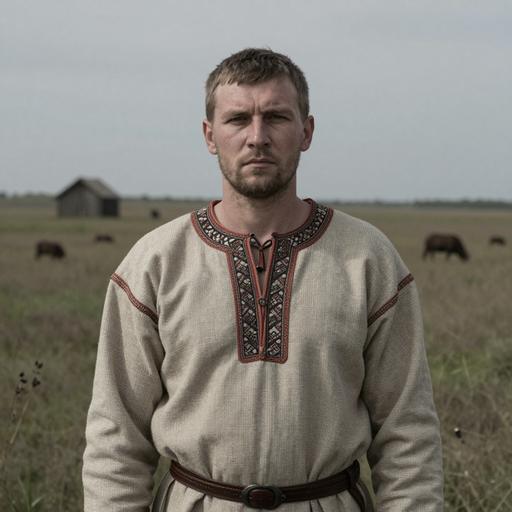
Portrait reconstruction of A man buried in Russia in the Mesolithic era
Ancient Individual

A man buried in Russia in the Mesolithic era

A man buried in Russia during the Medieval Kolyma, Russia

A fragment of the ancient world, preserved across millennia in strands of DNA.

Kolyma1
7952 BCE - 7658 BCE
Male
Russia
Scroll to begin
Chapter I

Identity

The biological and cultural markers that define this ancient individual

Sample ID

Kolyma1

Date Range

7952 BCE - 7658 BCE

Cultural Period

Medieval Kolyma, Russia

Biological Sex

Male

mtDNA Haplogroup

G1b*

Y-DNA Haplogroup

Q-Z36017

Chapter II

Place

Where this individual was discovered

Country Russia
Locality Duvanni Yar
Chapter III

Time

When this individual lived in the broader context of human history

Kolyma1 7952 BCE - 7658 BCE
Chapter IV

Story

The narrative of this ancient life

Medieval Kolyma refers to the region surrounding the Kolyma River in what is now northeastern Siberia, Russia, during the medieval period. This era is characterized by the intersection of Paleo-Siberian and emerging influences from neighboring areas, reflecting a unique cultural and social evolution against the challenging backdrop of Siberia's harsh climate.

Geography and Environment

The Kolyma region is known for its subarctic climate, marked by long, brutally cold winters and short, mild summers. The terrain is dominated by permafrost, tundra, taiga forests, and numerous rivers and lakes. The harsh environment significantly influenced the livelihoods of its inhabitants.

Inhabitants

The primary inhabitants during this period were likely the indigenous Paleo-Siberian peoples, such as the Yukaghir and possibly early Chukchi and Evenki groups. These groups were distinct from the later, more populous Yukaghir of historical accounts. Their way of life centered around a nomadic or semi-nomadic existence, heavily reliant on hunting, fishing, and reindeer herding.

Culture and Social Structure

The social structure of medieval Kolyma's Paleo-Siberian peoples was typically organized around small, kin-based groups. Leadership was likely informal and based on personal prowess and age. Storytelling, oral tradition, and shamanistic beliefs played vital roles in maintaining cultural identity and transmitting knowledge.

Spiritual Beliefs

Shamanism was central to spiritual life. Shamans, as intermediaries between the human and spirit worlds, conducted rituals and ceremonies to ensure successful hunts, protect the community from malevolent spirits, and cure illnesses. Animism was prevalent, with the natural world, animals, and celestial bodies all regarded as having spiritual significance.

Material Culture

Given the environmental constraints, the material culture was adapted to the cold climate. Clothing was made from animal skins and furs, providing essential insulation. Dwellings were likely temporary structures, such as skin tents, designed for mobility.

Tools and implements were crafted from available materials like bone, antler, and stone. The technology included sleds and canoes, enabling efficient movement across snow and water.

Economy and Subsistence

The economy was subsistence-based, relying on hunting Siberian wildlife, including deer, elk, and fish, which were abundant in the rivers. Trade with neighboring groups may have occurred, though evidence is sparse. Such exchanges likely involved goods difficult to source locally, such as metal tools, which were precious and often reworked from earlier items or obtained from trade networks extending towards the south or west.

Interaction with Other Cultures

Medieval Kolyma seemed relatively isolated due to its geographical challenges. However, there could have been interactions with nearby Siberian cultures, facilitating an exchange of ideas and goods. These contacts might have introduced new technologies or cultural practices, albeit slowly and sporadically.

Legacy and Transition

The medieval era in this remote part of Siberia eventually transitioned into more documented historical periods, with increased Russian exploration and eventual incorporation into the expanding Russian Empire. This brought significant cultural changes, integrating Kolyma more fully into broader Siberian and Russian historical narratives.

Conclusion

Medieval Kolyma represents a fascinating period of adaptation and resilience. The Paleo-Siberian peoples of this region developed a unique cultural identity forged in one of Earth's harshest climates, sustaining themselves through a blend of ancient practices and resourcefulness. While much about them remains enveloped in mystery, ongoing archaeological and anthropological studies continue to shed light on their intriguing history.

Context

Related Samples

This individual exists within a broader network of ancient samples. No ancient genome stands alone.

Sample ID Culture/Period Date Location Action
Yana1 Upper Paleolithic Yana, Russia 30250 BCE Yana RHS, Russia View
Kolyma1 Medieval Kolyma, Russia 7952 BCE Duvanni Yar, Russia View
Yana2 Upper Paleolithic Yana, Russia 30250 BCE Yana RHS, Russia View
NEO240 Neolithic Devil's Cave, Russia 5625 BCE Devil's Gate Cave, Russia View
NEO236 Neolithic Devil's Cave, Russia 5830 BCE Devil's Gate Cave, Russia View
Yana_young Medieval Yana, Russia 1053 CE Yana River, Russia View
I11280 Magadan Bronze Age 1265 BCE Ol'skaia. shore of Okhotsk Sea, Russia View
NEO235 Neolithic Devil's Cave, Russia 5802 BCE Devil's Gate Cave, Russia View
NEO232 Ust-Belaya Angara Culture, Russia 3007 BCE Baikal Region. Angara river basin. Mouth of the Belaya River, Russia View
I11278 Magadan Bronze Age 1300 BCE Ol'skaia. shore of Okhotsk Sea, Russia View
NEO229 Ust-Belaya Angara Culture, Russia 4785 BCE Baikal Region. Angara river basin. Mouth of the Belaya River, Russia View
NEO238 Neolithic Devil's Cave, Russia 5712 BCE Devil's Gate Cave, Russia View
NEO230 Early Bronze Age Ust-Belaya, Russia 3022 BCE Baikal Region. Angara river basin. Mouth of the Belaya River, Russia View
NEO250 Iron Age Ekven, Russia 354 BCE Ekven, Russia View
NEO241 Iron Age Ekven, Russia 101 BCE Ekven, Russia View
NEO242 Iron Age Ekven, Russia 122 CE Ekven, Russia View
NEO237 Neolithic Devil's Cave, Russia 5721 BCE Devil's Gate Cave, Russia View
NEO239 Neolithic Devil's Cave, Russia 5707 BCE Devil's Gate Cave, Russia View
NEO299 Medieval Ust-Belaya, Russia 1292 CE Baikal Region. Angara river basin. Mouth of the Belaya River, Russia View
NEO253 Iron Age Ekven, Russia 125 CE Ekven, Russia View
NEO243 Iron Age Ekven, Russia 376 BCE Ekven, Russia View
NEO234 Iron Age Uelen, Russia 975 BCE Uelen, Russia View
NEO233 Iron Age Uelen, Russia 121 CE Uelen, Russia View
I7341 Old Bering Sea Culture Ekven, Russia 710 CE Chukotka. Bering Strait. Ekven, Russia View
I7342 Old Bering Sea Culture Ekven, Russia 348 BCE Chukotka. Bering Strait. Ekven, Russia View
I7782 Ust-Belaya Angara Culture, Russia 2860 BCE Baikal Region. Angara river basin. Mouth of the Belaya River, Russia View
DA237 Iron Age Saami, Finland 436 CE Levanluhta, Finland View
M0831 Bronze Age Okhotsk Culture of Magadan 1300 BCE Ol'skaia (Magadan Oblast, Magadan municipality), Russia View
M9984 Magadan Bronze Age 1265 BCE Ol'skaia (Magadan Oblast, Magadan municipality), Russia View
Kolyma1 7952 BCE Duvanni Yar, Russia View
I11278 1300 BCE Ol'skaia. shore of Okhotsk Sea, Russia View
I11280 1265 BCE Ol'skaia. shore of Okhotsk Sea, Russia View
I8296 2860 BCE Baikal Region. Angara river basin. Mouth of the Belaya River, Russia View
I7343 970 CE Chukotka. Bering Strait. Ekven, Russia View
I7339 690 CE Chukotka. Bering Strait. Ekven, Russia View
I7342 348 BCE Chukotka. Bering Strait. Ekven, Russia View
I7341 710 CE Chukotka. Bering Strait. Ekven, Russia View
I7349 640 CE Chukotka. Bering Strait. Ekven, Russia View
I7782 2860 BCE Baikal Region. Angara river basin. Mouth of the Belaya River, Russia View
Yana1 30250 BCE Yana RHS, Russia View
Yana2 30250 BCE Yana RHS, Russia View
I7349 640 CE Chukotka. Bering Strait. Ekven, Russia View
I7339 690 CE Chukotka. Bering Strait. Ekven, Russia View
I8296 2860 BCE Baikal Region. Angara river basin. Mouth of the Belaya River, Russia View
I7343 970 CE Chukotka. Bering Strait. Ekven, Russia View
DA237 436 CE Levanluhta, Finland View
NEO229 4785 BCE Baikal Region. Angara river basin. Mouth of the Belaya River, Russia View
NEO230 3022 BCE Baikal Region. Angara river basin. Mouth of the Belaya River, Russia View
NEO232 3007 BCE Baikal Region. Angara river basin. Mouth of the Belaya River, Russia View
NEO233 121 CE Uelen, Russia View
NEO234 975 BCE Uelen, Russia View
NEO235 5802 BCE Devil's Gate Cave, Russia View
NEO236 5830 BCE Devil's Gate Cave, Russia View
NEO237 5721 BCE Devil's Gate Cave, Russia View
NEO238 5712 BCE Devil's Gate Cave, Russia View
NEO239 5707 BCE Devil's Gate Cave, Russia View
NEO240 5625 BCE Devil's Gate Cave, Russia View
NEO241 101 BCE Ekven, Russia View
NEO242 122 CE Ekven, Russia View
NEO243 376 BCE Ekven, Russia View
NEO250 354 BCE Ekven, Russia View
NEO253 125 CE Ekven, Russia View
NEO299 1292 CE Baikal Region. Angara river basin. Mouth of the Belaya River, Russia View
Yana_young 1053 CE Yana River, Russia View
Sample ID Culture/Period Date Location Action
Kolyma1 Medieval Kolyma, Russia 7952 BCE Duvanni Yar, Russia View
Sources

References

Scientific publications and genetic data that inform this profile.

Scientific Publication

The population history of northeastern Siberia since the Pleistocene

Authors Sikora M, Pitulko VV, Sousa VC, Allentoft ME, Vinner L et al.
Abstract

Northeastern Siberia has been inhabited by humans for more than 40,000 years but its deep population history remains poorly understood. Here we investigate the late Pleistocene population history of northeastern Siberia through analyses of 34 newly recovered ancient genomes that date to between 31,000 and 600 years ago. We document complex population dynamics during this period, including at least three major migration events: an initial peopling by a previously unknown Palaeolithic population of 'Ancient North Siberians' who are distantly related to early West Eurasian hunter-gatherers; the arrival of East Asian-related peoples, which gave rise to 'Ancient Palaeo-Siberians' who are closely related to contemporary communities from far-northeastern Siberia (such as the Koryaks), as well as Native Americans; and a Holocene migration of other East Asian-related peoples, who we name 'Neo-Siberians', and from whom many contemporary Siberians are descended. Each of these population expansions largely replaced the earlier inhabitants, and ultimately generated the mosaic genetic make-up of contemporary peoples who inhabit a vast area across northern Eurasia and the Americas.

Use code for 25% off Expires Jul 13