Menu
Currency
Main
Store
Blog

Loading Report

Preparing your ancestry journey

Connecting to ancient matches...

Preparing your report

Skip to main content
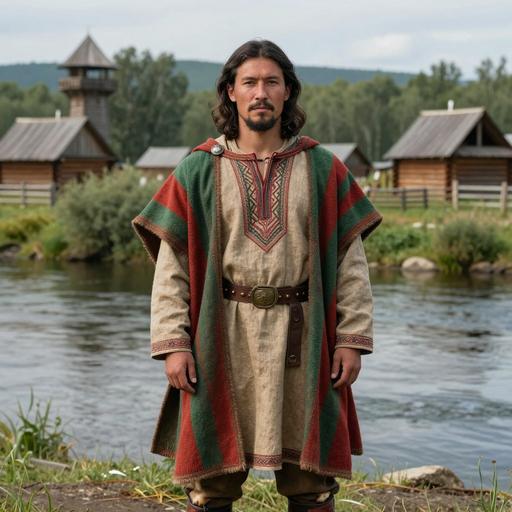
Portrait reconstruction of A man buried in Russia in the Medieval era
Ancient Individual

A man buried in Russia in the Medieval era

A man buried in Russia during the Medieval Yana, Russia

A fragment of the ancient world, preserved across millennia in strands of DNA.

Yana_young
1053 CE - 1259 CE
Male
Russia
Scroll to begin
Chapter I

Identity

The biological and cultural markers that define this ancient individual

Sample ID

Yana_young

Date Range

1053 CE - 1259 CE

Cultural Period

Medieval Yana, Russia

Biological Sex

Male

mtDNA Haplogroup

D4o2a2a

Y-DNA Haplogroup

N-M1991

Chapter II

Place

Where this individual was discovered

Country Russia
Locality Yana River
Chapter III

Time

When this individual lived in the broader context of human history

Yana_young 1053 CE - 1259 CE
Chapter IV

Story

The narrative of this ancient life

Medieval Yana, located in what is now considered the eastern part of the historical Slavic territories in Russia, presents a fascinating chronicle of cultural, social, and political transformations. The period, which stretches roughly from the early 9th century to the late 15th century, is marked by the integration of East Slavic tribes, the adoption of Orthodox Christianity, and the interactions with various nomadic tribes and empires.

Geographical and Historical Context

Yana, during the medieval period, was part of a broader area occupied by East Slavic tribes, extending over the forested and steppe regions of Eastern Europe. This region's critical geographical features included vast forests, fertile plains, and numerous rivers, like the Volga and Dnieper, serving as vital trade routes that connected the northern territories with Byzantine and other southern cultures.

Socio-Political Structure

The socio-political landscape of Medieval Yana was characterized by a mix of tribal governance and evolving principalities. Influenced by the Varangian (Viking) rulers who established the Kievan Rus' state, the regional governance structure included powerful local leaders known as princes or knyaz. These rulers were part of loose confederations and engaged in both alliances and conflicts to consolidate power across different territories. With time, power began to centralize around major principalities such as Novgorod and Kiev, which also influenced the Yana region.

Cultural and Religious Evolution

The cultural tapestry of Medieval Yana was richly woven with Slavic paganism initially, characterized by the worship of a pantheon of gods, such as Perun and Dazhbog, whose significance was closely tied to nature and warfare. However, the pivotal moment in cultural shift occurred in 988 AD with the Christianization of Kievan Rus', when Vladimir the Great officially adopted Orthodox Christianity. This conversion influenced much of Yana, gradually replacing pagan traditions and integrating the region into the Eastern Orthodox cultural sphere, fostering ties with Byzantium.

Economy and Trade

The economy of Medieval Yana was significantly agrarian, with agriculture forming the bedrock of the local economy. The commercial activities were boosted by its strategic position along the trade routes between Scandinavia, the Byzantine Empire, and the Middle East. Key commodities traded included furs, wax, honey, and later, grains. The presence of rivers facilitated both internal communications and trade exchanges with the broader European and Asian worlds.

Artistic and Intellectual Life

In terms of artistic expression, Medieval Yana was notably influenced by Byzantine styles, especially visible in church architecture and religious iconography. The construction of Orthodox churches with their distinctive onion domes and decorative frescoes became prominent. The invention of Cyrillic script in the 10th century, credited to Saints Cyril and Methodius, spurred the growth of literacy and documentation in the region, leading to the creation of important historical texts such as the Primary Chronicle.

Interactions with Neighboring Cultures

Throughout its medieval history, Yana interacted with numerous cultures, primarily through trade and conflict. To the east and south, the region encountered Turkic nomadic tribes such as the Pechenegs and Cumans, often resulting in militarized skirmishes or alliances. The Mongol invasion in the 13th century marked another significant epoch, leading to the establishment of the Mongol yoke under the Golden Horde, which exerted control over the region for several generations, impacting political structures and economic practices.

Legacy

The legacy of Medieval Yana is integral to the broader East Slavic cultural and political identity that eventually evolved into the modern Russian state. The region's history serves as a testament to the adaptability and resilience of the East Slavic peoples, reflecting a synthesis of indigenous traditions with foreign influences. This era laid the foundational stones for future developments in Russian society, governance, religion, and culture. The resilience and melding of old and new during this period illustrate a dynamic progression that would shape the identity and direction of Russia for centuries to follow.

Context

Related Samples

This individual exists within a broader network of ancient samples. No ancient genome stands alone.

Sample ID Culture/Period Date Location Action
Yana1 Upper Paleolithic Yana, Russia 30250 BCE Yana RHS, Russia View
Kolyma1 Medieval Kolyma, Russia 7952 BCE Duvanni Yar, Russia View
Yana2 Upper Paleolithic Yana, Russia 30250 BCE Yana RHS, Russia View
NEO240 Neolithic Devil's Cave, Russia 5625 BCE Devil's Gate Cave, Russia View
NEO236 Neolithic Devil's Cave, Russia 5830 BCE Devil's Gate Cave, Russia View
Yana_young Medieval Yana, Russia 1053 CE Yana River, Russia View
I11280 Magadan Bronze Age 1265 BCE Ol'skaia. shore of Okhotsk Sea, Russia View
NEO235 Neolithic Devil's Cave, Russia 5802 BCE Devil's Gate Cave, Russia View
NEO232 Ust-Belaya Angara Culture, Russia 3007 BCE Baikal Region. Angara river basin. Mouth of the Belaya River, Russia View
I11278 Magadan Bronze Age 1300 BCE Ol'skaia. shore of Okhotsk Sea, Russia View
NEO229 Ust-Belaya Angara Culture, Russia 4785 BCE Baikal Region. Angara river basin. Mouth of the Belaya River, Russia View
NEO238 Neolithic Devil's Cave, Russia 5712 BCE Devil's Gate Cave, Russia View
NEO230 Early Bronze Age Ust-Belaya, Russia 3022 BCE Baikal Region. Angara river basin. Mouth of the Belaya River, Russia View
NEO250 Iron Age Ekven, Russia 354 BCE Ekven, Russia View
NEO241 Iron Age Ekven, Russia 101 BCE Ekven, Russia View
NEO242 Iron Age Ekven, Russia 122 CE Ekven, Russia View
NEO237 Neolithic Devil's Cave, Russia 5721 BCE Devil's Gate Cave, Russia View
NEO239 Neolithic Devil's Cave, Russia 5707 BCE Devil's Gate Cave, Russia View
NEO299 Medieval Ust-Belaya, Russia 1292 CE Baikal Region. Angara river basin. Mouth of the Belaya River, Russia View
NEO253 Iron Age Ekven, Russia 125 CE Ekven, Russia View
NEO243 Iron Age Ekven, Russia 376 BCE Ekven, Russia View
NEO234 Iron Age Uelen, Russia 975 BCE Uelen, Russia View
NEO233 Iron Age Uelen, Russia 121 CE Uelen, Russia View
I7341 Old Bering Sea Culture Ekven, Russia 710 CE Chukotka. Bering Strait. Ekven, Russia View
I7342 Old Bering Sea Culture Ekven, Russia 348 BCE Chukotka. Bering Strait. Ekven, Russia View
I7782 Ust-Belaya Angara Culture, Russia 2860 BCE Baikal Region. Angara river basin. Mouth of the Belaya River, Russia View
DA237 Iron Age Saami, Finland 436 CE Levanluhta, Finland View
M0831 Bronze Age Okhotsk Culture of Magadan 1300 BCE Ol'skaia (Magadan Oblast, Magadan municipality), Russia View
M9984 Magadan Bronze Age 1265 BCE Ol'skaia (Magadan Oblast, Magadan municipality), Russia View
Kolyma1 7952 BCE Duvanni Yar, Russia View
I11278 1300 BCE Ol'skaia. shore of Okhotsk Sea, Russia View
I11280 1265 BCE Ol'skaia. shore of Okhotsk Sea, Russia View
I8296 2860 BCE Baikal Region. Angara river basin. Mouth of the Belaya River, Russia View
I7343 970 CE Chukotka. Bering Strait. Ekven, Russia View
I7339 690 CE Chukotka. Bering Strait. Ekven, Russia View
I7342 348 BCE Chukotka. Bering Strait. Ekven, Russia View
I7341 710 CE Chukotka. Bering Strait. Ekven, Russia View
I7349 640 CE Chukotka. Bering Strait. Ekven, Russia View
I7782 2860 BCE Baikal Region. Angara river basin. Mouth of the Belaya River, Russia View
Yana1 30250 BCE Yana RHS, Russia View
Yana2 30250 BCE Yana RHS, Russia View
I7349 640 CE Chukotka. Bering Strait. Ekven, Russia View
I7339 690 CE Chukotka. Bering Strait. Ekven, Russia View
I8296 2860 BCE Baikal Region. Angara river basin. Mouth of the Belaya River, Russia View
I7343 970 CE Chukotka. Bering Strait. Ekven, Russia View
DA237 436 CE Levanluhta, Finland View
NEO229 4785 BCE Baikal Region. Angara river basin. Mouth of the Belaya River, Russia View
NEO230 3022 BCE Baikal Region. Angara river basin. Mouth of the Belaya River, Russia View
NEO232 3007 BCE Baikal Region. Angara river basin. Mouth of the Belaya River, Russia View
NEO233 121 CE Uelen, Russia View
NEO234 975 BCE Uelen, Russia View
NEO235 5802 BCE Devil's Gate Cave, Russia View
NEO236 5830 BCE Devil's Gate Cave, Russia View
NEO237 5721 BCE Devil's Gate Cave, Russia View
NEO238 5712 BCE Devil's Gate Cave, Russia View
NEO239 5707 BCE Devil's Gate Cave, Russia View
NEO240 5625 BCE Devil's Gate Cave, Russia View
NEO241 101 BCE Ekven, Russia View
NEO242 122 CE Ekven, Russia View
NEO243 376 BCE Ekven, Russia View
NEO250 354 BCE Ekven, Russia View
NEO253 125 CE Ekven, Russia View
NEO299 1292 CE Baikal Region. Angara river basin. Mouth of the Belaya River, Russia View
Yana_young 1053 CE Yana River, Russia View
Sample ID Culture/Period Date Location Action
Yana_young Medieval Yana, Russia 1053 CE Yana River, Russia View
Sources

References

Scientific publications and genetic data that inform this profile.

Scientific Publication

The population history of northeastern Siberia since the Pleistocene

Authors Sikora M, Pitulko VV, Sousa VC, Allentoft ME, Vinner L et al.
Abstract

Northeastern Siberia has been inhabited by humans for more than 40,000 years but its deep population history remains poorly understood. Here we investigate the late Pleistocene population history of northeastern Siberia through analyses of 34 newly recovered ancient genomes that date to between 31,000 and 600 years ago. We document complex population dynamics during this period, including at least three major migration events: an initial peopling by a previously unknown Palaeolithic population of 'Ancient North Siberians' who are distantly related to early West Eurasian hunter-gatherers; the arrival of East Asian-related peoples, which gave rise to 'Ancient Palaeo-Siberians' who are closely related to contemporary communities from far-northeastern Siberia (such as the Koryaks), as well as Native Americans; and a Holocene migration of other East Asian-related peoples, who we name 'Neo-Siberians', and from whom many contemporary Siberians are descended. Each of these population expansions largely replaced the earlier inhabitants, and ultimately generated the mosaic genetic make-up of contemporary peoples who inhabit a vast area across northern Eurasia and the Americas.

Use code for 25% off Expires Jul 13