Menu
Currency
Main
Store
Blog

Loading Report

Preparing your ancestry journey

Connecting to ancient matches...

Preparing your report

Skip to main content
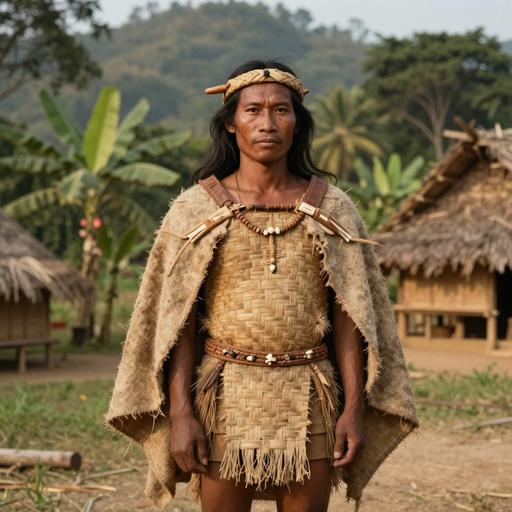
Portrait reconstruction of A man buried in Laos in the Late Neolithic To Bronze Age era
Ancient Individual

A man buried in Laos in the Late Neolithic To Bronze Age era

A man buried in Laos during the Late Neolithic to Bronze Age Laos

A fragment of the ancient world, preserved across millennia in strands of DNA.

La364
1125 BCE - 926 BCE
Male
Laos
Scroll to begin
Chapter I

Identity

The biological and cultural markers that define this ancient individual

Sample ID

La364

Date Range

1125 BCE - 926 BCE

Cultural Period

Late Neolithic to Bronze Age Laos

Biological Sex

Male

mtDNA Haplogroup

F1a1a1

Y-DNA Haplogroup

O-B426

Chapter II

Place

Where this individual was discovered

Country Laos
Locality Northeast Huapan. Tam Pa Ping
Chapter III

Time

When this individual lived in the broader context of human history

La364 1125 BCE - 926 BCE
Chapter IV

Story

The narrative of this ancient life

The transition from the Late Neolithic to the Bronze Age in Laos is a fascinating period that encapsulates significant cultural, technological, and societal transformations. This era in Southeast Asian history marks a critical juncture where prehistoric communities began adopting advancements that would lay the groundwork for subsequent civilizations. Let's explore this transitional phase in detail.

Geography and Environment

Laos, located in the heart of the Indochina Peninsula, is characterized by its rugged terrains, extensive river systems, and fertile valleys. During the Late Neolithic to Bronze Age, these geographic features would have significantly influenced settlement patterns and subsistence strategies. The Mekong River, in particular, served as a crucial artery for trade, communication, and transportation, linking various communities within the region and beyond.

Societal Organization

In the Late Neolithic period, Laos was primarily composed of small, kin-based groups practicing subsistence agriculture, hunting, and gathering. As people began transitioning into the Bronze Age, evidence suggests the emergence of more complex societal structures. Hierarchical organization started to appear, potentially led by chieftains or tribal leaders. These communities were likely organized around extended families or clans, involved in both agricultural practices and craft specialization.

Technological and Agricultural Advances

The Late Neolithic period in Laos saw the development of advanced stone tool technologies. As the Bronze Age approached, metallurgy began to surface, though at a slower pace than in other parts of Southeast Asia. The introduction of bronze tools and ornaments marked a significant technological advancement, allowing for improved agricultural practices, craftsmanship, and trade. This metallurgy was primarily based on copper-tin alloys, which were either produced locally or acquired through trade networks.

Agriculture during this period saw intensified rice cultivation, facilitated by improved farming techniques. Communities also practiced slash-and-burn agriculture and domesticated animals such as pigs and chickens, contributing to a more stable food supply and increased sedentism.

Cultural and Artistic Expressions

Artifacts from this era provide insight into the cultural and artistic expressions of the time. Pottery from the Late Neolithic period typically features simple designs, but as the Bronze Age emerged, ceramics became more sophisticated, with intricate decorations and varied forms. Jewelry, made from bronze and sometimes adorned with semi-precious stones, suggests a society placing increasing emphasis on personal adornment and status symbols.

Trade and Interaction

The Late Neolithic to Bronze Age transition in Laos was marked by increased regional interaction. Communities engaged in trade, exchanging commodities such as pottery, metals, and beads. These trade networks connected Laos with surrounding regions, facilitating cultural exchanges that influenced local technological and artistic developments.

Rituals and Beliefs

The archaeological record indicates that spiritual and ritual practices were an integral part of life during this era. Burial sites provide evidence of complex rituals, with graves often containing pottery, tools, and jewelry, suggesting beliefs in an afterlife or spiritual continuity. These practices indicate a society with evolving religious or ritualistic frameworks, potentially involving ancestor worship and animistic traditions.

Challenges and Adaptations

While technological advancements brought about significant advantages, these communities faced challenges such as environmental shifts, resource management, and social stratification. The ability to adapt to these changes was crucial and contributed to the resilience and eventual evolution of these societies into more complex Bronze Age cultures.

In summary, the Late Neolithic to Bronze Age period in Laos represents a critical era of transformation. It is characterized by technological advances, the shift from nomadic to semi-sedentary lifestyles, increased social complexity, and vibrant cultural expressions. These developments laid the foundation for future historical and cultural trajectories in Southeast Asia and underscored the dynamic interplay between environment, technology, and human ingenuity.

Context

Related Samples

This individual exists within a broader network of ancient samples. No ancient genome stands alone.

Sample ID Culture/Period Date Location Action
In661 Late Neolithic to Iron Age Indonesia 30 CE Sumatra. Northwest Aceh. Loyang Ujung Cave, Indonesia View
In662 Late Neolithic to Iron Age Indonesia 353 BCE Sumatra. Northwest Aceh. Loyang Ujung Cave, Indonesia View
La364 Late Neolithic to Bronze Age Laos 1125 BCE Northeast Huapan. Tam Pa Ping, Laos View
La368 The Hoabinhian Culture 6012 BCE Northern Bolikhamsay. Pha Faen, Laos View
La727 Bronze Age Laos 459 BCE Northeast Huapan. Tam Hang, Laos View
La898 Unknown Era in Laos 8000 BCE Northeast Huapan. Tam Hang, Laos View
Ma554 Historical Malaysia 1448 CE Northeast Borneo. Sabah. Supu Hujung4, Malaysia View
Ma555 Historical Malaysia 1505 CE Northeast Borneo. Sabah. Kinabatagan, Malaysia View
Ma911 Hoabinhian Culture, Malaysia 2463 BCE West Peninsular Kelantan. Gua Cha Cave, Malaysia View
Phl534 Red Slipped Pottery Culture, Philippines 84 CE Luzon. Northern Cagayan. Nagsabaran, Philippines View
Th519 Iron Age Thailand 236 CE Northern Mae Hong Son. Long Long Rak, Thailand View
Th521 Iron Age Thailand 215 CE Northern Mae Hong Son. Long Long Rak, Thailand View
Th530 Iron Age Thailand 238 CE Northern Mae Hong Son. Long Long Rak, Thailand View
Th531 Iron Age Thailand 259 CE Northern Mae Hong Son. Long Long Rak, Thailand View
Vt833 Late Neolithic Vietnam 2343 BCE Northern Thanh Hoa. Mai Da Dieu, Vietnam View
Vt880 Late Neolithic Vietnam 2500 BCE Northeast Quang Ninh. Hhon Hai Co Tien, Vietnam View
JHF05 Modern Malaysia 2000 CE West Peninsular Northern Perak, Malaysia View
JHM06 Modern Malaysia 2000 CE West Peninsular Northern Perak, Malaysia View
IK002 The Jomon Period in Japan 897 BCE Honshu. Central Aichi. Ikawazu, Japan View
Ma912 Late Neolithic Malaysia 744 BCE West Peninsular Kelantan. Gua Cha Cave, Malaysia View
Vt779 Bronze Age Dong Son Culture, Vietnam 386 BCE Northern Thanh Noa. Nui Nap, Vietnam View
Vt781 Bronze Age Dong Son Culture, Vietnam 389 BCE Northern Thanh Noa. Nui Nap, Vietnam View
Vt796 Bronze Age Dong Son Culture, Vietnam 350 BCE Northern Thanh Noa. Nui Nap, Vietnam View
Vt808 Bronze Age Dong Son Culture, Vietnam 391 BCE Northern Thanh Noa. Nui Nap, Vietnam View
Vt719 Historical Vietnam 1641 CE Northeast Quang Ninh. Hon Hai Co Tien, Vietnam View
Vt777 Late Neolithic Vietnam 399 BCE Northern Thanh Hoa. Mai Da Dieu, Vietnam View
Vt778 Late Neolithic Vietnam 800 BCE Northwest Lai Châu. Nam Tun, Vietnam View
Th519 236 CE Northern Mae Hong Son. Long Long Rak, Thailand View
IK002 897 BCE Honshu. Central Aichi. Ikawazu, Japan View
Ma912 744 BCE West Peninsular Kelantan. Gua Cha Cave, Malaysia View
Vt719 1641 CE Northeast Quang Ninh. Hon Hai Co Tien, Vietnam View
Vt777 399 BCE Northern Thanh Hoa. Mai Da Dieu, Vietnam View
Vt778 800 BCE Northwest Lai Châu. Nam Tun, Vietnam View
Vt779 386 BCE Northern Thanh Noa. Nui Nap, Vietnam View
Vt781 389 BCE Northern Thanh Noa. Nui Nap, Vietnam View
Vt796 350 BCE Northern Thanh Noa. Nui Nap, Vietnam View
Vt808 391 BCE Northern Thanh Noa. Nui Nap, Vietnam View
Sample ID Culture/Period Date Location Action
La364 Late Neolithic to Bronze Age Laos 1125 BCE Northeast Huapan. Tam Pa Ping, Laos View
Sources

References

Scientific publications and genetic data that inform this profile.

Scientific Publication

The prehistoric peopling of Southeast Asia

Authors McColl H, Racimo F, Vinner L, Demeter F, Gakuhari T et al.
Abstract

The human occupation history of Southeast Asia (SEA) remains heavily debated. Current evidence suggests that SEA was occupied by Hòabìnhian hunter-gatherers until ~4000 years ago, when farming economies developed and expanded, restricting foraging groups to remote habitats. Some argue that agricultural development was indigenous; others favor the "two-layer" hypothesis that posits a southward expansion of farmers giving rise to present-day Southeast Asian genetic diversity. By sequencing 26 ancient human genomes (25 from SEA, 1 Japanese Jōmon), we show that neither interpretation fits the complexity of Southeast Asian history: Both Hòabìnhian hunter-gatherers and East Asian farmers contributed to current Southeast Asian diversity, with further migrations affecting island SEA and Vietnam. Our results help resolve one of the long-standing controversies in Southeast Asian prehistory.

Use code for 25% off Expires Jul 13