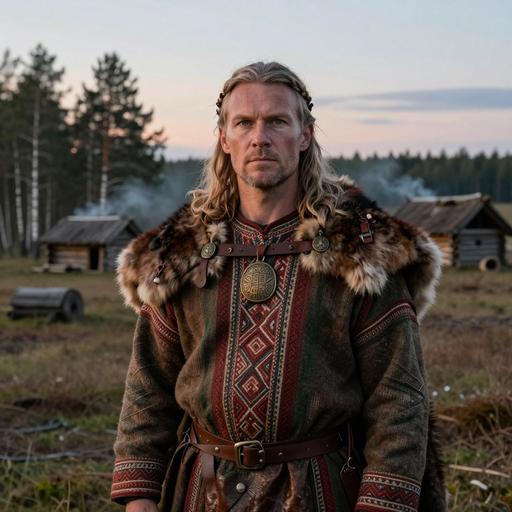
The conceptualization of a \Swedish Steppe-Influenced Culture at Nästegården of Nordic" suggests an imaginative blending of historical and geographical influences that may not exist historically but offers a fascinating basis for exploration. Here, we can speculate on what such a culture might encompass by considering the influences of both Nordic and Steppe traditions and weaving them into a vivid tapestry of cultural exchange and development.
Geographic Setting
Nästegården, likely imagined as a cultural hub, might be situated in a region in Sweden characterized by its vast landscapes, reminiscent of steppe environments but with a Nordic twist. Rolling fields, interspersed with serene lakes and dense forests, create a landscape that supports both agriculture and pastoralism, mirroring the open expanses of the Eurasian steppes but with a distinctly Nordic climate and flora.
Historical Context
This culture could emerge during a period where migrations, trade, or diplomatic exchanges bring the steppe nomads into contact with the settled societies of Sweden. This setting might draw from the historical Viking Age (circa late 8th to early 11th century) when Norse seafarers reached new territories, enabling cultural exchanges across Europe and beyond.
Cultural Practices
Society and Governance
The society at Nästegården may be structured around a blend of Norse and nomadic governance. Leadership could be dual or council-based, combining a chieftain or jarl system with the more mobile and egalitarian tribal assemblies of steppe cultures, emphasizing warrior ethos and clan loyalties.
Livelihood and Economy
The hybrid economy includes settled agricultural practices typical of Nordic societies, alongside pastoral nomadism inspired by the steppes. The people might practice mixed farming—growing hardy grains and tubers while also herding reindeer, sheep, or cattle across vast expanses. Trade would play a vital role, facilitated by accessible river routes and overland paths traversing the northern terrain, allowing for the exchange of furs, amber, handicrafts, and steppe goods such as horses and metalwork.
Architecture and Settlement
Settlements in Nästegården might reflect a blend of Nordic wooden and earthen structures with portable designs drawn from nomadic traditions. Longhouses with central hearths could stand alongside yurts or other movable dwellings, lending flexibility and adaptability to the harsh climate.
Art and Symbolism
Visual Art
Artistic expressions might involve intricate wood carvings and metalwork, combining Norse mythological themes with abstract, geometric patterns popular in steppe art. The use of vibrant dyes and textiles would reflect the importance of both stationary and nomadic lifestyles.
Music and Dance
The music of this culture could be a captivating blend of Nordic tunes and steppe rhythms, employing traditional instruments like the lyre, bagpipes, or drums, alongside string instruments reminiscent of those found on the steppes. Dance rituals, both communal and ceremonial, celebrate battles, harvests, and changing seasons.
Religious and Mythological Beliefs
Religion might merge Norse paganism with shamanistic traditions from the steppes. It's a spiritual tapestry where the pantheon includes both Norse deities like Thor and Freyja and nature spirits or totems akin to those revered by nomadic cultures.
Clothing and Attire
Clothing in Nästegården combines practicality with artistry. Layered woolen and fur garments bear intricate embroidery and beadwork representing the blending of styles. Headwear might include fur-lined hoods or caps, while jewelry comprises both Norse amulets and steppe-influenced designs.
Language and Literature
The language could be a unique dialect, mixing Old Norse with elements from the languages of steppe peoples. The sagas, myths, and oral traditions combine epic narratives from both cultures—a rich tapestry of heroism, natural wonders, and the divine.
Festivals and Gatherings
Seasonal festivals, market gatherings, and sporting contests reflect this cultural synthesis. Events celebrate solstices, equinoxes, and successful hunts, where both settled and nomadic populations come together to share stories, trade goods, and affirm social bonds.
Conclusion
The Swedish Steppe-Influenced Culture at Nästegården of Nordic, though speculative, provides a canvas to explore the potential richness of cultural fusion. It emphasizes human adaptability, the sharing of knowledge, and the beauty of blended traditions in crafting societies that draw strength from diverse influences. This imagined culture celebrates a cross-cultural dialogue that honors both the settled and the nomadic, the ancient and the evolving."