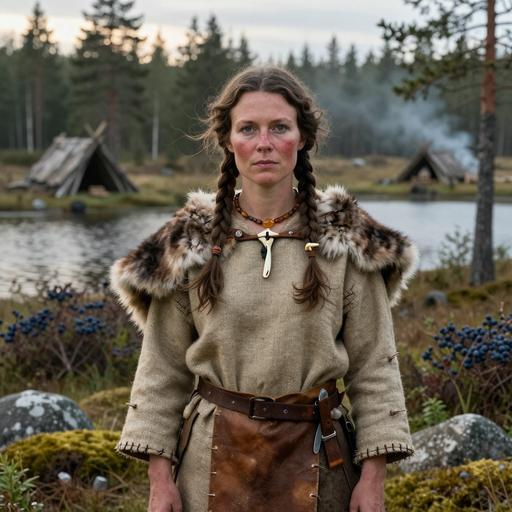
The Swedish Rossberga Hunter-Gatherers of the Pre-Nordic era represent a fascinating chapter in the prehistoric narrative of what is now modern-day Sweden. Situated in the broader context of Northern Europe's Mesolithic period, roughly between 10,000 to 4,000 BCE, the Rossberga hunter-gatherers exemplify a lifestyle inextricably linked to the rhythms of nature and the challenges of a post-glacial landscape.
Geographic and Environmental Context
The region known as Rossberga is characterized by a mix of dense forests, sprawling lakes, and riverine systems, with a climate transitioning from the harshness of the Late Pleistocene to a more temperate, although still cool, Holocene environment. As the ice sheets receded, Sweden’s terrain became defined by its abundant waterways and growing verdant landscapes. This era witnessed rising sea levels and the development of complex ecosystems that supported diverse flora and fauna, integral to the Rossberga diet and culture.
Sociocultural Framework
The Rossberga communities were small, cohesive groups likely organized around extended family structures. These groups were semi-nomadic, migrating seasonally to exploit the diverse resources available in different regions. The social structure was relatively egalitarian, with roles primarily determined by skill and age rather than hereditary status or possessions, common in later, more settled societies.
Subsistence and Economy
As hunter-gatherers, the Rossberga people relied on a wide-ranging diet drawn from their environment. Hunting was a vital component; forest game such as elk, deer, and wild boar were primary targets, skillfully hunted with tools crafted from stone, bone, and wood. The proximity to water bodies allowed for an equally significant focus on fishing, with species like salmon and trout forming dietary staples.
Gathering complemented hunting and fishing activities; seasonal foraging for berries, nuts, roots, and edible plants provided essential nutrients and diversity to their meals. The Rossberga utilized intricate knowledge of local plant life, not only for sustenance but for medicinal purposes and crafting materials.
Tools and Technology
The Rossberga toolkit was sophisticated for its time, reflecting a deep understanding of available resources. Flint and other stone types were expertly knapped into a variety of implements, including arrowheads, scrapers, and knives. The use of bone and antler also became prominent, particularly in the creation of harpoons and fishing hooks.
Innovations such as the bow and arrow offered increased efficiency in hunting, while carefully constructed dugout canoes enabled transportation and fishing in Sweden’s many waterways. Evidence suggests the use of hearths and controlled fire, which hints at communal living spaces structured around shared activities like cooking and crafting.
Art and Symbolism
While not as prominently documented as later European prehistoric cultures, the Rossberga people expressed themselves through art, likely serving both functional and ritualistic purposes. Carvings, engravings on bone and stone, and possibly body ornamentation through clothing or tattoos might have played roles in individual and group identity, storytelling, or spiritual beliefs.
Portable art, such as carved figurines and decorated tools, shed light on their aesthetics and symbolic thinking. These objects often depicted animals and natural motifs, which may have held totemic or shamanistic significance, reflecting a worldview that revered and mythologized the natural world.
Interaction and Legacy
Although isolated from other major prehistoric cultures, the Rossberga people likely interacted with neighboring groups through trade networks or shared seasonal territories. Such interactions would have facilitated the exchange of goods, ideas, and technologies, progressively shaping their society.
With the onset of the Neolithic era, marked by the advent of agriculture and settled life, the Rossberga hunter-gatherers—like many such communities—gradually integrated new practices into their way of life, leading to transformational cultural shifts. The legacy of these early inhabitants is a testimony to human adaptability and resilience, serving as a foundation for the subsequent Nordic cultures that eventually evolved in the region.
Their existence is chronicled through a combination of archaeological findings, such as tool remnants, settlement traces, and analysis of environmental changes, unraveling the complex tapestry of early human life in Northern Europe.