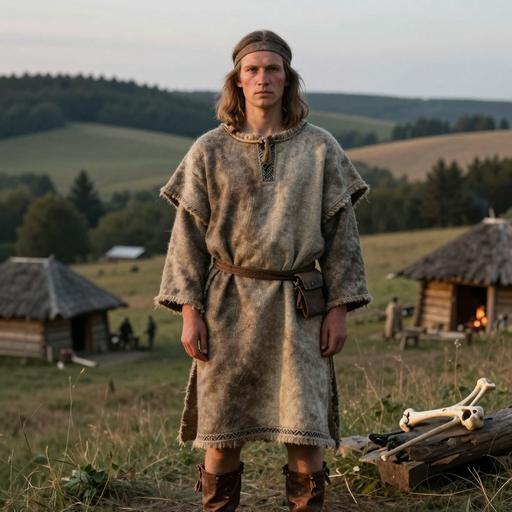
The Corded Ware Culture (CWC), which spanned approximately 2900 to 2350 BCE, represents a significant prehistoric European phenomenon, characterized by its distinctive pottery and burial practices. In Southeast Poland, this culture offers a fascinating window into the lives of early Indo-European communities.
Geographic Context:
Southeast Poland, during the Corded Ware period, was a region of diverse landscapes, including rolling plains, river valleys, and forested areas. This variety of environments supported a range of subsistence activities and likely contributed to the cultural development specific to the area.
Origins and Spread:
The Corded Ware Culture is thought to have originated in the Eurasian steppes and spread across much of Europe, reaching Southeast Poland by the early 3rd millennium BCE. It is often associated with the spread of Indo-European languages, although debates continue about the exact routes and mechanisms of this dissemination.
Material Culture:
- Pottery: The hallmark of the Corded Ware Culture, particularly in Southeast Poland, is its distinctive pottery. Vessels were often decorated with cord impressions, a technique involving pressing cords into wet clay to produce decorative patterns. These pots were typically beaker-shaped and played a significant role in social and ritual contexts.
- Stone Tools: While largely utilitarian, the stone tools of the CWC were crafted with skill, including axes and arrowheads, suggesting both everyday use and possible warfare activities.
Burial Practices:
Burials within the Corded Ware Culture offer deep insights into their social structure and belief systems. In Southeast Poland, individuals were often interred in single graves, usually positioned in a flexed posture. Grave goods typically included pottery, ornaments, and tools, reflecting the individual's status and societal role. Male burials were typically more elaborate, indicating a possibly patriarchal society.
Settlement Patterns:
The Corded Ware people in Southeast Poland were likely semi-nomadic, with settlements that combined some fixed habitation sites with seasonal migration. Archaeological findings suggest they practiced a mixed economy of agriculture, pastoralism, and hunting-gathering. Cereal cultivation alongside herding of cattle, sheep, and goats provided a stable economic base.
Social Organization:
The Corded Ware society in Southeast Poland was likely organized into small, kin-based groups. The presence of prestige goods and differences in burial wealth suggest a level of social stratification. Traditional views have depicted the culture as patriarchal, with male dominance in social hierarchies, although this is under continuous revision with new evidence.
Cultural and Linguistic Implications:
Linguistically, the Corded Ware Culture is often linked with the spread of Proto-Indo-European languages across Europe. This has significant implications for understanding the linguistic and genetic heritage of modern European populations. Cultural practices, such as the use of horse-drawn wagons, also underscore the Indo-European connections.
Interaction with Neighboring Cultures:
The Corded Ware communities interacted with neighboring cultures such as the Funnelbeaker and Globular Amphora cultures. These interactions likely involved both conflict and cultural exchange, influencing technological, social, and ritual practices in Southeast Poland. The transmission of ideas and goods across these cultural boundaries was an essential dynamic of this period.
In conclusion, the Corded Ware Culture in Southeast Poland is a fascinating convergence of traditional practices and innovations shaping the prehistoric cultural landscape of Europe. Its legacy is profound, influencing subsequent cultural developments and the historical trajectory of the Indo-European speaking peoples.