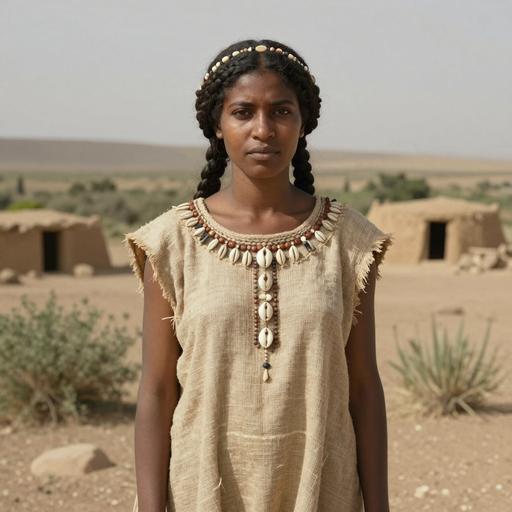
The Middle Neolithic period in North Africa, particularly concerning Berber cultures, represents a transformative era in the region's history, dating approximately from 5000 to 3000 BCE. This period is characterized by significant advancements in human settlement, subsistence practices, and cultural development, reflecting broader patterns seen across the Neolithic world.
Geographic and Environmental Context
The North African region during the Middle Neolithic experienced significant climatic and environmental changes. The Sahara Desert, which is now one of the most inhospitable environments on Earth, was much more hospitable during the early Holocene. Increased rainfall transformed much of the Sahara into savannahs, grasslands, and even lakes and rivers, creating a \Green Sahara" that was conducive to human habitation and the development of complex societies.
Societal and Cultural Development
Settlements and Architecture
Middle Neolithic communities in North Africa transitioned from nomadic hunter-gatherer bands to more sedentary lifestyles. This led to the establishment of more permanent settlements. Evidence of such settlements includes remains of stone structures, huts, and other forms of dwellings. These structures suggest a move toward community-based living and greater social organization.
Subsistence and Economy
The Middle Neolithic was marked by the development of agriculture and animal husbandry, although hunting and gathering still played a significant role. People cultivated crops such as barley and wheat and domesticated animals like sheep, goats, and cattle. The cultivation of crops and domestication of animals indicate an economic shift towards a more reliable and sustainable food supply, which supported larger populations and social stratification.
Tool and Pottery Innovations
Technological advancements during this period included the refinement of stone tools, which became more specialized and efficient. Additionally, pottery production became a hallmark of Neolithic cultures, with North African communities developing distinct styles and techniques. Pottery was used not only for practical purposes, such as storage and cooking, but also had cultural and symbolic significance. Decorative patterns are found on many pottery pieces from this era, signifying an evolving aesthetic and possibly conveying cultural narratives or status.
Art and Symbolism
Artistic expression flourished during the Middle Neolithic, as evidenced by rock art found throughout North Africa. These artworks often depict pastoral scenes, wildlife, and human activities, offering insights into the daily lives, spiritual beliefs, and social structures of Neolithic peoples. Berber culture at this time likely had rich traditions of storytelling, mythology, and possibly shamanistic practices, as suggested by ceremonial artifacts and burial sites.
Social Structure
As communities grew larger and more complex, social hierarchies began to emerge. Evidence of trade and interaction between different communities indicates the existence of regional social networks and possibly proto-political structures. These developments suggest that early forms of leadership, social stratification, and communal cooperation were being established.
Linguistic and Genetic Heritage
The Middle Neolithic period is significant for the Berber identity, as it represents a foundational era for the Berber-speaking peoples of North Africa. Linguistic evidence suggests that proto-Berber languages began to differentiate around this time. Moreover, genetic studies indicate continuity between present-day Berber populations and ancient North African inhabitants, providing a deep historical connection to the Neolithic peoples of the region.
Conclusion
The Middle Neolithic period in North Africa was a time of profound transition and cultural development, setting the stage for the emergence of complex societies and laying the foundations for later civilizations. The Berber culture, in particular, both shaped and was shaped by these transformations, leaving a lasting legacy evident in the cultural, linguistic, and genetic heritage of the region. This era reflects broader Neolithic trends while also illustrating the unique adaptations and innovations of North African peoples in response to their changing environment."