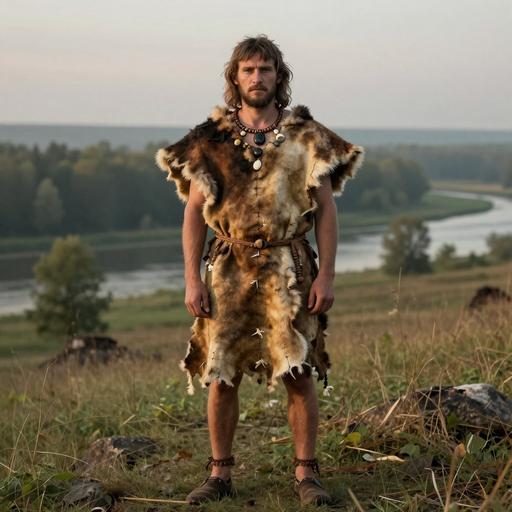
The Mesolithic era in Ukraine, part of the broader Mesolithic period across Europe, represents a fascinating transitional phase between the Paleolithic and Neolithic ages. This era, approximately dated between 10,000 and 5,500 BCE, marks a period of significant environmental, technological, and cultural transformations following the last Ice Age. While much of Europe was witnessing the emergence of agriculture during the Neolithic, Mesolithic Ukraine remained predominantly hunter-gatherer, shaped by its unique geographical and ecological conditions.
Environmental Context
The Mesolithic era in Ukraine occurred during the Holocene epoch, a time of climatic warming and stabilization after the harsh conditions of the last glacial maximum. This climatic shift led to the retreat of ice sheets and the expansion of forests and grasslands, significantly transforming the Ukrainian landscape. The environment included a rich mosaic of steppe, forest-steppe, and deciduous forests, providing diverse habitats for various plant and animal species. These environmental changes had a profound impact on the diets and lifestyles of the Mesolithic peoples of Ukraine.
Lifestyle and Subsistence
The Mesolithic populations in Ukraine were highly mobile, often moving in response to the seasonal availability of resources. Their subsistence was primarily based on hunting, fishing, and gathering. The fauna of the time featured a mix of large game such as aurochs and red deer, smaller mammals like hare and beaver, and rich aquatic life in the numerous rivers and wetlands, including fish and mollusks.
Advanced hunting techniques evolved during this era, evidenced by refined lithic technologies. Microlithic tools, often used as barbs in composite tools such as arrows and spears, became prevalent. The invention and use of the bow and arrow greatly enhanced hunting efficiency. Evidence of dugouts and fishing gear suggest a reliance on both terrestrial and aquatic resources.
Settlements and Social Organization
While largely nomadic, Mesolithic communities in Ukraine established semi-permanent settlements, particularly along riverbanks and near other abundant natural resources. Seasonal camps likely consisted of simple structures made from wood, bone, and skins. These sites were strategic, often chosen for their proximity to migratory routes of game and water sources.
The social structure of Mesolithic groups was probably based around small family units or bands, though the exact nature of their social organization remains speculative. Evidence of specialized roles, such as tool-making, indicates a division of labor. The complexity of these societies likely varied, influenced by the richness of local resources and environmental pressures.
Material Culture and Art
The material culture of Mesolithic Ukraine is characterized by the development and use of microliths, alongside more traditional stone tools such as scrapers and burins. Bone and antler were also employed to create various implements and ornaments. The period is marked by a gradual increase in the variety of tools, indicating specialization and adaptation to specific tasks.
Art in the Mesolithic era is less apparent than in the preceding Paleolithic, but it did exist in the form of personal adornment and possibly abstract motifs engraved on tools and weapons. Decorative elements such as beads and pendants crafted from bone, teeth, and shells have been found, suggesting a continuing tradition of personal expression and aesthetic sensibility.
Transition to the Neolithic
The Mesolithic period in Ukraine sets the stage for the gradual transition to the Neolithic era. During this time, influences from neighboring regions began to permeate, including early agricultural practices, though full sedentism and agriculture did not appear until later. Contact with early farming communities from the Balkans and Central Europe likely introduced new concepts, eventually leading to the development of mixed economies and increased social complexity characteristic of the Neolithic.
In summary, the Mesolithic era of Ukraine is a period marked by adaptability and transition. The hunter-gatherer communities of this time skillfully navigated changing climates, environments, and technological innovations, laying the foundation for the eventual shift toward more sedentary and agrarian lifestyles. Their legacy offers critical insights into human resilience and adaptability during a time of profound change.