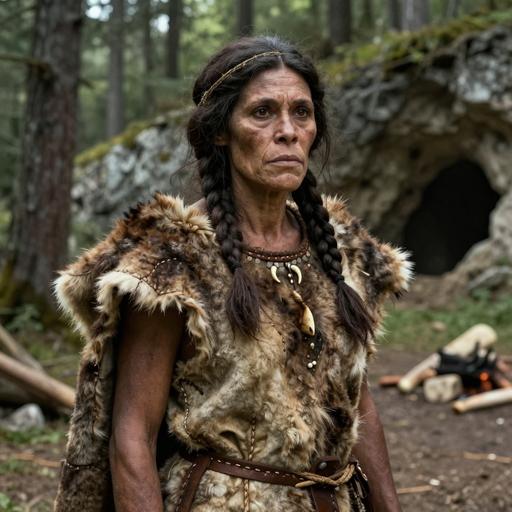
The Vindija G1 Neanderthals refer to a group of Neanderthals whose remains were discovered in the Vindija Cave, located in northern Croatia. This site has provided significant insight into the lifestyle, environment, and genetic makeup of Neanderthals during the Upper Paleolithic period. Here’s an extensive description of this era and its relevance:
Archaeological Context
Location and Discovery:
Vindija Cave is situated in the Hrvatsko Zagorje region, near the town of Varaždin, Croatia. This site was discovered in the late 19th century, but it gained prominence in the 1970s when intensive excavations led by Croatian archaeologists unearthed numerous Neanderthal fossils and cultural artifacts.
Stratigraphy and Dating:
The cave contains multiple stratigraphic layers, with the G1 layer being particularly significant for the study of late Neanderthal populations. Radiocarbon dating suggests that the Vindija G1 Neanderthals lived approximately 40,000 to 32,000 years ago. This places them among the last known Neanderthals, contemporaneous with early modern humans in Europe.
Cultural and Material Aspects
Tools and Technology:
The Vindija Neanderthals used a variety of Mousterian tools, characterized by flake-based technology. The toolkit includes scrapers, points, and knives, often created using the Levallois technique. Evidence suggests they adapted and possibly even exchanged tool-making techniques with anatomically modern humans during periods of coexistence.
Subsistence and Diet:
Like other Neanderthals, the Vindija G1 group was primarily hunter-gatherers. Faunal remains indicate they hunted large mammals such as deer, horses, and bison. Isotopic analysis of their bones supports a diet heavily reliant on meat, though inclusion of plant materials cannot be ruled out.
Physical and Genetic Attributes
Anatomy:
Fossils from the Vindija Cave reveal typical Neanderthal physical characteristics—robust skeletal features, large cranial capacity, and pronounced brow ridges. However, some Vindija specimens exhibit traits that suggest potential interbreeding with modern humans, such as features less robust than classic Neanderthals.
Genetic Insights:
The Vindija Neanderthals have been pivotal in genetic studies of ancient populations. DNA extracted from fossils at this site was sequenced and contributed to the draft Neanderthal genome published in 2010. These studies highlighted the genetic diversity among Neanderthal populations and confirmed gene flow between Neanderthals and modern humans, with parts of their DNA present in non-African modern human populations.
Interaction and Extinction
Interaction with Modern Humans:
The Vindija Neanderthals lived during a period of significant geographic and cultural overlap with early modern humans. Evidence points to both competitive and cooperative interactions. The cultural artifacts and genetic intermixing suggest a complex relationship with these new neighbors.
Extinction:
While the precise reasons for the Neanderthal extinction remain debated, possible factors include climate change, competition with modern humans, and disease. The Vindija Neanderthal population's decline coincides with broader patterns observed across Europe, marking the end of the Neanderthal lineage.
Significance
The Vindija G1 Neanderthals provide crucial insights into the adaptive strategies and genetic legacy of Neanderthals, emphasizing their complexity as a species capable of sophisticated behavior and interaction with modern humans. The site continues to offer valuable data, contributing to our broader understanding of human evolution and the intricate dynamics between co-existing hominin species during the Late Pleistocene.