Zum Hauptinhalt springen
mtDNA · Mütterliche Linie

B5B2A

mtDNA Haplogroup B5B2A

Ein Referenzprofil für einen Abstammungszweig. Gemeinsame Haplogruppen begründen weder eine familiäre Beziehung noch eine kulturelle Identität.

Referenzprofil

Hintergrund des Zweigs

Historischer Kontext für den mtDNA-Abstammungszweig B5B2A

Origins and Evolution

mtDNA haplogroup B5B2A is a downstream branch of B5B2, itself part of the broader B5/B section of mitochondrial haplogroup B. Based on its phylogenetic position and mutation accumulation relative to B5B2, B5B2A probably diversified in East–Southeast Asia during the early Holocene (around 10 kya). This time depth is consistent with post-glacial demographic expansions, coastal resource exploitation, and the beginning of Neolithic and pre-Neolithic population structure changes in mainland and island Southeast Asia.

Molecular-clock estimates for mtDNA B lineages place many subclades' origins in the Late Pleistocene to Early Holocene; B5B2A fits within the early Holocene window, consistent with a population that expanded along coastal and riverine corridors and subsequently participated in localized and long-range maritime movements.

Subclades (if applicable)

As a named subclade (B5B2A) of B5B2, the internal diversity recorded so far appears limited in published datasets and in the user's database (two ancient occurrences reported). This suggests either a relatively narrow founder expansion for the named branch or undersampling of modern and ancient populations. Additional sequencing and full mitogenome resolution would be required to resolve further downstream substructure and to identify any geographically restricted subbranches.

Geographical Distribution

B5B2A is concentrated in East and Southeast Asia with spillover into island Southeast Asia and some occurrences in Near Oceania tied to Holocene maritime contacts. Modern and ancient sample records indicate presence among:

  • Han and other East Asian groups (China, Korea, Japan) at low-to-moderate frequencies in some regions;
  • Multiple mainland Southeast Asian populations (Vietnamese, Thai, Burmese) and Malay groups;
  • Indigenous Taiwanese and several Austronesian-speaking communities in Island Southeast Asia; and
  • Low-frequency occurrences in parts of Near Oceania and selected Pacific island populations, likely reflecting later-stage maritime dispersals.

The pattern of distribution is consistent with a lineage that spread locally within mainland East–Southeast Asia and was later carried into island regions by maritime movements, including those connected to the Austronesian expansion and other Holocene coastal dispersals.

Historical and Cultural Significance

Although not as widely discussed as some Austronesian-associated mtDNA markers (for example B4a1a), B5B2A contributes to the maternal genetic signature of populations involved in East–Southeast Asian coastal and island prehistory. Its presence in Indigenous Taiwanese and some Island Southeast Asian and Pacific communities ties it to the demographic processes that accompanied seafaring, trade, and the spread of languages and cultures in the Holocene.

The haplogroup's archaeological visibility (two aDNA samples reported in the available database) confirms it existed in past populations and can help trace population continuity or movement when combined with other mtDNA and autosomal evidence. In cultural terms, B5B2A likely reflects maternal lineages of coastal foragers, early farmers, and later maritime-expanding groups rather than being diagnostic of a single archaeological culture.

Conclusion

mtDNA B5B2A is a regionally informative maternal lineage that likely arose in East–Southeast Asia around the early Holocene and subsequently participated in both local expansions and maritime dispersals into island regions. Current data point to a distribution concentrated in East and Southeast Asia with low-frequency extensions into Near Oceania; however, limited sampling and sparse ancient occurrences mean its full diversity and prehistoric dynamics will become clearer as more complete mitogenomes and ancient samples are analyzed.

Wichtige Punkte

  • Origins and Evolution
  • Subclades (if applicable)
  • Geographical Distribution
  • Historical and Cultural Significance
  • Conclusion
Referenzprofil

Baum und Verwandtschaft

Phylogenetischer Kontext und Subkladen

Entwicklungsweg

Folgen Sie den erfassten übergeordneten Zweigen bis B5B2A. Die Daten sind Schätzungen und können sich ändern, wenn Referenzdaten überarbeitet werden.

Schritte Haplogruppe Altersschätzung Archäologische Epoche Vergangene Zeit Unmittelbare Nachkommen Getestete moderne Nachkommen Antike Verknüpfungen
1 B5B2A Aktuell ~10,000 years ago Neolithic 10,000 Jahre 1 0 4
2 B5B2 ~12,000 years ago Neolithic 12,000 Jahre 1 3 0
3 B5B ~12,000 years ago Neolithic 12,000 Jahre 5 32 6
4 B5 ~18,000 years ago Mesolithic 18,000 Jahre 3 88 2
5 B4'5 ~40,000 years ago Paleolithic 40,000 Jahre 2 1,432 0
6 RA - - - 3 1,452 0
7 R ~55,000 years ago Paleolithic 55,000 Jahre 17 22,830 57
8 NA - - - 1 22,830 0
9 N ~60,000 years ago Paleolithic 60,000 Jahre 16 26,150 13
10 L3 ~70,000 years ago Paleolithic 70,000 Jahre 7 30,162 6
11 L3'4 - - - 2 30,212 0
12 L3'4'6 - - - 2 30,216 0
13 L2'3'4'6 - - - 2 31,333 0
14 L2'3'4'5'6'7 - - - 2 31,349 0
15 L1'2'3'4'5'6'7 - - - 2 31,852 0
16 L ~160,000 years ago Paleolithic 160,000 Jahre 2 32,236 5
Referenzprofil

Verbreitung weltweit

Geografische Verbreitung und moderne Präsenz

Erfasster Ursprung

East and Southeast Asia

Moderne Verbreitung

The populations where mtDNA haplogroup B5B2A is found include:

  1. Han Chinese and other East Asian populations (China, Korea, Japan)
  2. Southeast Asian groups (Vietnamese, Thai, Burmese, Malay peoples, some Filipino groups)
  3. Indigenous Taiwanese (Austronesian-speaking groups)
  4. Austronesian-speaking Pacific Islanders (selected Polynesians and Micronesians via maritime dispersals)
  5. Island Southeast Asian populations (Borneo, Sulawesi, Lesser Sunda islands)
  6. Coastal and riverine communities involved in Holocene maritime and coastal dispersals
  7. Mainland hunter–gatherer and early farming populations in parts of Indochina
  8. Low-frequency occurrences in parts of Near Oceania tied to later contact
Historischer Kontext

Ein Zweig durch die Zeit

Geschätzte Entstehung in einer breiten historischen Zeitleiste. Zeitmarken liefern Kontext und implizieren keine Verbindung zu bestimmten Kulturen.

  1. ~10k Jahre zurück

    Neolithische Revolution

    Beginn der Landwirtschaft und feste Siedlungen

  2. ~10k Jahre zurück

    Haplogruppe B5B2A

    Geschätzte Entstehung dieses mtDNA-Zweigs; Daten und Orte sind Referenzschätzungen.

    Dieser Zweig
  3. ~5k Jahre zurück

    Bronzezeit

    Metallverarbeitung, Schrift und frühe Zivilisationen

  4. ~3k Jahre zurück

    Eisenzeit

    Eisenwerkzeuge und ausgedehnte Handelsnetze

  5. ~2.5k Jahre zurück

    Klassische Antike

    Blüte griechischer und römischer Kulturen

  6. Gegenwart

    Gegenwart

    Moderne Zeit

Referenzprofil

Archäologischer Kontext

Erfasste archäologische Zuordnungen für den mtDNA-Zweig B5B2A

Erfasste Zuordnungen

Diese Bezeichnungen beschreiben archäologische Kontexte erfasster Referenzproben mit Bezug zu B5B2A. Eine Zuordnung bedeutet nicht, dass alle Träger einer Kultur angehörten oder einer bestimmten Migrationsroute folgten.

China_NorthernChina_Xingfulindai Coastal Neolithic Early Medieval Mongolian Kazakh Iron Age Khovsgol Culture Magyar Commoner Culture Mesolithic British Slab Grave Culture Ukraine_LateMedieval Xiongnu Xiongnu-Xianbei
Kulturzuordnungen basieren auf dem archäologischen Kontext antiker DNA-Proben und können regionale Verknüpfungen in bestimmten Zeiträumen widerspiegeln.
Referenzprofil

Probencatalog

2 direkte Träger und 2 Subkladen-Träger der Haplogruppe B5B2A

4 angezeigt · 4 passende Proben

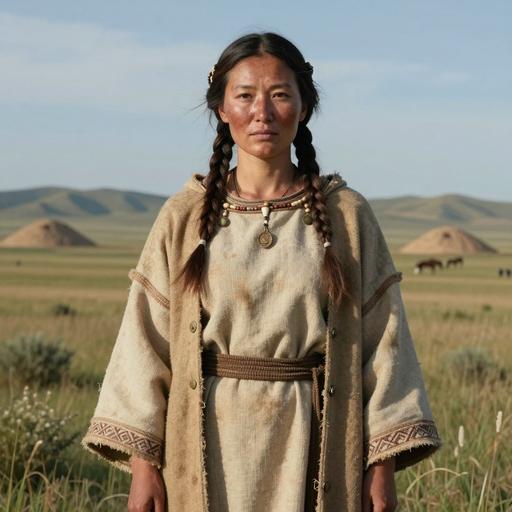
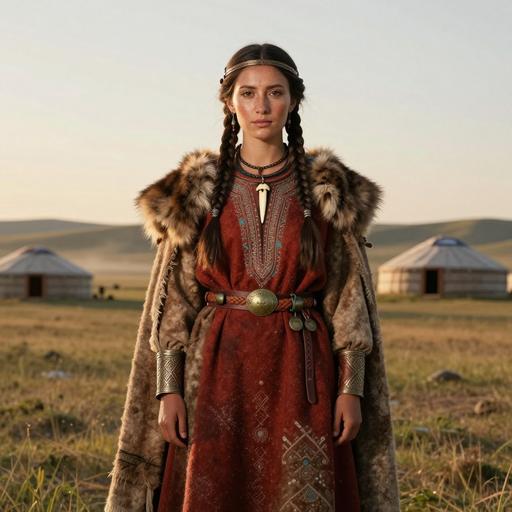
Porträts sind KI-generierte Illustrationen. Probenbezeichnungen und Zugangs-IDs identifizieren die Referenzdatensätze.

Porträt Probe Land Epoche Datum Kultur mtDNA Übereinstimmung
KI-generiertes illustratives Porträt von IA individual, Central Kazakhstan. Berel Necropolis. object 80A/80E, Kazakhstan (400 BCE-100 CE)
Proben-ID: BRE003
Kazakhstan Iron Age Kazakhstan 100 BCE - 200 CE Kazakh Iron Age B5b2a Direkt
KI-generiertes illustratives Porträt von Arkhangai Early Medieval individual, Arkhangai. Olon Dov, Mongolia (700-1,050 CE)
Proben-ID: OLN011
Mongolia Mongolia Arkhangai EarlyMedieval 700-1000 CE Early Medieval Mongolian B5b2a Direkt
KI-generiertes illustratives Porträt von IA individual, Central Kazakhstan. Berel Necropolis. object 105, Kazakhstan (35 BCE-125 CE)
Proben-ID: BRE009
Kazakhstan Iron Age Kazakhstan 50 BCE - 150 CE Kazakh Iron Age B5b2a2 Subklade
KI-generiertes illustratives Porträt von Arkhangai Xiongnu Period Early Medieval-3 individual, Arkhangai. Tamiryn Ulaan Khoshuu. Burkhan Tolgoi, Mongolia (150 BCE-450 CE)
Proben-ID: TUK002
Mongolia Early Medieval Xiongnu 150 BCE - 450 CE Xiongnu B5b2a2 Subklade
MATERNAL LINEAGE · ANCIENT DNA

Ancient lineage evidence map

Follow parent clades toward this branch and explore where ancient carriers were found.

Loading ancient observations…

Markers are archaeological find locations. A dashed connector is an uncertain, proposed geographic transition between consecutive branches supported by multiple dated observations; it is not an exact travel route, birthplace or proof of direct descent. Parent-clade samples may belong to other descendant branches. Gaps remain where evidence is insufficient. Sample dates differ from haplogroup formation dates.

Referenzprofil

Trägerverteilungskarte

Geografische Verteilung von 4 antiken DNA-Proben (direkte und Subkladen-Träger von B5B2A)

Direkter Träger Subkladen-Träger
Zeitraumfilter
Alle Zeiträume
Alle Proben werden angezeigt
Referenzprofil

Zeitliche Verteilung

Verteilung der Träger über archäologische Epochen

Referenzprofil

Geografische Verteilung

Anzahlen nach erfasstem Probenland. Sie spiegeln die verfügbare Referenzauswahl wider, nicht Bevölkerungshäufigkeiten.

Referenzprofil

Verteilung Land × Epoche

Vergleichen Sie erfasste Probenanzahlen nach Ländern und archäologischen Epochen. Wählen Sie eine belegte Zelle, um eine Probe anzusehen.

Daten

Daten und Herkunft

Quellenangaben und Datenqualität

Zuletzt aktualisiert 2026-02-16
Konfidenzwert 50/100
Abdeckung Low

Datenquelle

Klassifikation, geschätzte Daten und geografischer Kontext spiegeln die erfassten Referenzdaten wider und können sich bei überarbeiteten Belegen ändern. Die Probenabdeckung ist ungleichmäßig; erfasste Orte und archäologische Zuordnungen begründen weder persönliche Herkunft noch kulturelle Identität.