


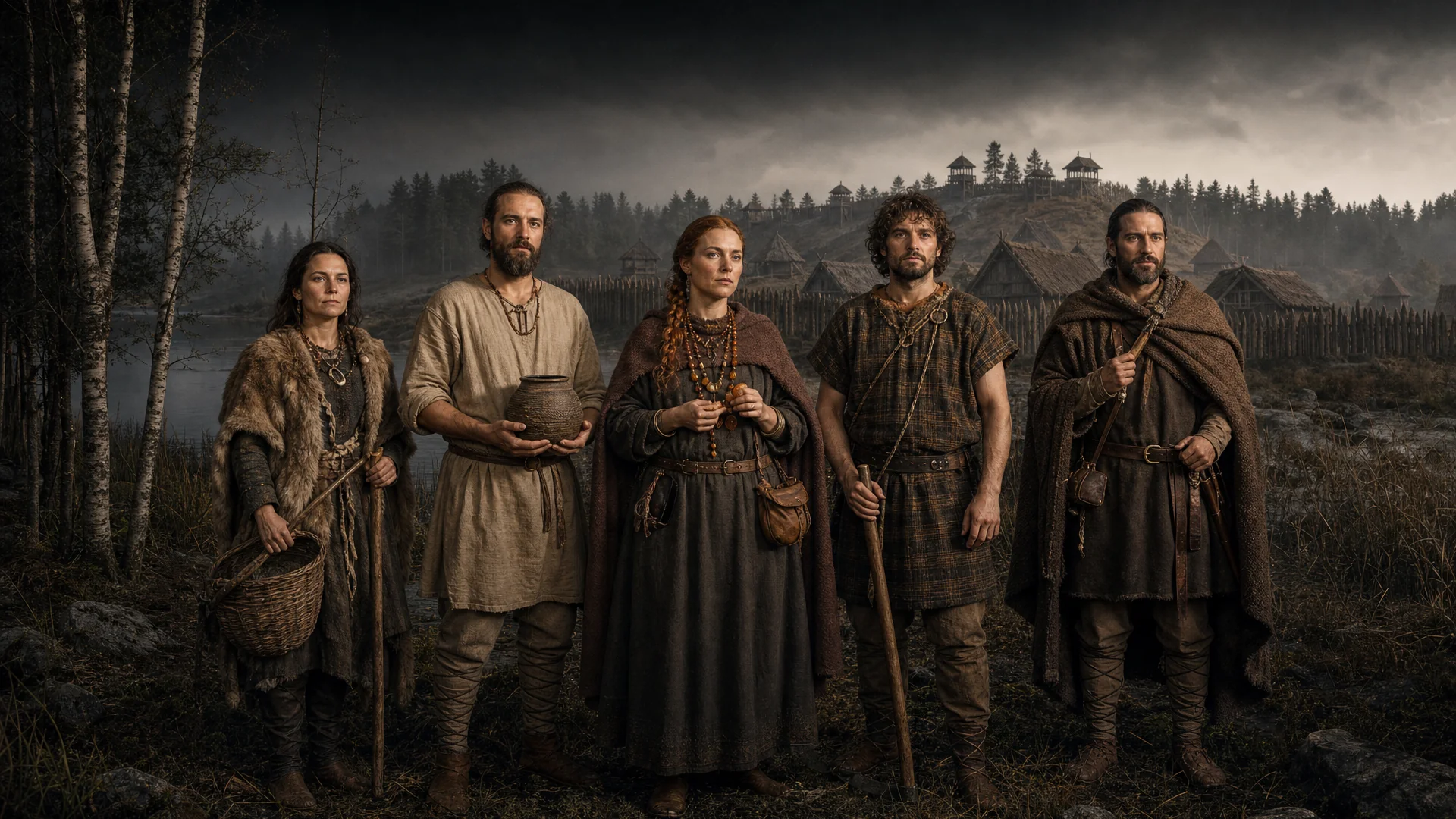
Ancient Eastern Europe and the Baltic
Historical Timeline
Analyzing your genetic similarity to ancient Eastern European and Baltic reference samples...
Preparing your genetic-similarity report
The Baltic and eastern forest zone kept a deep forager signal long after farming reached the rest of Europe.
7Periods scored
388Dated matches
36,826Years spanned by your matches
Copper AgeStrongest similarity (33/100)
Periods and individuals through time
Bands show the periods scored in this report, with your similarity score for each. Portraits mark matched ancient individuals at their estimated date; the crown marks your closest match. Select a portrait to see details. The tables below carry the same information as text.
Your matches in chronological order
Period similarity scores
Fit-weighted affinity to each period's reference populations on a 0 to 100 scale. Values are similarity scores and do not add up to your ancestry.
| Period | Dates | Similarity | About this period |
|---|---|---|---|
| Mesolithic | 10,000 BCE to 5,000 BCE | 24/100 | Forest-zone and Baltic foraging communities. |
| Neolithic | 5,000 BCE to 3,000 BCE | 0/100 | Comb Ware and early farming communities. |
| Copper Age | 3,000 BCE to 2,200 BCE | 33/100 | Corded Ware communities of the eastern plain. |
| Bronze Age | 2,200 BCE to 800 BCE | 9/100 | Bronze Age forest and steppe-edge societies. |
| Iron Age | 800 BCE to 400 CE | 1/100 | Iron Age Baltic and forest-zone populations. |
| Migration Period | 400 CE to 800 CE | 9/100 | Migration Period and early Slavic communities. |
| Medieval | 800 CE to 1,500 CE | 7/100 | Medieval Baltic and Rus communities. |