Mesolithic
10,000 BCE to 5,500 BCE
Hunter-gatherer communities of the Atlantic and Mediterranean coasts.
Explore this period
Overview
Geometric Mesolithic Portugal describes a Mesolithic phase in which stone tool technologies—especially geometric microliths—help define archaeological signatures. This period predates Neolithic farming in much of the region and is characterized by flexible foraging strategies across varied Portuguese landscapes.
Region & Environment
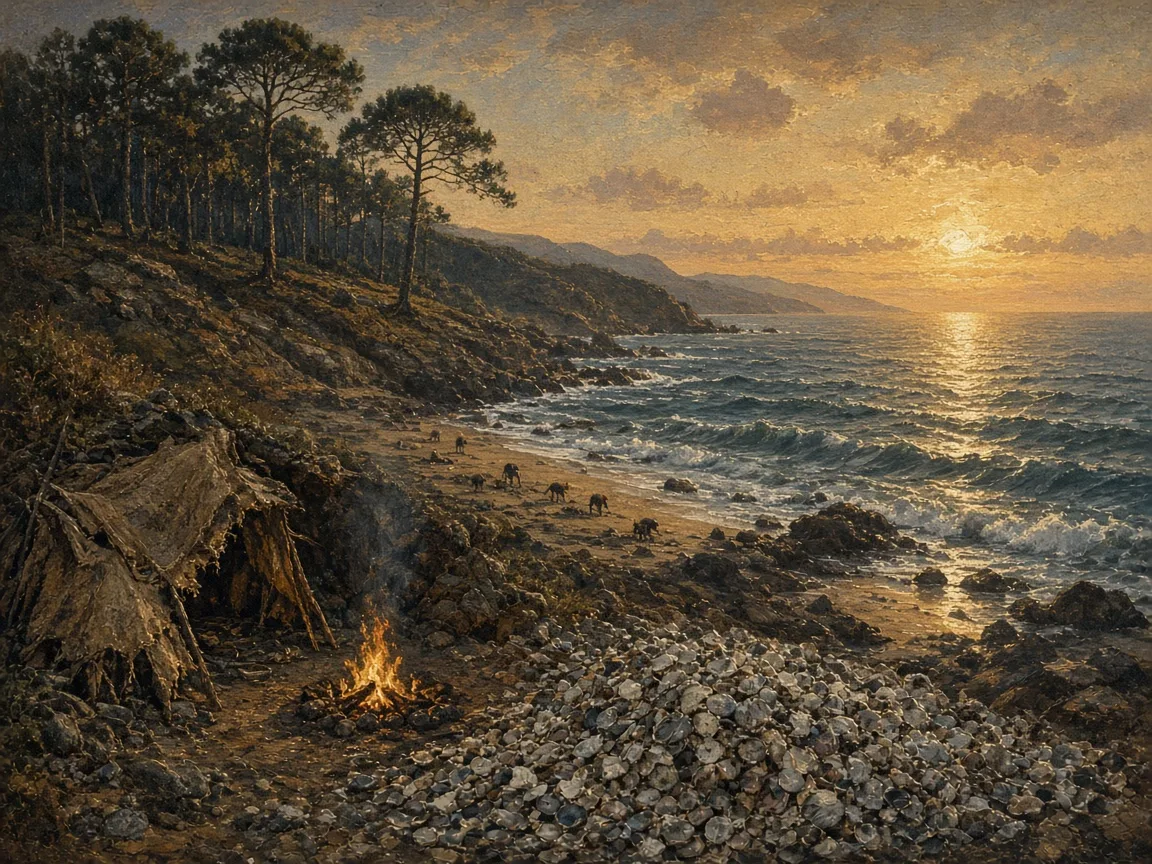
Portugal’s Atlantic coastlines, estuaries, and river systems provided rich resources, including fish and shellfish, while inland areas offered hunting grounds and plant resources. Over time, post-glacial environmental changes shaped habitats and the availability of different prey and gathering opportunities. Communities likely adjusted mobility and seasonal rounds accordingly.
Historical Context
Chronologically, 8500–5500 BCE falls within the Mesolithic of southwestern Europe, when hunter-gatherers used microlith-based stone toolkits adapted for composite weapons and tools. During these centuries, long-term shifts toward warmer and more stable conditions would have affected resource distribution. The archaeological record preserves technological and site-pattern changes rather than written accounts.
Populations & Lifeways
People likely lived in small groups with flexible mobility, visiting locations repeatedly across seasons. Diets would have included wild plants, hunted animals, and aquatic resources in coastal and river settings. Toolkits imply work in cutting, scraping, and processing materials for both hunting and daily tasks.
Archaeology & Material Culture
The most recognizable feature is the geometric microlith tradition—small, shaped stone blades used within composite tools. Lithic assemblages also include broader cutting and scraping implements, and evidence for hearths, activity areas, and sometimes repeated use of sites. Organic materials are rarely preserved, but lithic technologies provide strong evidence of specialized tool manufacture.
Culture & Society
Shared geometric microlith styles suggest communication and learning networks among groups, even without permanent settlements. Social structure is not directly measurable, but patterned technologies and repeated use of particular landscapes indicate common cultural choices and knowledge transmission.
Legacy & Transition
As later Neolithic lifeways spread into Iberia, Mesolithic tool traditions were gradually replaced or transformed. The Geometric Mesolithic period contributes to understanding how local foraging adaptations and technological expertise preceded and shaped the archaeological transition to farming communities.