Preparando el informe

Cargando la información y las referencias disponibles

Consultando el registro arqueológico...

Recopilando registros antiguos

Saltar al contenido principal
Aegean Civilizations: Palaces & Seafaring
Cultura destacada

Aegean Civilizations: Palaces & Seafaring

From Neolithic caves to Mycenaean palaces — archaeology meets ancient DNA across the Aegean

6434 CE - 9501600 BCE
Greece, western Turkey (Aegean)
2 Muestras antiguas
Desplázate para empezar
Capítulo I

La historia

Comprender la cultura Aegean Civilizations: Palaces & Seafaring

Archaeological and genetic evidence from 53 Aegean samples (6434–950 BCE) traces continuity from Neolithic farmers through Minoan and Mycenaean eras. Sites from Crete to mainland Greece and western Anatolia reveal a layered heritage shaped by migration, maritime trade, and local continuity.

Time Period

6434–950 BCE (notable Mycenaean c.1600–1100 BCE)

Region

Greece, western Turkey (Aegean)

Common Y-DNA

J (4), G (4)

Common mtDNA

K (8), J (7), H (6), U (5), HV (3)

Capítulo II

Cronología

Momentos clave de la historia de esta cultura

6434 BCE

Earliest sampled individuals

Oldest dated human remains in the series, marking Neolithic farmer presence in the Aegean region.

3000 BCE

Early Bronze Age developments

Emergence of regional Bronze Age traditions, increasing trade and craft specialization across islands and mainland.

1600 BCE

Palatial florescence

Palaces at sites such as Pylos and Crete reach political and economic prominence in the Late Bronze Age.

1200 BCE

Late Bronze Age transitions

Regional upheavals reshape settlement and political landscapes; cultural networks persist amid change.

Capítulo III

Origins & Emergence

The Aegean record opens in deep time: radiocarbon-dated human remains and settlements reach back to the 7th millennium BCE, and the genetic series here spans from 6434 BCE into the first millennium BCE. Archaeological sites such as Alepotrypa Cave (Diros), Early Neolithic settlements on Crete and mainland tell of early farming lifeways introduced from Anatolia and further west. Over millennia those farming communities accreted cultural innovations — maritime exchange, specialized craft, and social complexity — culminating in the monumental palace cultures of the Bronze Age.

By the Early and Middle Bronze Age (c. 3000–1700 BCE) we see regional traditions: the Cycladic islanders with distinctive marble sculpture, Minoan Crete’s palatial towns (Lassithi, Kephala, Petras), and developing mainland centers that later crystallize into Mycenaean polities around sites like Pylos and Kastrouli. Archaeological evidence — palatial architecture, Linear A and later Linear B administrative records, fortified citadels and tombs — paints a picture of growing inequality, long-distance trade, and complex ritual life.

Limited evidence suggests movement of people and ideas across the Aegean and to western Anatolia (Gümüşlük). While material culture signals intense interaction, the combined archaeological and genetic dataset indicates both continuity with earlier Neolithic farmers and episodes of incoming ancestry, producing the layered populations encountered by Classical authors.

  • Long sequence from 6434 BCE to 950 BCE across Crete, mainland Greece, and Aegean Turkey
  • Archaeological milestones: Alepotrypa Cave, Pylos (Palace of Nestor), Lassithi palatial sites
  • Cultural layering: Neolithic farmer roots plus Bronze Age social complexity
Capítulo IV

Daily Life & Society

Life in the Aegean unfolded between sea and stone. Fishermen, sailors, potters and palace scribes inhabited a landscape of terraced hills, sheltered bays and cave shrines. At Pylos and other palatial centers, administrative records (clay tablets) and storerooms show organized redistribution of goods, agricultural taxation, and specialized workshops. In caves such as Alepotrypa, funerary deposits and ritual assemblages reveal ancestor veneration and complex mortuary practices.

Material culture conveys texture: painted pottery, bronze tools, imported tin and copper, and carved ivory. Minoan Crete is notable for open palace courts, vibrant wall paintings, and coastal trade networks; Mycenaean mainland sites emphasize fortified citadels, shaft graves and warrior iconography. Settlement patterns indicate both permanent villages and seasonal exploitation of uplands and islands, while isotopic studies (when available) hint at diverse diets and mobility patterns.

Social life was organized around households, palace economies, and elite patronage. Craft specialization (metalsmithing, textile production) and maritime exchange linked distant communities. Archaeological data indicates regional variation in burial practice and social complexity; caution is necessary as many localized behaviors are inferred from limited excavated assemblages and sporadic preservation.

  • Palaces (Pylos, Lassithi) organized economic life and craft production
  • Cave sanctuaries (Alepotrypa) and varied burial rites reflect local ritual complexity
Capítulo V

Genetic Profile

The genetic series of 53 individuals spanning 6434–950 BCE provides a window into population dynamics of the Aegean. Maternally, haplogroups K, J, H, U and HV are well represented (K=8, J=7, H=6, U=5, HV=3), reflecting affinities with earlier European and Near Eastern farmer lineages commonly found across Neolithic and Bronze Age contexts. Y-chromosome haplogroups J and G (each observed four times) are frequent in the Near East and Anatolia and appear repeatedly in Aegean Bronze Age males, consistent with long-standing eastern Mediterranean connections.


Archaeogenomic analyses link many Aegean Bronze Age individuals to earlier Neolithic Aegean farmers, demonstrating substantial continuity in the female and autosomal lineages. Superimposed on that backbone are signals of additional ancestry components introduced during the Bronze Age period, inferred from genetic affinities that connect the Aegean to Anatolian and more easterly populations. Limited evidence of steppe-related ancestry is present in some Late Bronze Age contexts elsewhere in Greece, but in this dataset the patterns emphasize continuity with local Neolithic-descended populations together with measurable Anatolian-related input.

While 53 samples offer meaningful resolution, site-level counts are often small and unevenly distributed across Crete, mainland Greece and Aegean Turkey; therefore regional substructure and precise timing of migrations remain areas for further sampling. Future genomic sampling from underrepresented sites will refine models of how seafaring, trade and migration reshaped Aegean genomes.

  • Maternal lineages dominated by K, J, H, U, HV — continuity with Neolithic Aegean farmers
  • Y-DNA shows J and G presence, consistent with Anatolian and eastern Mediterranean connections
Capítulo VI

Legacy & Modern Connections

The material and genetic heritage of the Aegean is a palimpsest: traces of Neolithic farmers endure beneath Bronze Age palaces and later historical layers. Modern populations around the Aegean carry echoes of this long history in shared mitochondrial lineages and regional genetic continuity, even as later historical movements layered additional diversity.

Archaeologically, the aesthetic and administrative innovations of the Minoans and Mycenaeans shaped later Greek cultural memory — from monumental architecture to mythic cycles associated with palace life. Genetically, the Aegean stands as a crossroads: a place where Anatolian, farmer-derived, and locally evolving lineages met and mixed. While cultural influence radiated outward across the Mediterranean, the genomes preserved in caves and graves record the more intimate history of families, migrations and exchanges that built those civilizations.

Limited or uneven sampling for some islands and Anatolian coastal sites means modern connections should be framed cautiously; however, the combined archaeological-genetic narrative underscores deep continuity and the dynamic interactions that forged the Bronze Age Aegean.

  • Modern Aegean populations retain maternal lineages continuous with ancient farmers
  • Minoan and Mycenaean cultural innovations influenced later Greek art, administration and myth
Capítulo VII

Catálogo de muestras

2 muestras de ADN antiguo asociadas con la cultura Aegean Civilizations: Palaces & Seafaring que aportan datos de referencia sobre las poblaciones de este periodo.

2 / 2 muestras
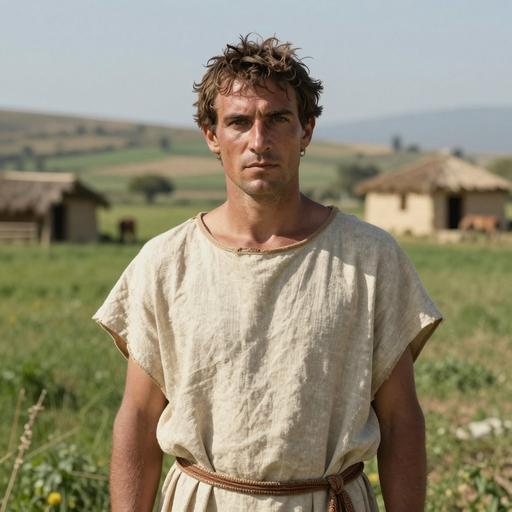
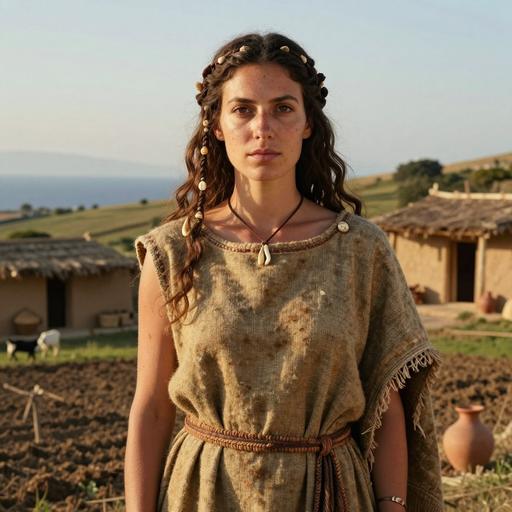
Retrato Muestra País Época Fecha Cultura Sexo ADN-Y ADNmt
Retrato reconstruido de Aegean Civilization individual, Greece
Aegean Civilization individual, Greece
Greece Greece_LN_2 4446 BCE Aegean Civilization M G-Z42562 K1a2
Retrato reconstruido de Aegean Civilization individual, Greece
Aegean Civilization individual, Greece
Greece Greece_LN_2 4449 BCE Aegean Civilization F - J1c1
Con IA

Asistente de IA

Haz preguntas sobre la cultura Aegean Civilizations: Palaces & Seafaring

Asistente de IA por DNAGENICS

Desbloquear esta función
Pregunta sobre la cultura Aegean Civilizations: Palaces & Seafaring. El asistente con IA puede explicar hallazgos genéticos, contexto histórico, pruebas arqueológicas y conexiones modernas, con sus límites de interpretación.
Ejemplo de análisis con IA

La cultura Aegean Civilizations: Palaces & Seafaring representa un capítulo de la historia humana...

El análisis genético permite estudiar similitudes con poblaciones anteriores y posibles adaptaciones. Las muestras de ADN antiguo aportan información para investigar patrones migratorios y relaciones entre poblaciones, con límites que dependen del estudio y del contexto arqueológico.

Esta es una vista previa del análisis con IA. Accede al asistente completo para explorar información sobre:

  • Composición y similitud genética
  • Patrones migratorios y orígenes
  • Vida cotidiana y prácticas culturales
  • Contexto genético moderno

Explora más culturas antiguas

Descubre la historia de civilizaciones de distintas partes del mundo antiguo