Preparando el informe

Cargando la información y las referencias disponibles

Consultando el registro arqueológico...

Recopilando registros antiguos

Saltar al contenido principal
Anatolian Mosaic: Modern Turkey, 2000 CE
Cultura destacada

Anatolian Mosaic: Modern Turkey, 2000 CE

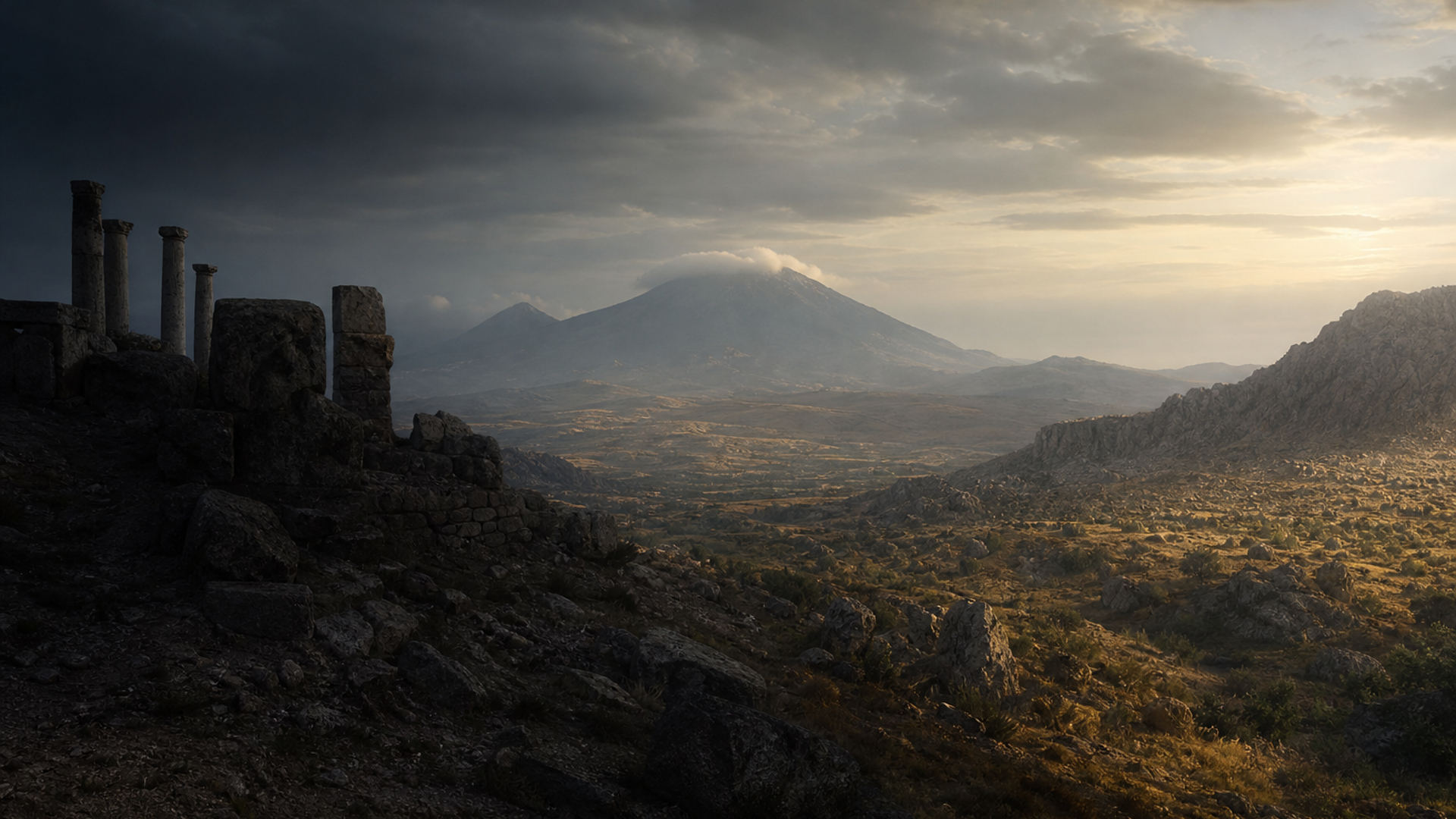
A cinematic snapshot of Turkey’s living genetic and archaeological landscape in the year 2000 CE.

2000 CE
Turkey (Anatolia & coasts)
Desplázate para empezar
Capítulo I

La historia

Comprender la cultura Anatolian Mosaic: Modern Turkey, 2000 CE

A concise, evidence‑based portrait of modern Turkey (2000 CE) connecting archaeological continuity across Anatolia with genetic data from 87 samples collected in cities such as Istanbul, Kayseri, İzmir and Trabzon. Explores multilayered ancestry and modern mobility.

Time Period

2000 CE (snapshot)

Region

Turkey (Anatolia & coasts)

Common Y-DNA

Diverse / not specified

Common mtDNA

Diverse / not specified

Capítulo II

Cronología

Momentos clave de la historia de esta cultura

1923 CE

Republic of Turkey established

Political reorganization and population movements in the 20th century reshaped demographics and migration patterns across Anatolia.

2000 CE

Population snapshot and sampling

Collection of 87 modern samples across Turkish cities and migrant communities provides a contemporary genetic snapshot for integrative study.

Capítulo III

Origins & Emergence

Anatolia is a long stage lit by human story — from the monumental stones at Göbekli Tepe to the Hittite capitals and the Byzantine harbors of modern Istanbul. Archaeological layers across central and western Anatolia record continuous settlement, complex urbanism, and repeated waves of cultural change. By 2000 CE, that deep history is visible in city plans, mosque courtyards, and rural terraces: a palimpsest where Roman roads cross Ottoman bazaars and Neolithic memory underlies modern fields.

Archaeological data indicates persistent long‑term occupation in key regions represented in the genetic sample set: Kayseri (near the central Anatolian corridor), İzmir and Aydın along the Aegean littoral, Adana in the Çukurova plain, and Trabzon on the Black Sea coast. These places have served as conduits for east–west and north–south movements for millennia. Limited evidence suggests that cultural horizons — Hittite, Byzantine, Seljuk, Ottoman — left distinct material signatures but did not erase the genomic signals of earlier inhabitants.

Caveat: archaeological continuity does not mean genetic stasis. Material continuity can coexist with episodes of population admixture, mobility, and replacement. Where the archaeological record is sparse or ambiguous, interpretations remain provisional and must be integrated cautiously with genetic data.

  • Long archaeological continuity from Neolithic to modern urban centers
  • Key settlement corridors: central Anatolia, Aegean coast, Black Sea fringe
  • Material culture layers coexist with genetic admixture events
Capítulo IV

Daily Life & Society

By the turn of the 21st century, daily life in Turkey unfolds across villages, bustling port cities, and highland towns — an everyday tableau shaped by geography and history. In port cities such as İzmir and Istanbul, Mediterranean and Black Sea trade currents meet Anatolian hinterlands; markets still echo centuries of exchange in spices, textiles, and peoples. In Kayseri and Kütahya, craft traditions and agricultural calendars link modern households to long‑standing local economies.

Archaeological traces of quotidian life — ceramics, household architecture, agricultural terraces — persist alongside modern infrastructure. These material traces help anchor living communities in place, even as migration, urbanization, and state formation reshape social landscapes. The presence of migrants collected in Israel and elsewhere in the sample set mirrors contemporary mobility: labor migration, urban migration, and diaspora ties have intensified in the 20th century, leaving both cultural and genetic footprints.

Interpreting society from material remains alone is limited. Ethnographic data and living memory complement archaeology, while genetic sampling captures recent demographic movements that might not yet be visible archaeologically. Together, they form a richer, if still incomplete, portrait of everyday life in modern Turkey.

  • Urban and rural life shaped by trade corridors and agricultural zones
  • Modern mobility (internal and international) overlays long‑term local traditions
Capítulo V

Genetic Profile

The genetic snapshot presented here is based on 87 modern samples collected across Turkey (Kayseri, Istanbul, İzmir, Aydın, Adana, Trabzon, Kütahya, Balıkesir) and including migrants sampled in Israel. This geographic spread captures coastal, inland and Black Sea populations, producing a view of high genetic heterogeneity typical of Anatolia.

Broadly speaking, Anatolia has acted as a genetic crossroads. Population genetic studies (general field consensus) indicate contributions from early Anatolian Neolithic farmers, later inflows associated with Bronze and Iron Age movements, and historical admixture from the Caucasus, the Levant, the Balkans, and — in the medieval period — Central Asian Turkic groups. Archaeological continuity in many sites suggests that local ancestry components persist, while successive waves of migration layered additional diversity onto the population.

Because specific Y‑DNA and mtDNA haplogroups were not provided with the input data, we cannot state precise haplogroup frequencies for these 87 samples. Instead, the available genetic context emphasizes admixture and regional differentiation within modern Turkey. The sample size (87) is moderate: large enough to reveal broad patterns of heterogeneity and regional contrasts, but susceptible to sampling bias. Interpretations should acknowledge that some signals (especially low‑frequency or localized lineages) may require larger, more evenly distributed sampling to confirm.

  • 87 modern samples reveal high regional heterogeneity across Anatolia
  • Genetic landscape reflects Anatolian Neolithic continuity plus later admixture
Capítulo VI

Legacy & Modern Connections

Modern Turkey in 2000 CE is a living archive: its streets, ruins, and genomes encode millennia of movement, exchange, and resilience. For users of a DNA ancestry platform, the key lesson is nuance — genetic profiles from Turkish populations are multilayered, shaped by deep local ancestry and many episodes of contact and migration. Archaeology provides the temporal depth; genetics traces the threads of ancestry through time.

Practically, this means interpreting a Turkish DNA result as a tapestry rather than a single origin: local Anatolian roots interwoven with regional contributions from the Caucasus, Balkans, Levant, and Central Asia. Where sampling is uneven, and where specific haplogroup data are unavailable, conclusions should remain cautious. Ongoing, well‑annotated sampling and collaboration between archaeologists and geneticists will continue to refine our understanding of Anatolia’s complex human story.

  • Modern Turkish ancestry is multilayered — continuity plus repeated admixture
  • Cautious interpretation advised; future, wider sampling will sharpen conclusions
Con IA

Asistente de IA

Haz preguntas sobre la cultura Anatolian Mosaic: Modern Turkey, 2000 CE

Asistente de IA por DNAGENICS

Desbloquear esta función
Pregunta sobre la cultura Anatolian Mosaic: Modern Turkey, 2000 CE. El asistente con IA puede explicar hallazgos genéticos, contexto histórico, pruebas arqueológicas y conexiones modernas, con sus límites de interpretación.
Ejemplo de análisis con IA

La cultura Anatolian Mosaic: Modern Turkey, 2000 CE representa un capítulo de la historia humana...

El análisis genético permite estudiar similitudes con poblaciones anteriores y posibles adaptaciones. Las muestras de ADN antiguo aportan información para investigar patrones migratorios y relaciones entre poblaciones, con límites que dependen del estudio y del contexto arqueológico.

Esta es una vista previa del análisis con IA. Accede al asistente completo para explorar información sobre:

  • Composición y similitud genética
  • Patrones migratorios y orígenes
  • Vida cotidiana y prácticas culturales
  • Contexto genético moderno

Explora más culturas antiguas

Descubre la historia de civilizaciones de distintas partes del mundo antiguo