Saltar al contenido principal
Cultura destacada

Avar Echoes: Steppe Shadows in the Carpathian Basin

A warrior society between steppe and Europe — archaeology and ancient DNA from Hungary & Croatia

580 CE - 947 CE
Carpathian Basin (Hungary, Croatia)
9 Muestras antiguas

La historia

Archaeology and ancient DNA from 179 Avar-period burials (c. 580–947 CE) in Hungary and Croatia reveal a mixed steppe–European ancestry, regional social heterogeneity, and connections between burial practices and paternal/maternal lineages.

Time Period

c. 580–947 CE

Region

Carpathian Basin (Hungary, Croatia)

Common Y-DNA

J, R, I, E, N (counts: J27, R18, I12, E7, N5)

Common mtDNA

H, U, J, T, D (counts: H37, U18, J14, T9, D8)

Ubicaciones de las muestras

El mapa interactivo no está disponible. Consulta el catálogo de muestras para ver los lugares registrados.

Cronología

567 CE

Avar arrival in the Carpathian Basin

Historical and archaeological evidence place the initial Avar migration into the basin around c. 567 CE, initiating Khaganate formation.

626 CE

Avars and the Siege of Constantinople

Avars appear in contemporary sources as participants in major conflicts, including the siege of Constantinople in 626 CE alongside other powers.

796 CE

Frankish campaigns weaken the Khaganate

Late 8th‑century Frankish military actions contributed to fragmentation of Avar political authority across the region.

947 CE

Absorption into emergent medieval polities

By the 10th century, Avar institutions had largely dissolved and communities were absorbed into rising medieval states and populations.

Origins & Emergence

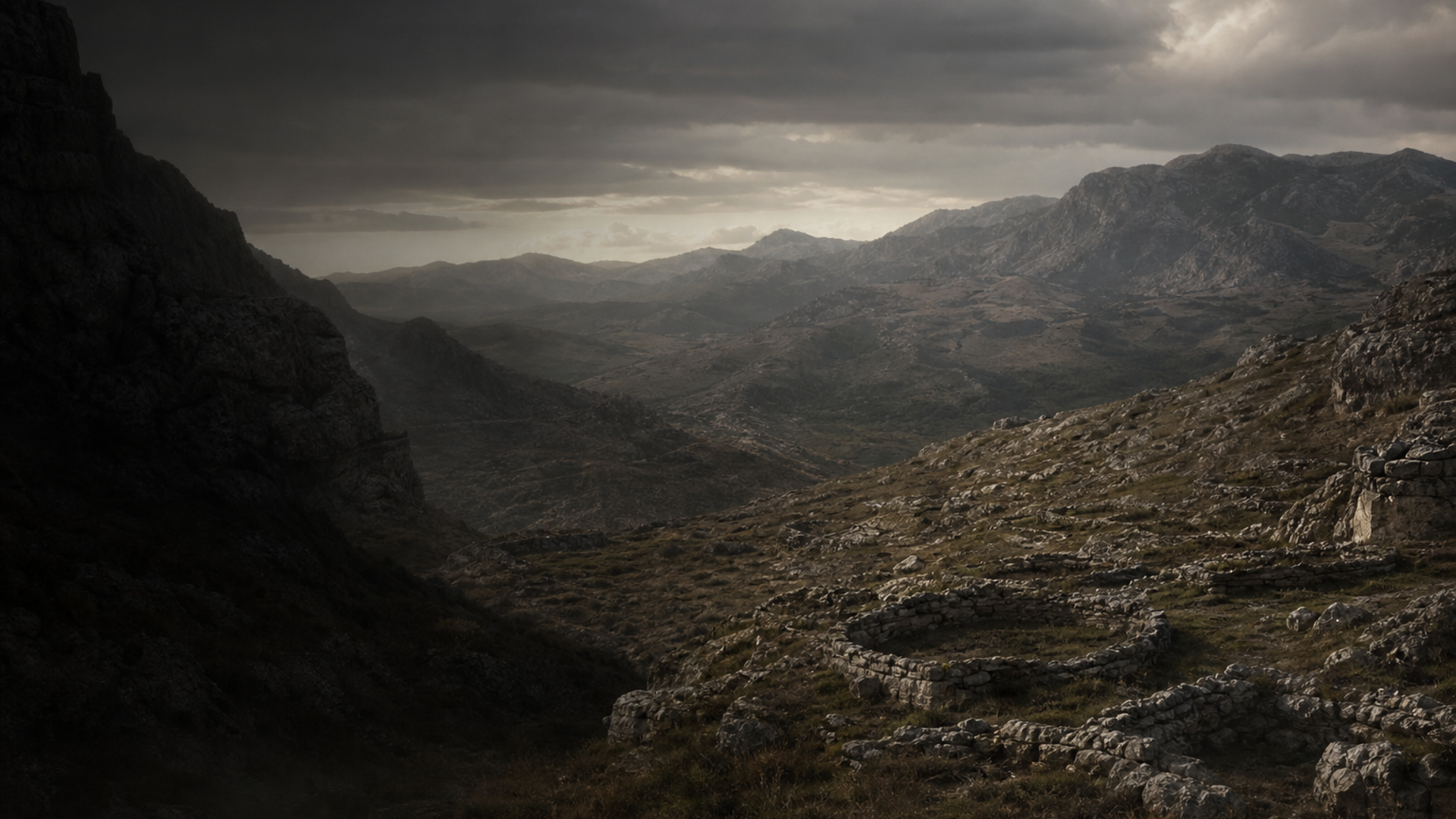
The Avar presence in the Carpathian Basin is best understood as a migration and political formation born of steppe dynamics colliding with European polities. Historical sources and archaeology place the initial Avar arrival in the region around the mid‑6th century CE (often cited c. 567 CE), after which the Avar Khaganate established itself as a major power in the 7th century. Archaeological horizons across Hungary and adjacent Croatia — including cemeteries at Kunpeszér‑Felsőpeszéri út, Orosháza‑Béketsz‑Homokbánya (Békés County), and Nuštar (Vukovar‑Syrmia) — document a material culture that blends steppe nomadic elements (horse harnesses, high‑status belt sets, and ring‑pommel weapons) with local European traditions.

From an evocative vantage, graves open like chapters: bronze and gold regalia flash against dark loam, equestrian trappings recall long migrations, and simple rural graves attest to settled farming lives integrated with martial prestige. Archaeological data indicates regional variation: some cemetery assemblages emphasize ostentation and imported styles, while others reflect continuity with local Late Antique and early medieval material culture.

Genetic sampling now provides a second layer of evidence. With 179 genome samples spanning c. 580–947 CE from sites in Hungary and Croatia, population‑level patterns can be discerned more robustly than from isolated burials, though geographic and cemetery biases remain. Together, archaeology and aDNA point to an emergent polity composed of steppeaffiliated elites and a diverse population mosaic formed through admixture and local incorporation.

  • Arrival in the Carpathian Basin c. 567 CE; Khaganate prominence in 7th century
  • Cemetery evidence from Kunpeszér, Orosháza, Nuštar shows steppe and local elements
  • 179 DNA samples allow population‑scale insights but sampling is regionally concentrated

Daily Life & Society

Life under the Avar aegis was multifaceted: a fusion of pastoral mobility, local agriculture, craft production, and hierarchical warrior culture. Excavated settlements and cemeteries reveal households engaged in mixed farming alongside horse breeding and specialized metalwork. In high‑status burials archaeologists find finely made harness fittings, ornate belt sets, and weaponry — signals of mounted warfare and a martial elite that projected power across landscapes of marsh and steppe. Simpler graves, often with few grave goods, point to a broad peasantry whose lives were tied to the land and seasonal rhythms.

Archaeological contexts at sites such as Rákóczifalva‑Bagi‑földek and Kunszállás‑Fülöpjakab preserve evidence for craft specialization: bronze working, iron tool production, and textile impressions. Funerary rites vary by region and time: some interments included horse equipment and animal sacrifices, while others adopt Christian burial practices in later phases, reflecting religious and cultural shifts. Settlement patterns suggest continuity of many local communities even as Avar political structures rose and fell; villages continued to farm floodplains and manage pastoral flocks.

These material traces, when paired with genetic profiles from the same cemeteries, allow researchers to link lifestyles, mobility, and kinship — for example, whether individuals buried with equestrian gear are genetically affiliated with particular paternal lineages or show evidence of exogenous ancestry. Archaeological data indicates social complexity and cultural blending rather than a single, monolithic Avar identity.

  • Mixed economy: agriculture, horse breeding, specialized metalwork
  • Funerary variety from rich equestrian graves to modest rural burials

Genetic Profile

The genetic portrait emerging from 179 Avar‑period individuals from Hungary and Croatia reveals a heterogeneous population shaped by admixture. Y‑chromosome counts show diversity among paternal lines: haplogroup J is most frequent in these samples (27 individuals), followed by R (18), I (12), E (7), and N (5). On the maternal side, mtDNA is dominated by typically European lineages, with H (37) and U (18) most common, alongside J (14), T (9), and D (8).

These patterns suggest a complex demographic history. The relative abundance of mtDNA H and U — frequent in European populations — indicates substantial local maternal ancestry, whereas the presence of Y‑haplogroups such as J and N points to paternal inputs from West Asian and steppe/Inner Asian sources, respectively. Haplogroup N is often associated with more northeasterly or Siberian connections, but its low count here (n=5) means such signals are present yet limited. Similarly, the notable count of J (n=27) among males may reflect male‑mediated gene flow from regions to the south or east of the Carpathian Basin.

With 179 genomes, statistical inference is stronger than for small case series, allowing population‑level statements about mixture and substructure; however, archaeological sampling bias (cemetery selection, chronological clustering across Early, Middle, and Late Avar phases) necessitates caution. Genetic data therefore complements material culture: together they indicate an Avar milieu forged by steppe immigration, local incorporation, and ongoing exchange across Eurasia.

  • 179 samples provide population‑level power; patterns indicate admixture
  • Paternal diversity (J, R, I, E, N) with predominantly European maternal lineages (H, U)

Legacy & Modern Connections

Archaeology and aDNA together sketch how Avar communities left material and genetic echoes in the Carpathian Basin. By the 9th–10th centuries the political structures of the Khaganate had waned and were absorbed into emerging medieval polities; people associated with Avar culture were incorporated into the evolving demographic tapestry. Modern populations in Hungary and neighboring regions carry layered ancestry — Roman, Germanic, Slavic, Avar, and later Magyar — making it difficult to attribute any single modern genetic signal uniquely to the Avars.

Genetic traces identified in the 179‑sample series are unlikely to map directly and exclusively onto contemporary ethnic groups, but they do document episodes of gene flow: steppe‑affiliated paternal lines entered the Carpathian Basin and mixed with local maternal pools. Cultural elements — equestrian iconography, certain metalwork styles, and burial practices — also diffused, contributing to the medieval material repertoire.

Ultimately, the Avar story is one of integration: a dynamic frontier of migration, warfare, and settlement whose archaeological and genetic legacies survive as detectable but diffuse threads in Europe's genetic and cultural fabric.

  • Avar genetic signals are detectable but blended into later population layers
  • Material and genetic evidence shows integration, not wholesale replacement

Catálogo de muestras

9 / 9 muestras
Retrato Muestra País Época Fecha Cultura Sexo ADN-Y ADNmt
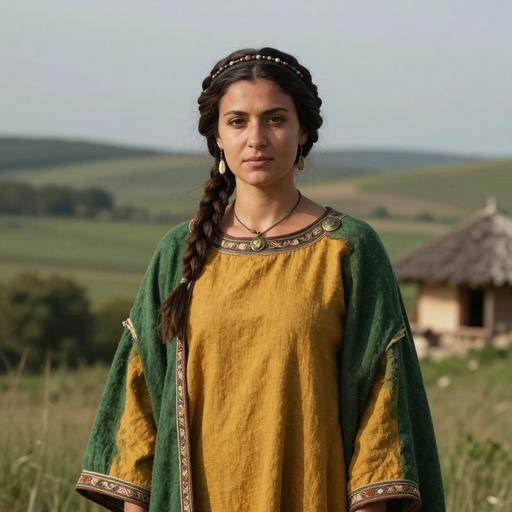
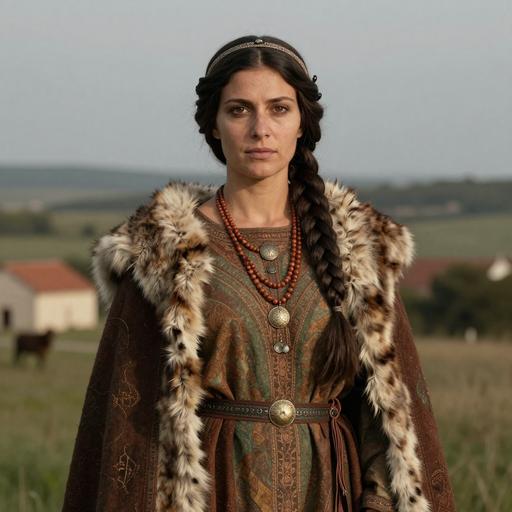
Retrato reconstruido de Early Medieval Avar-o North Europe individual, Croatia
Croatia Croatia_EarlyMedieval_Avar 771-947 calCE (1175±15 BP, PSUAMS-12038) Avar F - H16
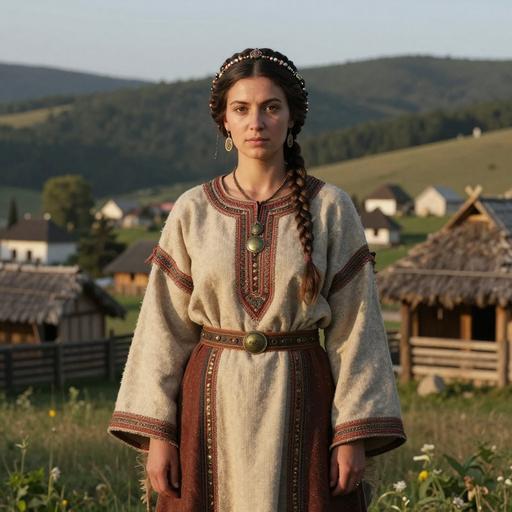
Retrato reconstruido de Early Medieval Avar individual, Croatia
Croatia Croatia_EarlyMedieval_Avar 700-900 CE Avar F - H7a1a
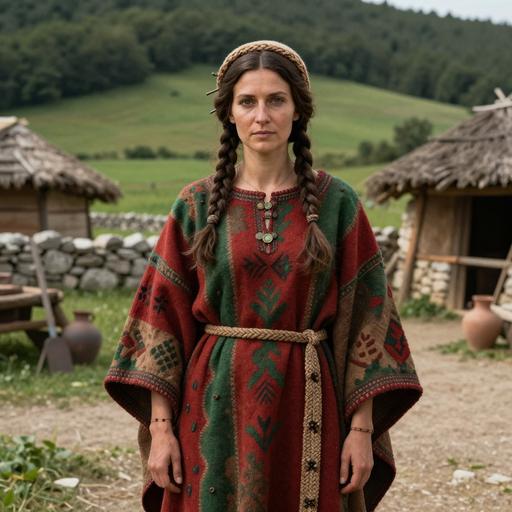
Retrato reconstruido de Early Medieval Avar individual, Croatia
Croatia Croatia_EarlyMedieval_Avar 700-900 CE Avar F - J1c2
Retrato reconstruido de Early Medieval Avar individual, Croatia
Croatia Croatia_EarlyMedieval_Avar 700-900 CE Avar M J-FGC62445 J1c1b1a
Retrato reconstruido de Early Medieval Avar individual, Croatia
Croatia Croatia_EarlyMedieval_Avar 700-900 CE Avar F - K1a4j
Retrato reconstruido de Early Medieval Avar individual, Croatia
Croatia Croatia_EarlyMedieval_Avar 700-900 CE Avar M Q-YP789 H14b2
Retrato reconstruido de Early Medieval Avar individual, Croatia
Croatia Croatia_EarlyMedieval_Avar 700-900 CE Avar M J-Z1043 H16
Retrato reconstruido de Early Medieval Avar individual, Croatia
Croatia Croatia_EarlyMedieval_Avar 700-900 CE Avar F - H5
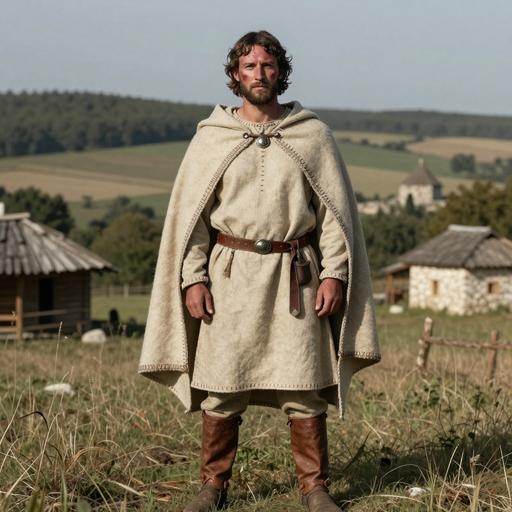
Retrato reconstruido de Avar individual, Croatia
Croatia Croatia_EarlyMedieval_Avar 600 CE Avar M E-FGC11457 U8b1a1

Asistente de IA

Asistente de IA por DNAGENICS

Desbloquear esta función
Pregunta sobre la cultura Avar Echoes: Steppe Shadows in the Carpathian Basin. El asistente con IA puede explicar hallazgos genéticos, contexto histórico, pruebas arqueológicas y conexiones modernas, con sus límites de interpretación.
Ejemplo de análisis con IA

La cultura Avar Echoes: Steppe Shadows in the Carpathian Basin representa un capítulo de la historia humana...

El análisis genético permite estudiar similitudes con poblaciones anteriores y posibles adaptaciones. Las muestras de ADN antiguo aportan información para investigar patrones migratorios y relaciones entre poblaciones, con límites que dependen del estudio y del contexto arqueológico.

Esta es una vista previa del análisis con IA. Accede al asistente completo para explorar información sobre:

  • Composición y similitud genética
  • Patrones migratorios y orígenes
  • Vida cotidiana y prácticas culturales
  • Contexto genético moderno