Preparando el informe

Cargando la información y las referencias disponibles

Consultando el registro arqueológico...

Recopilando registros antiguos

Saltar al contenido principal
Balaton–Lasinja Echoes
Cultura destacada

Balaton–Lasinja Echoes

Chalcolithic lives on the western Hungarian shore, seen through archaeology and ancient DNA

4341 CE - 3900 BCE
Western Hungary (Lake Balaton region)
Desplázate para empezar
Capítulo I

La historia

Comprender la cultura Balaton–Lasinja Echoes

Archaeological and genetic glimpses from six Chalcolithic individuals (4341–3900 BCE) at Balaton-Lasinja sites in Hungary. Material culture ties to the Balaton region, while preliminary DNA points to farmer-lineage maternal haplogroups and a single broad Y-chromosome call — conclusions remain tentative.

Time Period

4341–3900 BCE

Region

Western Hungary (Lake Balaton region)

Common Y-DNA

CT (single low-resolution call)

Common mtDNA

T (2), H40, T2b, J, K2a

Capítulo II

Cronología

Momentos clave de la historia de esta cultura

4341 BCE

Earliest dated Balaton–Lasinja individuals

Radiocarbon dates place sampled individuals at the early Chalcolithic horizon near Lake Balaton, marking local farmer communities adapting to new cultural expressions.

Capítulo III

Origins & Emergence

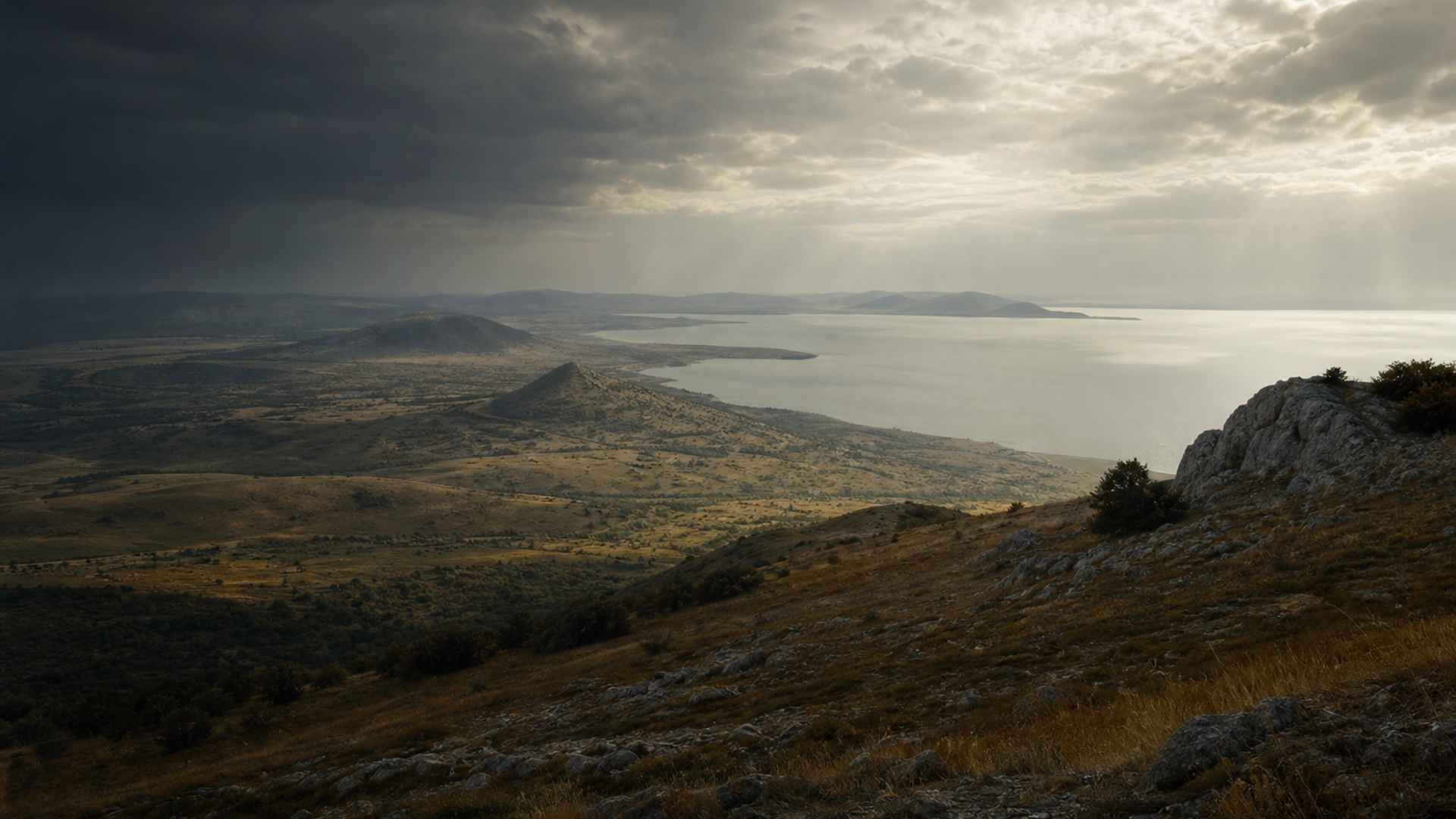
On the lakeshore plain west of Balaton, communities that archaeologists group as Balaton–Lasinja emerge in the centuries after the Neolithic farming expansion. Radiocarbon dates associated with the six sampled individuals span 4341–3900 BCE, situating them in an early Chalcolithic horizon that both continues local Neolithic traditions and explores new ceramic styles and settlement forms. Sites represented among the samples — Tolna‑Mözs TO3, Veszprém Jutasi út, Alsónyék site 11, Keszthely‑Fenékpuszta (Pusztaszentegyházi‑dűlő), Lánycsók Csata‑alja and Enese (Kóny Proletár‑dülö) — preserve domestic features, burials and pottery assemblages that reflect a regional vocabulary of decoration and craft.

Archaeological data indicates a mosaic of influences: continuity with earlier farmer communities in the Carpathian Basin, local adaptation to lakeside environments, and contacts with neighboring groups across the Pannonian plain. Material culture suggests a community negotiating long‑standing agricultural lifeways with new social expressions in the Chalcolithic. Limited evidence means the pathways of cultural emergence remain partly conjectural; ongoing excavation and fine‑grained chronology are essential to resolve whether technological change came from internal evolution or from small‑scale movement of peoples and ideas.

  • Dates place the group in early Chalcolithic Hungary (4341–3900 BCE)
  • Sites include Tolna‑Mözs, Veszprém, Alsónyék, Keszthely‑Fenékpuszta, Lánycsók, Enese
  • Material culture shows continuity with Neolithic farmers plus regional innovations
Capítulo IV

Daily Life & Society

The Balaton–Lasinja world was shaped by water and field: settlements tended to cluster near lakes, rivers and fertile loess soils, fostering mixed economies of cereal cultivation, animal husbandry and freshwater resources. Archaeological assemblages from Alsónyék and Keszthely‑Fenékpuszta include pottery with distinct decorative motifs, stone and bone tools, and domestic features such as hearths and post‑holes that mark small hamlets rather than large nucleated towns.

Burials, often simple inhumations, provide glimpses of social practice. Grave goods are generally modest, suggesting societies organized around household units with subtle social differentiation rather than dramatic elite display. Craft specialization likely operated at a local scale: potting, bone working and textile production leave traces in toolkits and wear patterns. The interplay of ritual and daily routine — offerings at lakeside, the seasonal rhythm of planting and harvest, the shaping of pottery forms — can be read in the archaeological record as a cinematic sequence of everyday gestures, though many details remain uncertain because preservation and excavation coverage vary by site.

Taken together, the material record paints a picture of resilient, place‑rooted communities adapting long‑established farming lifeways to changing social and environmental conditions along the Balaton shores.

  • Mixed farming, stock‑keeping, and exploitation of freshwater resources
  • Small hamlets with household craft production and modest burial practices
Capítulo V

Genetic Profile

Six genome samples from the Balaton–Lasinja horizon provide a cautious window into population history. Maternal lineages in this small set include haplogroups T (two individuals), H40, T2b, J and K2a — mitochondrial types commonly associated with Neolithic farmer populations across Europe and the Carpathian Basin. The single reported Y‑chromosome call is CT, a broad lineage that lacks downstream resolution here; CT includes many descendant branches found in later Eurasian populations but the present data cannot specify which subclade was present.

Archaeological and genetic context together suggest these individuals largely reflect the legacy of earlier Neolithic farmers in the region. Importantly, the dates (c. 4341–3900 BCE) are early enough that they may predate the large‑scale influxes of steppe‑related ancestry documented later in the 3rd millennium BCE in parts of Europe. Nevertheless, low sample count (n = 6) and limited Y‑chromosome resolution mean conclusions about population continuity, admixture or migration are preliminary. Additional genomes, isotopic data and finer chronological control are needed to test whether Balaton–Lasinja communities were genetically continuous with preceding Neolithic groups or whether subtle gene flow from nearby regions contributed to their ancestry.

In short: maternal lineages align with farmer ancestry, the Y call is non‑diagnostic, and the dataset is promising but too small to support broad demographic claims.

  • mtDNA dominated by farmer‑associated lineages (T, H40, T2b, J, K2a)
  • Single Y‑call CT is low resolution; small sample size makes conclusions preliminary
Capítulo VI

Legacy & Modern Connections

Balaton–Lasinja communities contributed threads to the tapestry of later Hungary and Central Europe, primarily through local continuities of farming practices, pottery traditions and settlement organization. While the limited ancient DNA from this culture does not allow precise mapping of genetic descent into modern populations, the presence of common Neolithic maternal haplogroups suggests that some genetic heritage of early farmers persisted in the region.

From a museological perspective, the evocative junction of lakeside landscapes, pottery vessels and human remains connects us to everyday people who shaped the Balaton shore millennia ago. For geneticists and archaeologists, these remains are markers in an evolving dataset: each new genome can clarify whether Balaton–Lasinja represents a stable local lineage, a mixture zone, or a stepping stone in wider Chalcolithic networks. Until more samples and higher‑resolution Y‑chromosome calls are available, claims about direct ancestry to modern Hungarians or broader population movements must remain tentative.

In practice, the cultural legacy is best understood as a combination of persistent lifeways and selective influences that, together with later migrations, formed the complex ancestry of Central Europe.

  • Material and genetic traces suggest continuity with Neolithic farmer traditions
  • Direct links to modern populations remain tentative until more data is available
Con IA

Asistente de IA

Haz preguntas sobre la cultura Balaton–Lasinja Echoes

Asistente de IA por DNAGENICS

Desbloquear esta función
Pregunta sobre la cultura Balaton–Lasinja Echoes. El asistente con IA puede explicar hallazgos genéticos, contexto histórico, pruebas arqueológicas y conexiones modernas, con sus límites de interpretación.

Ejemplo de análisis con IA

La cultura Balaton–Lasinja Echoes representa un capítulo de la historia humana...

El análisis genético permite estudiar similitudes con poblaciones anteriores y posibles adaptaciones. Las muestras de ADN antiguo aportan información para investigar patrones migratorios y relaciones entre poblaciones, con límites que dependen del estudio y del contexto arqueológico.

Esta es una vista previa del análisis con IA. Accede al asistente completo para explorar información sobre:

  • Composición y similitud genética
  • Patrones migratorios y orígenes
  • Vida cotidiana y prácticas culturales
  • Contexto genético moderno

Explora más culturas antiguas

Descubre la historia de civilizaciones de distintas partes del mundo antiguo