Preparando el informe

Cargando la información y las referencias disponibles

Consultando el registro arqueológico...

Recopilando registros antiguos

Saltar al contenido principal
Beagle Channel Yamana (c.100 BP)
Cultura destacada

Beagle Channel Yamana (c.100 BP)

Late historic maritime people of Tierra del Fuego revealed by archaeology and DNA

1550 CE - 1960 CE
Beagle Channel, Tierra del Fuego, Argentina
Desplázate para empezar
Capítulo I

La historia

Comprender la cultura Beagle Channel Yamana (c.100 BP)

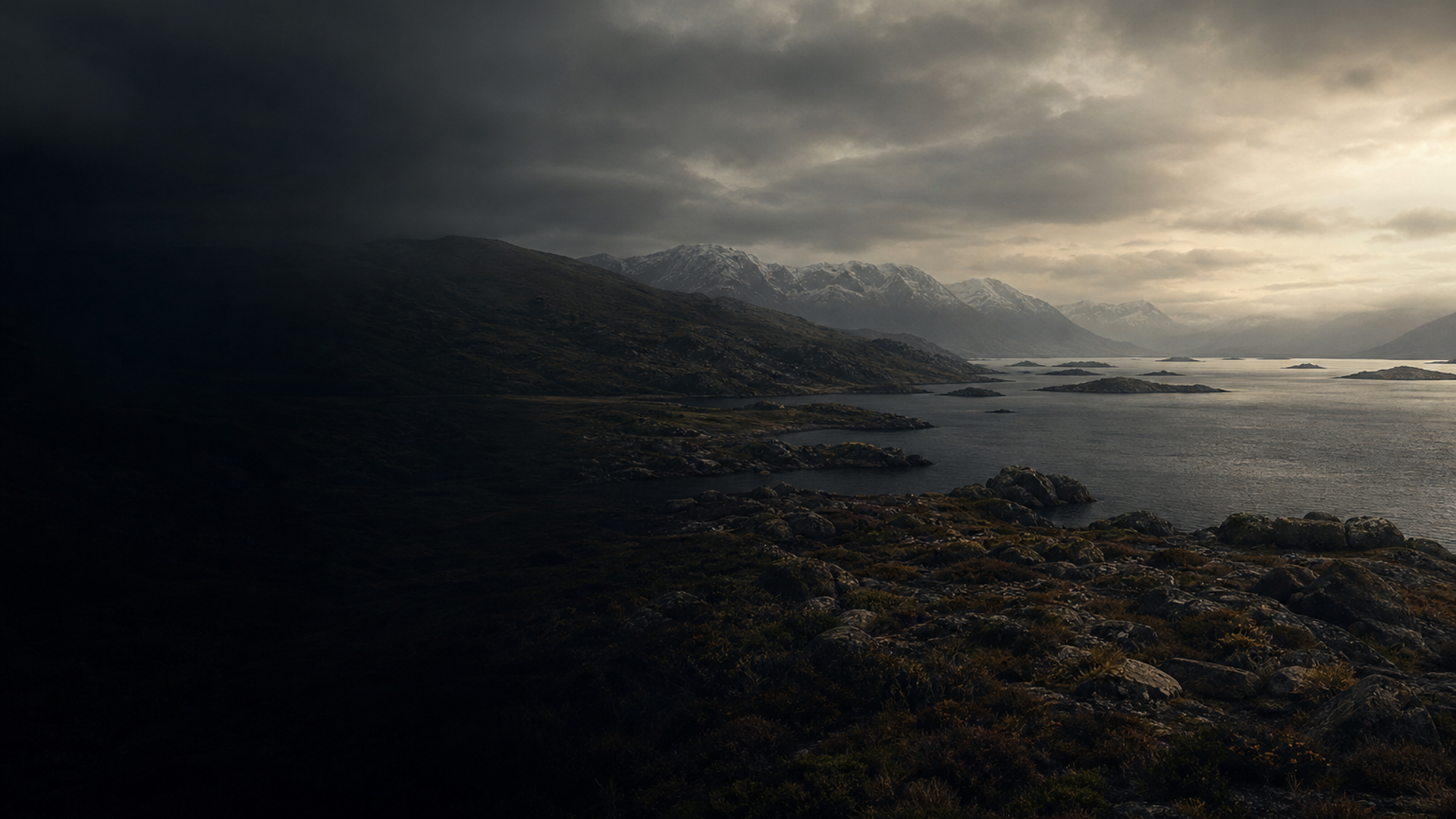
Six historic-era individuals (1550–1960 CE) from the Beagle Channel, Tierra del Fuego. Archaeological contexts at Almanza and Acatushún paired with genomic signals (Y Q; mtDNA C1b, D) illuminate coastal lifeways and Indigenous ancestry—findings are preliminary given small sample size.

Time Period

1550–1960 CE (historic period)

Region

Beagle Channel, Tierra del Fuego, Argentina

Common Y-DNA

Q (observed in 2 of 6 samples)

Common mtDNA

C1b (4/6), D (2/6)

Capítulo II

Cronología

Momentos clave de la historia de esta cultura

12000 BCE

Pleistocene–Holocene transition

Early peopling of southern South America establishes coastal adaptations that later underpin Yamana maritime lifeways.

1550 CE

Earliest individuals in dataset

One or more sampled individuals date to the mid-16th century, reflecting late pre-contact and early contact-era lifeways in the Beagle Channel.

1960 CE

Latest individuals in dataset

The most recent sampled remains approach the mid-20th century, capturing effects of centuries of colonial contact and change.

Capítulo III

Origins & Emergence

The Yamana people inhabited the glacial-carved islands of the Beagle Channel for centuries, persisting into the historic era witnessed by European explorers. Archaeological sites such as Almanza and Acatushún on the shores of Tierra del Fuego preserve shell middens, bone tools, and boat-related artefacts that testify to a deep adaptation to littoral hunting and gathering.

Limited evidence suggests that the maritime adaptations of Ushuaia–Beagle Channel groups build on millennia of coastal occupation in southern Patagonia. Material culture shows continuity in stone and bone tool forms alongside changes introduced by 19th-century contact. Ethnohistoric accounts describe canoe travel, seabird and seal hunting, and complex seasonal rounds that threaded islands and open waters.

Archaeological data indicate resilience in small, mobile bands whose territorial knowledge centered on narrow fjords and tidal reefs. While cultural continuity is clear in the archaeological record, the fine-scale origins of specific kin groups in the late historic period remain unresolved. Genetic insights (below) help anchor these individuals within broader Native South American lineages, but conclusions remain cautious because of the small sample set and uneven preservation.

  • Material continuity in shell middens and bone tools at Almanza and Acatushún
  • Maritime specialization: canoe use, seal and seabird exploitation
  • Long-term coastal occupation with historic-era continuity
Capítulo IV

Daily Life & Society

Life along the Beagle Channel unfolded at the edge of the sea: narrow camps perched on sheltered coves, hearths ringed with mussel shell, and caches of seasoned bone and wood. Canoes and paddles were central technologies, enabling travel between islands and access to seal rookeries, kelp beds, and seabird colonies.

Archaeological assemblages recovered at Almanza and Acatushún include worked bone implements, harpoon fragments, and stone flakes—evidence of sustained maritime hunting and tool maintenance. Social organization likely emphasized flexible kin networks and strong knowledge transmission of tides, currents, and weather. Seasonal cycles determined mobility, with groups moving to exploit spawning fish, seal pupping, and bird nesting seasons.

Ethnohistoric descriptions and the archaeological record together evoke a vivid coastal ecology in which crafted objects and bodies were tuned to wind, surf, and ice. Contact-era perturbations—diseases, missionization, and resource pressures—altered lifeways and demography, a pattern reflected in late historic changes to settlement distribution and artifact frequency.

  • Canoes, harpoons, and shore-based foraging dominated subsistence
  • Seasonal mobility with small, kin-based bands tied to tidal knowledge
Capítulo V

Genetic Profile

Ancient DNA from six individuals dated between 1550 and 1960 CE offers a window into the biological ancestry of late historic Yamana-associated communities. The Y-chromosome signal includes haplogroup Q in two individuals—a lineage widely observed across Indigenous populations of the Americas and consistent with deep Native American paternal ancestry. Mitochondrial DNA is dominated by C1b (four samples) and D (two samples), both known founding branches in South American maternal lineages.

These genetic markers align with expectations for southern South America and support archaeological interpretations of long-standing regional continuity. However, the sample count is small (n = 6). Because fewer than ten individuals are reported, conclusions about population structure, diversity, or sex-biased processes (for example, differential mobility of men and women) must be considered preliminary.

Genomic analyses can still test key questions: continuity versus replacement, degrees of admixture with neighboring groups, and the demographic impacts of historic contact. Future sampling across more sites and temporal layers—combined with isotope studies and careful contextual archaeology—will refine the picture of how genes and lifeways co-evolved on the storm-swept margins of Patagonia.

  • Y haplogroup Q present (2/6), indicating Native American paternal lineages
  • mtDNA dominated by C1b (4/6) and D (2/6); sample size makes results preliminary
Capítulo VI

Legacy & Modern Connections

The genetic and archaeological traces from Almanza, Acatushún, and other Beagle Channel localities connect living communities and their descendants to a maritime past. MtDNA lineages such as C1b and D are shared across southern South America and can be compared to modern DNA datasets to map continuity and historical gene flow.

Archaeology preserves the textures of daily life—shell middens, paddles, and harpoon tips—while genetics offers a complementary lineage-based perspective. Together they form a cinematic, layered narrative: people navigating wind-scored channels, passing knowledge by hearthlight, and leaving both artifacts and genomes in the sediment record. Given the small number of sampled individuals, these connections are promising but tentative; expanded sampling and respectful collaboration with descendant communities are essential to deepen and validate these ties.

  • mtDNA lineages offer avenues to test regional genetic continuity with modern communities
  • Combined archaeological and genomic work foregrounds cultural resilience despite historic disruptions
Con IA

Asistente de IA

Haz preguntas sobre la cultura Beagle Channel Yamana (c.100 BP)

Asistente de IA por DNAGENICS

Desbloquear esta función
Pregunta sobre la cultura Beagle Channel Yamana (c.100 BP). El asistente con IA puede explicar hallazgos genéticos, contexto histórico, pruebas arqueológicas y conexiones modernas, con sus límites de interpretación.
Ejemplo de análisis con IA

La cultura Beagle Channel Yamana (c.100 BP) representa un capítulo de la historia humana...

El análisis genético permite estudiar similitudes con poblaciones anteriores y posibles adaptaciones. Las muestras de ADN antiguo aportan información para investigar patrones migratorios y relaciones entre poblaciones, con límites que dependen del estudio y del contexto arqueológico.

Esta es una vista previa del análisis con IA. Accede al asistente completo para explorar información sobre:

  • Composición y similitud genética
  • Patrones migratorios y orígenes
  • Vida cotidiana y prácticas culturales
  • Contexto genético moderno

Explora más culturas antiguas

Descubre la historia de civilizaciones de distintas partes del mundo antiguo




