Preparando el informe

Cargando la información y las referencias disponibles

Consultando el registro arqueológico...

Recopilando registros antiguos

Saltar al contenido principal
Beniamin (Armenia): Achaemenid‑Era Voices
Cultura destacada

Beniamin (Armenia): Achaemenid‑Era Voices

Seven ancient genomes from Shirak Province that whisper of empire, local lifeways, and genetic continuity.

450 BCE - 550 CE
Shirak Province, Armenia (Beniamin)
Desplázate para empezar
Capítulo I

La historia

Comprender la cultura Beniamin (Armenia): Achaemenid‑Era Voices

Archaeological and genetic data from seven individuals (450 BCE–550 CE) at Beniamin, Shirak Province, Armenia, illuminate life on the Armenian highland during and after Achaemenid rule. Limited samples suggest regional continuity with complex local interactions; conclusions remain preliminary.

Time Period

450 BCE–550 CE

Region

Shirak Province, Armenia (Beniamin)

Common Y-DNA

Not reported — 7 samples (preliminary)

Common mtDNA

Not reported — 7 samples (preliminary)

Capítulo II

Cronología

Momentos clave de la historia de esta cultura

550 BCE

Achaemenid Expansion into the Highlands

The Achaemenid Empire expands its influence across the Armenian plateau, reshaping trade and administrative networks.

450 BCE

Earliest Dated Individuals at Beniamin

The oldest genomes in the Beniamin series date to the mid-5th century BCE, within the Achaemenid period.

550 CE

Latest Occupation Horizon

The most recent individuals sampled at Beniamin date to the early medieval period, reflecting long occupation continuity.

Capítulo III

Origins & Emergence

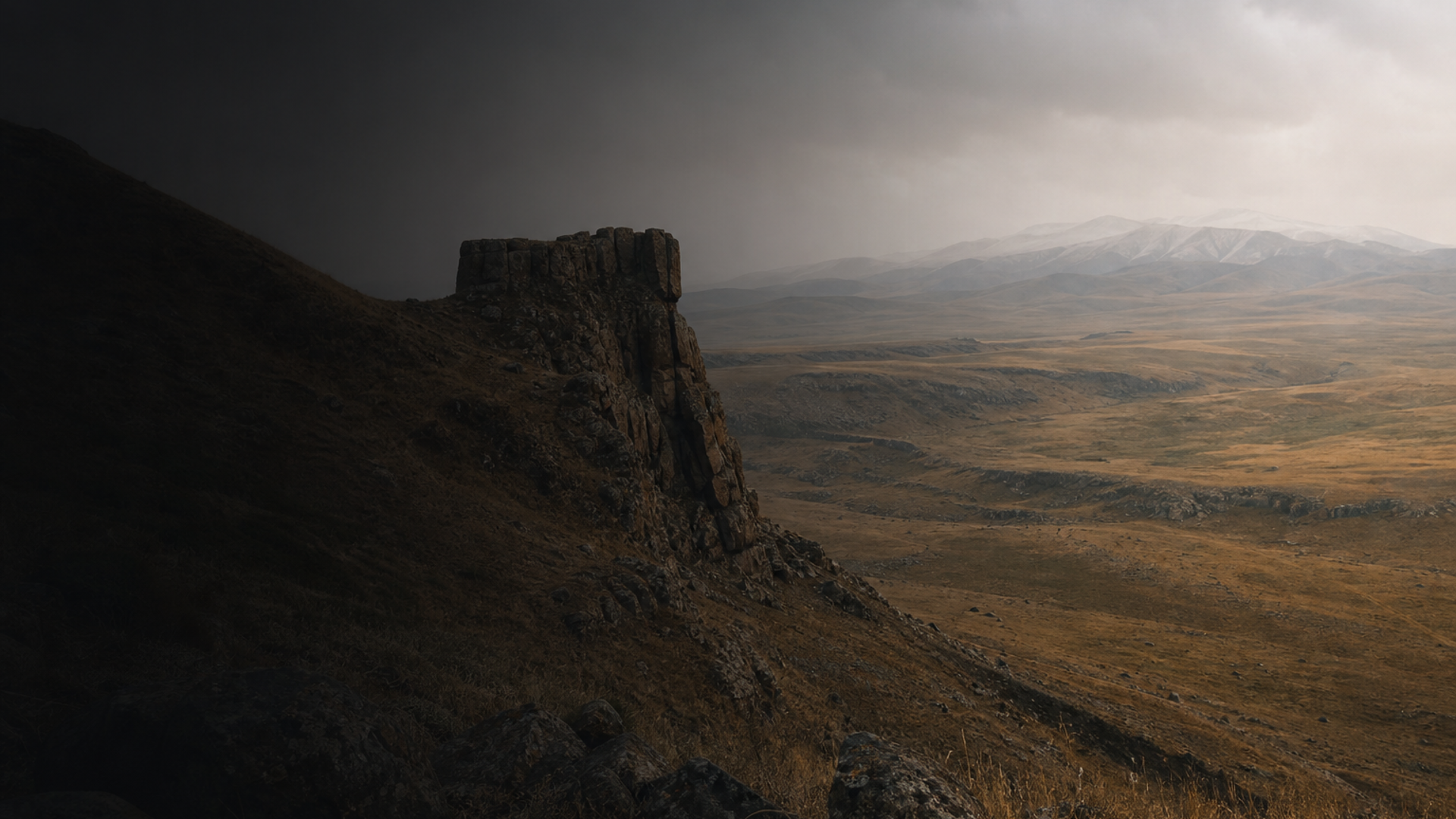
Perched on the rolling plateaus of Shirak Province, the settlement and burial contexts at Beniamin span a fluid interval from the mid-5th century BCE into the early medieval period (450 BCE–550 CE). Archaeological data indicates occupation during the late Achaemenid era and through subsequent Hellenistic and early Sasanian horizons. The material record is limited but evocative: ceramic assemblages and burial placements align with patterns known across the Armenian highland, suggesting local communities adapted to shifting imperial hegemonies rather than wholesale population replacement.

The Achaemenid Empire (c. 550–330 BCE) established broad administrative and cultural networks that reached the Armenian plateau; archaeological traces at nearby sites show increased exchange in objects and styles. At Beniamin, however, the current excavated sample is small — only seven individuals have produced ancient DNA — so inferences about origin and demographic change must be made cautiously. Limited evidence suggests a strong element of local persistence on the landscape, punctuated by contacts with imperial trade and mobility corridors. Future excavation and additional genomes are essential to resolve whether these patterns represent continuity, gradual admixture, or episodic influxes of new people.

  • Site: Beniamin, Shirak Province, Armenia; dated 450 BCE–550 CE
  • Context: Small cemetery/occupation sequence spanning Achaemenid to early medieval eras
  • Interpretation: Archaeological data indicates local continuity with external contacts
Capítulo IV

Daily Life & Society

Archaeological traces at Beniamin evoke a landscape of stone-built houses, fields carved into highland terraces, and a rhythm of seasonal work. Ceramic types and domestic debris recovered in limited excavation suggest a mixed agrarian economy supplemented by pastoralism and local craft production. The cinematic image is of smoke and clay, of people tied to place but aware of long-distance connections — Achaemenid administrative routes and regional markets would have brought exotic goods and ideas to the highlands.

Burial practice provides another window: the seven sampled individuals derive from contexts that hint at communal memory and continuity in mortuary treatment. Yet the small number of contexts and limited excavation means many aspects of social organization—status differentiation, household size, gender roles—remain uncertain. Archaeological data indicates resilience and adaptation: communities at Beniamin appear to have weathered imperial change without radical demographic collapse, but material gaps leave room for multiple interpretations.

  • Economy likely mixed: agriculture, pastoralism, and local crafts
  • Mortuary evidence suggests community continuity; social structure remains poorly resolved
Capítulo V

Genetic Profile

Ancient DNA was recovered from seven individuals at Beniamin (450 BCE–550 CE). Because the sample count is low (<10), genetic conclusions are necessarily tentative and described here as preliminary. Published metadata for these individuals does not report consolidated common Y‑DNA or mtDNA haplogroup frequencies; therefore, statements about specific uniparental lineages for this series cannot be confidently made.

Nevertheless, genomic context matters: broader ancient DNA research across the Armenian highland and the South Caucasus shows long-term population continuity on the plateau, with contributions from Anatolian, Iranian-related, and steppe-associated ancestries at different times. Archaeological chronology at Beniamin spans the late Achaemenid period and later centuries when imperial movements and trade could introduce new genetic inputs. The seven genomes from Beniamin may reflect the regional mosaic typical of the era — a dominant local substrate with admixture signals layered during periods of mobility — but the low sample size prevents robust modeling of admixture proportions, sex-biased migration, or temporal trends.

In short: the genetic data from Beniamin are valuable as initial points of contact between archaeology and aDNA, but expanded sampling, higher coverage genomes, and comparative datasets are required to move from evocative suggestions to firm demographic narratives.

  • Sample size is seven—fewer than 10 genomes: interpretations are preliminary
  • No consolidated Y‑DNA/mtDNA haplogroup frequencies reported; broader regional patterns suggest mixed local and incoming ancestries
Capítulo VI

Legacy & Modern Connections

The Beniamin individuals form a slender but resonant thread linking ancient lifeways on the Armenian plateau to the present. Archaeological and genetic indications of regional continuity support a picture in which many modern Armenians inherit a substantial component of their ancestry from longstanding highland populations, even as historical episodes of mobility layered additional genetic inputs.

This legacy is not a simple story of direct descent but a palimpsest: cultural practices, place names, and genetic signals accumulate and interweave over centuries. Given the preliminary nature of the Beniamin dataset, any claims about direct ancestry to contemporary groups must be cautious. Continued sampling across Shirak and neighboring regions will clarify how these Achaemenid-era and post‑Achaemenid communities contributed to the genetic and cultural tapestry of the South Caucasus.


  • Suggests long-term regional persistence contributing to modern Armenian ancestry
  • Emphasizes need for more samples to trace precise links to contemporary populations
Con IA

Asistente de IA

Haz preguntas sobre la cultura Beniamin (Armenia): Achaemenid‑Era Voices

Asistente de IA por DNAGENICS

Desbloquear esta función
Pregunta sobre la cultura Beniamin (Armenia): Achaemenid‑Era Voices. El asistente con IA puede explicar hallazgos genéticos, contexto histórico, pruebas arqueológicas y conexiones modernas, con sus límites de interpretación.
Ejemplo de análisis con IA

La cultura Beniamin (Armenia): Achaemenid‑Era Voices representa un capítulo de la historia humana...

El análisis genético permite estudiar similitudes con poblaciones anteriores y posibles adaptaciones. Las muestras de ADN antiguo aportan información para investigar patrones migratorios y relaciones entre poblaciones, con límites que dependen del estudio y del contexto arqueológico.

Esta es una vista previa del análisis con IA. Accede al asistente completo para explorar información sobre:

  • Composición y similitud genética
  • Patrones migratorios y orígenes
  • Vida cotidiana y prácticas culturales
  • Contexto genético moderno

Explora más culturas antiguas

Descubre la historia de civilizaciones de distintas partes del mundo antiguo