Preparando el informe

Cargando la información y las referencias disponibles

Consultando el registro arqueológico...

Recopilando registros antiguos

Saltar al contenido principal
Beniamin Late Bronze Age Voices
Cultura destacada

Beniamin Late Bronze Age Voices

Two burials from Shirak Province illuminating Late Bronze Age Armenia with DNA hints

1492 CE - 1261 BCE
Shirak Province, Armenia (Beniamin)
2 Muestras antiguas
Desplázate para empezar
Capítulo I

La historia

Comprender la cultura Beniamin Late Bronze Age Voices

Archaeological remains from Beniamin (Shirak Province, Armenia), dated 1492–1261 BCE, offer a rare Late Bronze Age snapshot. Two samples provide preliminary ancient DNA context linking local lifeways to wider Transcaucasian networks — conclusions remain tentative due to the very small sample size.

Time Period

1492–1261 BCE (Late Bronze Age)

Region

Shirak Province, Armenia (Beniamin)

Common Y-DNA

Not reported — sample count: 2 (preliminary)

Common mtDNA

Not reported — sample count: 2 (preliminary)

Capítulo II

Cronología

Momentos clave de la historia de esta cultura

1492 BCE

Earliest dated burial at Beniamin

One of two radiocarbon-dated burials anchors Beniamin to the Late Bronze Age (1492–1261 BCE), providing a chronological point for further study.

Capítulo III

Origins & Emergence

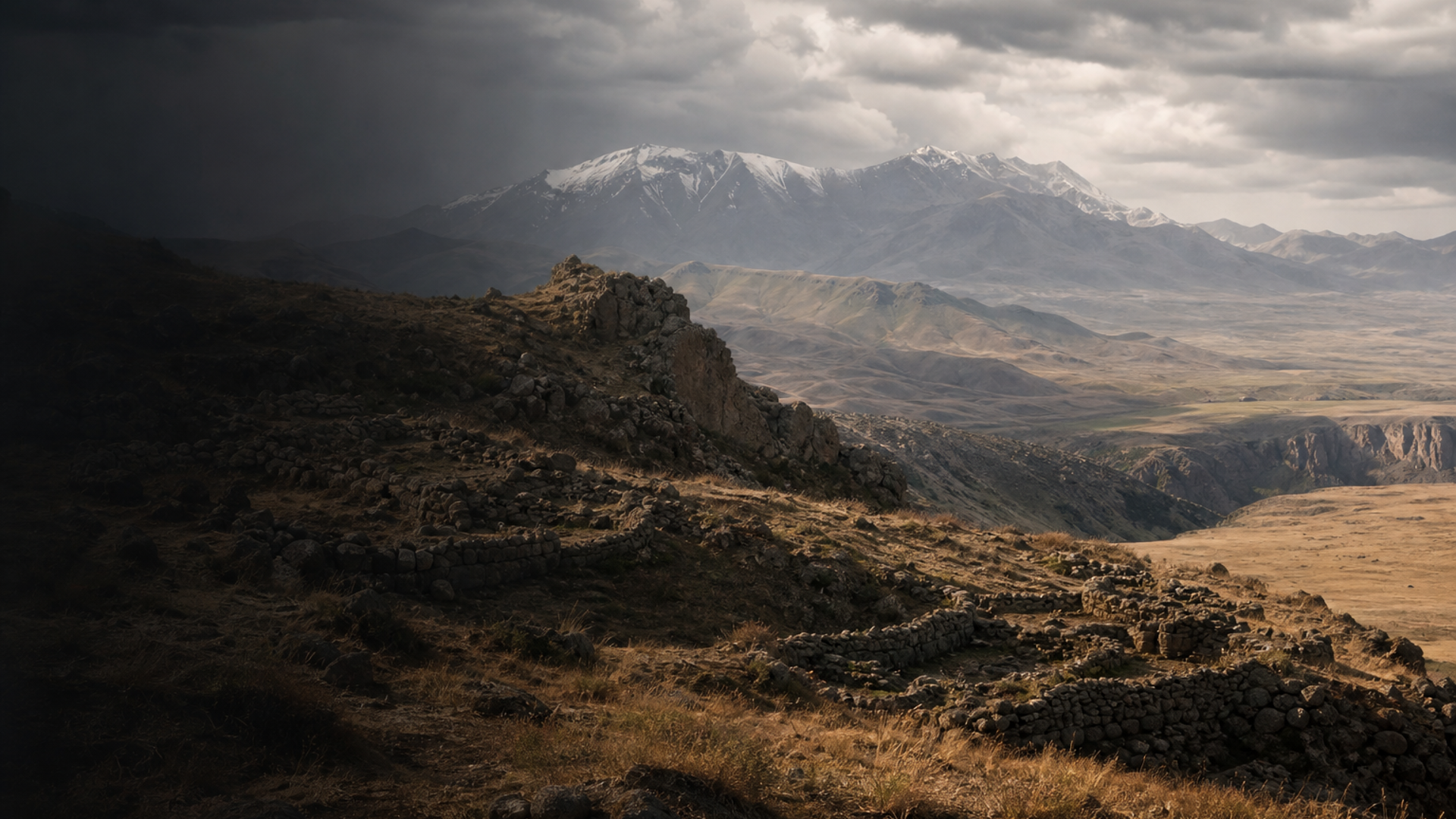
Beniamin sits on the high plains of Shirak Province, where Late Bronze Age lifeways crystallized against a backdrop of mountain horizons and long-distance trade routes. Archaeological data indicates mortuary activity here between 1492 and 1261 BCE; the material traces — ceramics, burial contexts and landscape placement — align Beniamin with regional expressions of Late Bronze Age Armenia. Limited evidence suggests the community participated in broader economic and cultural exchanges that connected the southern Caucasus with Anatolia and Mesopotamia, visible in imported object types and shared stylistic traits.

The archaeological horizon in which Beniamin falls is complex: settlement, pastoralism and cemetery records of contemporary sites show a mosaic of village life punctuated by episodic mobility. The two dated burials from Beniamin provide chronological anchors but cannot alone define population movements or cultural origins. Instead, they offer a focused glimpse into a moment in which local traditions were interacting with wider networks of exchange and influence. Archaeobotanical and zooarchaeological data remain sparse for this site, so interpretations of subsistence and environment are provisional.

In short, Beniamin emerges as a localized expression of Late Bronze Age dynamics in the Armenian highlands — rooted in place but open to regional interaction — and the genetic data available should be read as preliminary evidence in a larger, still-unfolding story.

  • Burials dated to 1492–1261 BCE anchor Beniamin in the Late Bronze Age
  • Material culture suggests links to wider Transcaucasian and Anatolian networks
  • Current dataset is small; broader conclusions require more samples
Capítulo IV

Daily Life & Society

Archaeological traces at Beniamin evoke a landscape of seasonal rhythms and household craft, where pastoral corridors met cultivated plots. Excavations revealed funerary contexts rather than extensive habitation layers, so reconstructions of daily life rely on comparative evidence from nearby Late Bronze Age settlements in the Armenian highlands. Archaeological data indicates communities combined small-scale farming, herding, and specialized production — a mixed economy capable of sustaining villages through variable mountain climates.

Grave goods and burial treatment, where present, hint at social differentiation: variations in assemblages and positioning can reflect age, gendered roles or status, though the tiny sample size from Beniamin prevents strong claims. Ceramics and portable objects suggest practical domestic activities alongside symbolic traditions tied to ancestry and place. Evidence from contemporaneous sites shows craft specialists — metalworkers and potters — circulating ideas and objects across valleys, and Beniamin likely participated in those networks to some degree.

Landscape use was pivotal: seasonal pastures, spring water sources, and routes connecting to larger settlement centers structured mobility and exchange. The overall picture is of resilient communities negotiating scarce resources and long-distance ties, with daily life anchored in both household labor and broader social connections.

  • Economy likely mixed: agriculture, herding and craft production
  • Funerary variation suggests social differentiation but is tentative
Capítulo V

Genetic Profile

Ancient DNA from Beniamin is extremely limited — only two samples dated between 1492 and 1261 BCE are currently available. Because the sample count is below ten, all genetic inferences are preliminary and should be treated with caution. The published dataset for these Beniamin burials does not report common Y-chromosome or mitochondrial haplogroups in the aggregated metadata provided here, so no definitive statements can be made about paternal or maternal lineages at the site.

Despite the small sample size, the genetic context of Late Bronze Age Armenia more broadly—based on regional studies—suggests mixture among local Caucasus-related ancestry, West Asian (Anatolian/Levantine) contributions, and gene flow linked to Steppe-derived populations at varying levels. If future sampling from Beniamin corroborates regional patterns, it may reflect similar admixture processes: long-term residence of Caucasus-related groups with intermittent influxes from neighboring zones. However, without reliable haplogroup calls or genome-wide summaries for these two individuals, such connections remain speculative.

In sum, the Beniamin genetic signal is a tantalizing fragment: it confirms the feasibility of recovering ancient DNA from the Shirak highlands, but more samples and published haplogroup/genome-wide analyses are required to place these individuals securely within the demographic tapestry of Late Bronze Age Transcaucasia.

  • Only 2 samples available — conclusions are highly preliminary
  • No reported common Y- or mtDNA haplogroups for these samples
Capítulo VI

Legacy & Modern Connections

Beniamin offers a cinematic, humanizing frame for understanding how Late Bronze Age communities in the Armenian highlands lived and moved. Archaeological evidence ties the site into enduring patterns of highland settlement, pastoral mobility, and interregional exchange that helped shape cultural landscapes still visible in modern Armenia. Genetic inquiry, while nascent at Beniamin, holds promise for tracing ancestral links across the Caucasus and beyond, but any suggested ties to modern populations must be couched in caution: two ancient genomes cannot map the full arc of millennia of demographic change.

As more sites are sampled, comparisons between Beniamin and other Late Bronze Age assemblages will clarify continuities and ruptures — revealing which practices endured locally and which reflect broader migrations. For museum and public audiences, Beniamin's legacy is powerful: these burials are intimate witnesses to a past where local identities were forged within networks of exchange, environment and memory. The immediate scientific value is methodological too — demonstrating that the highland soils of Shirak can preserve ancient DNA and inviting greater, carefully contextualized sampling across the region.
  • Connects modern Armenia to long-lived highland traditions through material culture
  • Genetic potential is high but requires larger, well-contextualized sample sets
Capítulo VII

Catálogo de muestras

2 muestras de ADN antiguo asociadas con la cultura Beniamin Late Bronze Age Voices que aportan datos de referencia sobre las poblaciones de este periodo.

2 / 2 muestras
Retrato Muestra País Época Fecha Cultura Sexo ADN-Y ADNmt
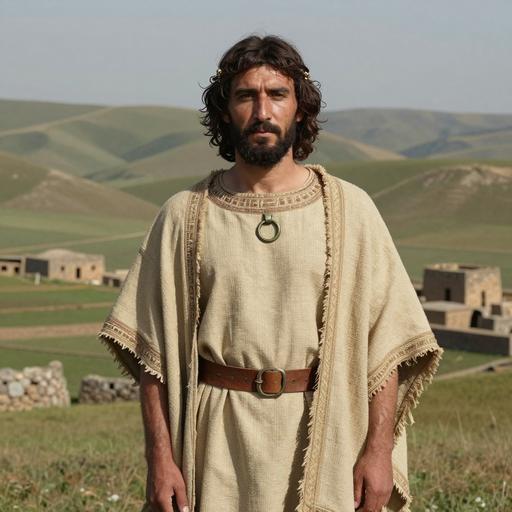
Retrato reconstruido de Beniamin LBA individual, Armenia
Beniamin LBA individual, Armenia
Armenia Armenia_Beniamin_LBA 1492-1325 calBCE (3145±15 BP, UCIAMS-237549) Ancient Near Eastern Civilization M E-FT278388 -
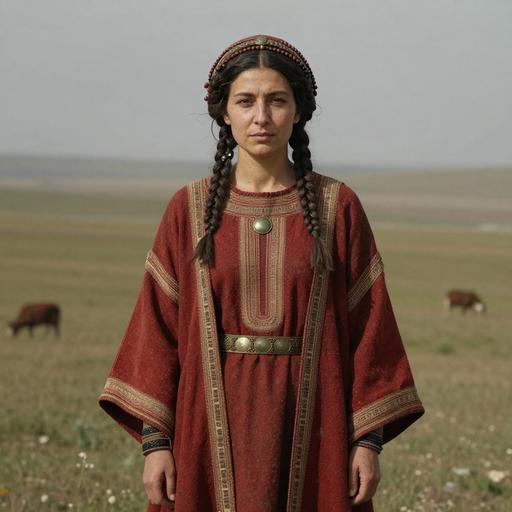
Retrato reconstruido de Beniamin LBA individual, Armenia
Beniamin LBA individual, Armenia
Armenia Armenia_Beniamin_LBA 1398-1261 calBCE (3055±15 BP, UCIAMS-237547) Ancient Near Eastern Civilization F - -
Con IA

Asistente de IA

Haz preguntas sobre la cultura Beniamin Late Bronze Age Voices

Asistente de IA por DNAGENICS

Desbloquear esta función
Pregunta sobre la cultura Beniamin Late Bronze Age Voices. El asistente con IA puede explicar hallazgos genéticos, contexto histórico, pruebas arqueológicas y conexiones modernas, con sus límites de interpretación.


Ejemplo de análisis con IA

La cultura Beniamin Late Bronze Age Voices representa un capítulo de la historia humana...

El análisis genético permite estudiar similitudes con poblaciones anteriores y posibles adaptaciones. Las muestras de ADN antiguo aportan información para investigar patrones migratorios y relaciones entre poblaciones, con límites que dependen del estudio y del contexto arqueológico.

Esta es una vista previa del análisis con IA. Accede al asistente completo para explorar información sobre:

  • Composición y similitud genética
  • Patrones migratorios y orígenes
  • Vida cotidiana y prácticas culturales
  • Contexto genético moderno

Explora más culturas antiguas

Descubre la historia de civilizaciones de distintas partes del mundo antiguo