Preparando el informe

Cargando la información y las referencias disponibles

Consultando el registro arqueológico...

Recopilando registros antiguos

Saltar al contenido principal
Black Sea Echoes
Cultura destacada

Black Sea Echoes

Medieval lives on the Krasnodar coast seen through archaeology and maternal genomes

776 CE - 1157 CE
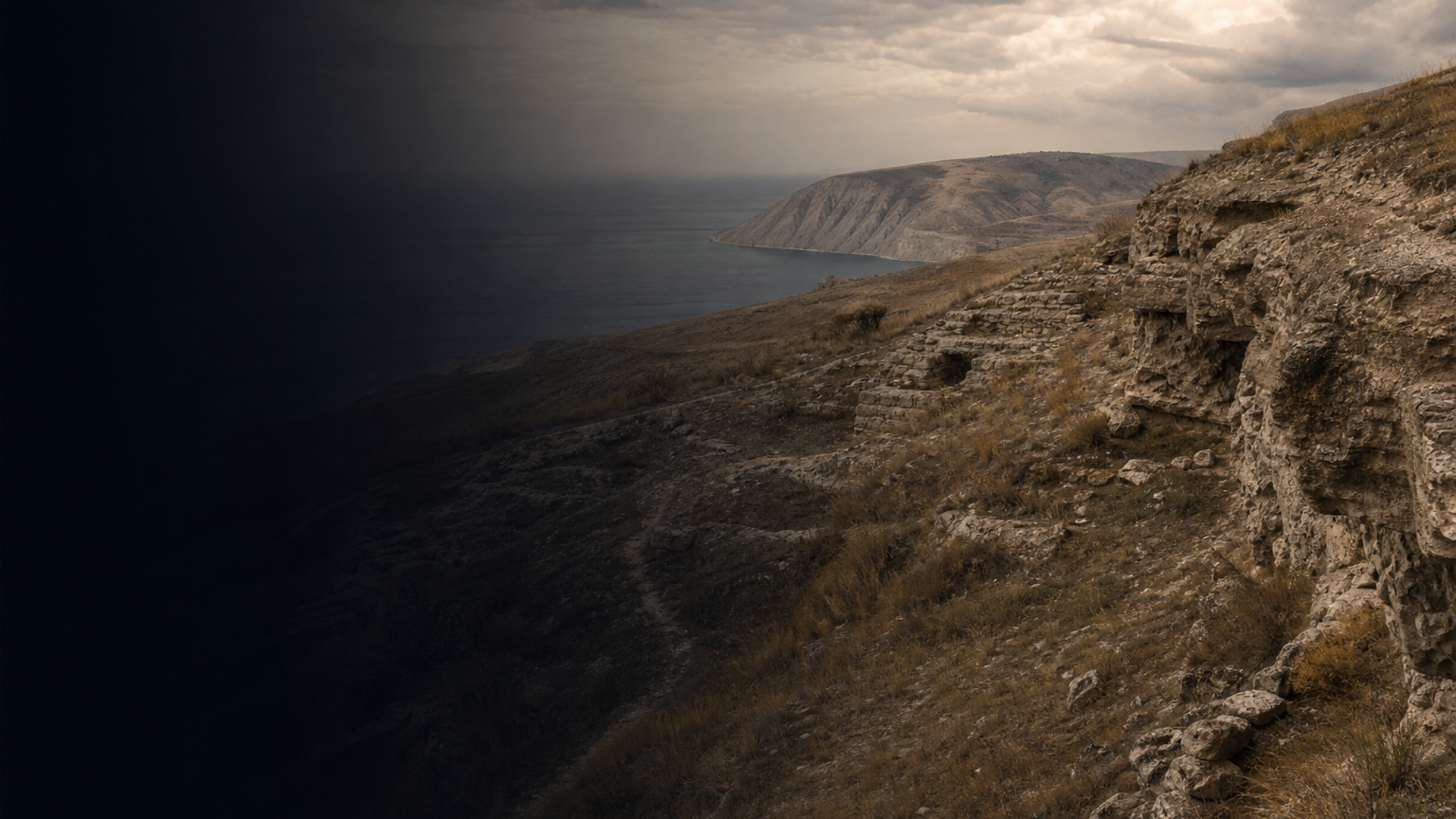
Krasnodar Krai, Russia (Anapa-Andreyevskaya Shhel)
Desplázate para empezar
Capítulo I

La historia

Comprender la cultura Black Sea Echoes

Archaeological remains from Anapa-Andreyevskaya Shhel (Krasnodar Krai, Russia) dated 776–1157 CE reveal preliminary maternal DNA signals (J1c, U). Limited samples suggest local continuity and Black Sea connections; interpretations remain tentative pending more data.

Time Period

776–1157 CE

Region

Krasnodar Krai, Russia (Anapa-Andreyevskaya Shhel)

Common Y-DNA

Undetermined (no consensus from 3 samples)

Common mtDNA

J1c (2), U (1)

Capítulo II

Cronología

Momentos clave de la historia de esta cultura

776 CE

Earliest dated burial

One of the three sampled individuals from Anapa-Andreyevskaya Shhel dates to 776 CE, marking the earliest secure genetic date in this set.

1000 CE

Medieval Black Sea crossroads

Around the 10th–11th centuries the Black Sea coast was a nexus of trade and movement between Caucasus, Byzantium, and steppe regions.

1157 CE

Latest dated burial

The most recent of the sampled individuals falls at 1157 CE, capping the current chronological window.

Capítulo III

Origins & Emergence

On the windswept edge of the northeastern Black Sea, human communities in the medieval period stood at a crossroads of trade, migration, and empire. Archaeological work at Anapa-Andreyevskaya Shhel, a coastal site in Krasnodar Krai, has produced human remains dated between 776 and 1157 CE. These burials belong to a broad Mediterranean–Caucasus world shaped by the movement of peoples and goods across maritime routes and overland corridors.

Archaeological data indicates a landscape where local groups encountered merchants, travelers, and political influences from the wider medieval Caucasus and Black Sea littoral. The small number of securely dated samples (three individuals) prevents firm statements about population origins or large-scale demographic shifts. However, the combination of coastal location and the period’s known historical dynamics makes it plausible that the community experienced intermittent influxes of people and cultural practices.

Limited evidence suggests continuity with regional Late Antique and early medieval settlement patterns rather than a sudden population replacement. The genetic signals recovered from these few individuals provide initial clues but must be read as provisional: the region’s deep and layered history demands larger sample sizes to trace origins with confidence.

  • Site: Anapa-Andreyevskaya Shhel, Krasnodar Krai, Russia
  • Date range of samples: 776–1157 CE
  • Evidence points to a coastal community embedded in Black Sea exchange
Capítulo IV

Daily Life & Society

Archaeological context along the Black Sea coast evokes a life shaped by sea and steppe. Material remains from similar medieval littoral sites show a mixture of fishing, small-scale agriculture, craft production, and trade. At Anapa-Andreyevskaya Shhel, the coastal setting would have granted access to maritime routes linking the Caucasus, the Bosporus, and the wider Black Sea economy.

Archaeological data indicates that communities in this region participated in networks that carried goods, ideas, and people. Foodways likely reflected both marine resources and inland agriculture; pottery, metalwork, and imported items in comparable sites testify to long-distance contacts. Social life may have been organized around kin networks and village-level leadership, with occasional influence from larger polities in the medieval Caucasus.

Because excavation reports and material inventories for this specific assemblage are limited, reconstructions of daily life remain tentative. The small genetic sample set complements the archaeological picture by offering direct evidence of biological ancestry, particularly maternal lineages, but cannot on its own illuminate social structure or cultural practices.

  • Economy: likely coastal fishing, agriculture, and participation in Black Sea trade
  • Material culture: indications of local craft with occasional imported goods (regional pattern)
Capítulo V

Genetic Profile

Ancient DNA from three individuals at Anapa-Andreyevskaya Shhel reveals maternal haplogroups J1c (two individuals) and U (one individual). These mitochondrial lineages offer a first glimpse into maternal ancestry but must be interpreted cautiously given the extremely small sample count (<10).

Haplogroup J (including subclades like J1c) is widespread across Europe and the Near East and is often associated, in broad strokes, with post‑Neolithic female-mediated gene flow and later regional mobility. Its presence here could reflect connections to Anatolian, Caucasian, or Mediterranean maternal pools—consistent with the Black Sea’s history as a conduit for people and goods. Haplogroup U, by contrast, is an older European lineage with roots extending back to Paleolithic and Neolithic populations; a U lineage here may indicate local or long-standing regional maternal ancestry.

No consistent Y‑chromosome haplogroups were reported for this small cohort, so paternal patterns remain unresolved. Because only three individuals were analyzed, any population-level inference (continuity, admixture, migration) is highly provisional. Future sampling—especially paired nuclear genome data and larger sample sizes—would allow testing of hypotheses about local continuity versus incoming maternal lineages and the relative roles of male and female mobility in shaping medieval Black Sea populations.

  • mtDNA: J1c (2 samples) suggests Mediterranean/Caucasus connections; U (1) indicates deeper European roots
  • Y-DNA: not determined in this cohort; paternal patterns remain unresolved
Capítulo VI

Legacy & Modern Connections

The genetic threads uncovered at Anapa-Andreyevskaya Shhel hint at a tapestry of maternal ancestries woven along the medieval Black Sea shore. Modern populations around Krasnodar and the wider Caucasus are genetically heterogeneous, reflecting centuries of local continuity and episodic movement. The presence of J1c and U in medieval burials mirrors lineages still detectable in contemporary regional mtDNA pools, but direct continuity cannot be assumed from three samples alone.

These results are a cinematic opening — a small window onto long human stories of mobility, exchange, and adaptation. They underscore how ancient DNA can illuminate human connections across time when integrated with careful archaeological context. Expanded sampling and the recovery of genome-wide data will be necessary to move from evocative possibilities to robust narratives about descent, mixture, and cultural identity in the medieval Caucasus.

  • Modern relevance: maternal lineages found are present in regional mtDNA today, but continuity is tentative
  • Research need: larger, genome-wide datasets required to confirm population-level links
Con IA

Asistente de IA

Haz preguntas sobre la cultura Black Sea Echoes

Asistente de IA por DNAGENICS

Desbloquear esta función
Pregunta sobre la cultura Black Sea Echoes. El asistente con IA puede explicar hallazgos genéticos, contexto histórico, pruebas arqueológicas y conexiones modernas, con sus límites de interpretación.

Ejemplo de análisis con IA

La cultura Black Sea Echoes representa un capítulo de la historia humana...

El análisis genético permite estudiar similitudes con poblaciones anteriores y posibles adaptaciones. Las muestras de ADN antiguo aportan información para investigar patrones migratorios y relaciones entre poblaciones, con límites que dependen del estudio y del contexto arqueológico.

Esta es una vista previa del análisis con IA. Accede al asistente completo para explorar información sobre:

  • Composición y similitud genética
  • Patrones migratorios y orígenes
  • Vida cotidiana y prácticas culturales
  • Contexto genético moderno

Explora más culturas antiguas

Descubre la historia de civilizaciones de distintas partes del mundo antiguo