Preparando el informe

Cargando la información y las referencias disponibles

Consultando el registro arqueológico...

Recopilando registros antiguos

Saltar al contenido principal
Bones of Zealand: Saxon Medieval Voices
Cultura destacada

Bones of Zealand: Saxon Medieval Voices

Archaeology and DNA from 1000–1100 CE burials on Zealand, Kopenhagen

1000 CE - 1100 CE
Zealand, Denmark (Kopenhagen)
Desplázate para empezar
Capítulo I

La historia

Comprender la cultura Bones of Zealand: Saxon Medieval Voices

Fifteen medieval burials from Zealand (Kopenhagen) dated 1000–1100 CE link archaeological burial practice with genetic signals: rare Y-lineages (R, G) and a predominance of mtDNA H. Archaeological data indicates Christian burial contexts; genetic results illuminate family lines and population continuity.

Time Period

1000–1100 CE

Region

Zealand, Denmark (Kopenhagen)

Common Y-DNA

R (1), G (1)

Common mtDNA

H (4), HV (1), H31 (1), U (1), T (1)

Capítulo II

Cronología

Momentos clave de la historia de esta cultura

965 CE

Christianization gains momentum

Conversion of Danish elites around the late 10th century leads to church foundations and Christian burial customs across Zealand.

1000 CE

Burial contexts sampled

Individuals later dated to 1000–1100 CE interred in churchyard contexts around Kopenhagen.

1100 CE

Parish networks solidify

By the early 12th century, ecclesiastical and administrative structures shape local communities on Zealand.

Capítulo III

Origins & Emergence

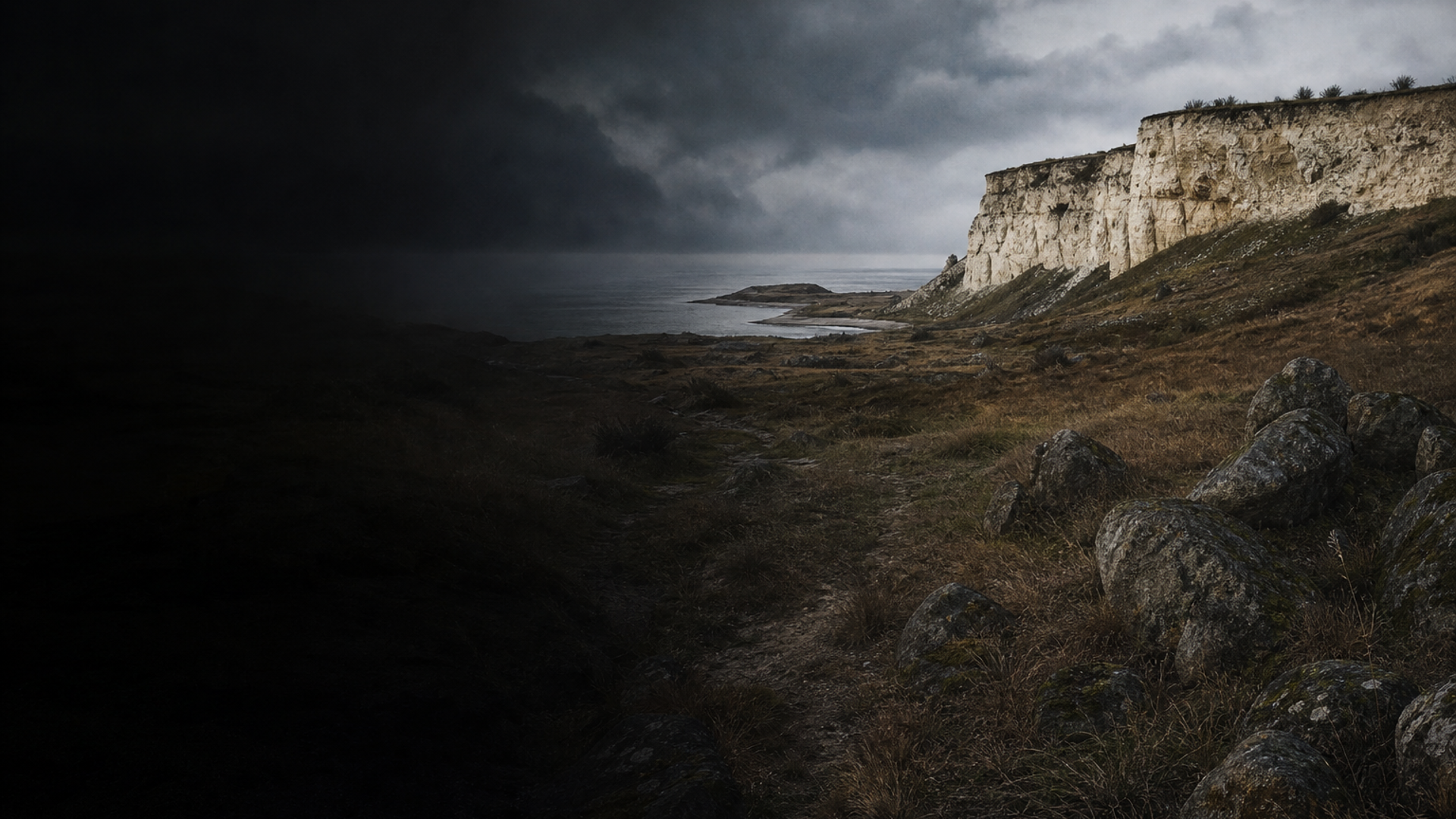
Along the low, wind-scoured shores of Zealand, human stories from the turn of the first millennium are written in bone and soil. Archaeological data indicates that the burials sampled in Kopenhagen date to 1000–1100 CE, a century marked by the consolidation of Christian practice in Denmark and by shifting social ties across the North Sea. The skeletal assemblage and grave orientations are consistent with churchyard and parish burial traditions documented elsewhere in medieval Scandinavia, suggesting integration into Christian ritual landscapes.

Genetically, this small cluster (n = 15) provides a snapshot rather than a full portrait of medieval Zealand. The presence of Y-haplogroups R and G—each observed in a single male—suggests the male lineages in this assemblage are diverse but low in frequency within the sample. Mitochondrial haplogroups are dominated by H (four occurrences), with HV, H31, U and T also present, a pattern compatible with broader northwestern European maternal lineages during the medieval period. Limited evidence suggests continuity of maternal lineages in the region, but the modest geographic and numeric scope of the samples means broader population-level conclusions remain tentative.

Archaeological context and isotopic study (when available) can help separate local continuity from mobility. For now, these remains evoke a coastal community negotiating old kin networks and new ecclesiastical structures as recorded in both artifact and allele.

  • Samples dated to 1000–1100 CE from burial contexts in Kopenhagen, Zealand
  • Burial orientation and context consistent with Christian churchyard traditions
  • mtDNA dominated by haplogroup H; Y-DNA shows rare R and G lineages
Capítulo IV

Daily Life & Society

The medieval life of Zealanders emerges from a mosaic of material fragments: worn bone, iron nails, textile impressions, and ecofacts from domestic middens. Archaeological data indicates that communities around Kopenhagen at 1000–1100 CE were closely tied to maritime trade routes, local agriculture, and parish structures. Churchyards imply organized ritual and a visible imprint of Christianity on everyday life — baptism, burial, and seasonal festivals likely structured social rhythm.

Skeletal markers—when preserved—tell quieter stories: stresses of physical labor, healed fractures, dental wear from abrasive diets, and growth markers that speak to childhood nutrition. Grave goods in this period tend to be modest in Denmark, yet occasional imported objects and metalwork hint at connections reaching across the Baltic and North Sea. Household size, kinship practice, and craft specialization can be inferred from settlement patterns and artifact distributions, but specific household reconstructions for the sampled individuals are limited by the absence of associated dwelling excavations.

Combined archaeological and genetic approaches can reveal family relationships in cemeteries, patterns of patrilocality or matrilocality, and whether newcomers married into local groups. For Zealand’s medieval burials, current data suggest a community anchored to the land and sea, with biological and cultural ties that cross regional boundaries.

  • Christian parish structures shaped burial practices and community life
  • Skeletal markers indicate labor-intensive lifestyles and maritime connections
Capítulo V

Genetic Profile

Ancient DNA from 15 individuals from Zealand (Kopenhagen) dated to 1000–1100 CE offers a focused window into medieval genetic variation on the Danish islands. The Y-chromosome dataset is limited: two male haplogroups were identified, one R and one G. Each appears only once among the males sampled, indicating diversity in paternal lines but caution given the small male sample size. The mitochondrial record is richer: H occurs four times, HV once, H31 once, U once, and T once. This maternal distribution aligns with a pattern of Western and Northern European matrilineal lineages commonly observed in medieval and later populations.

Genetic signals here do not indicate dramatic population replacement. Instead, they are consistent with regional continuity combined with episodic mobility — merchants, sailors, and clerics moving along networks of trade and church ties. Limited evidence suggests some gene flow from broader North Sea and Baltic contacts, but resolving the scale of migration versus local continuity requires larger datasets and genome-wide analyses that include autosomal data, isotopic values, and comparative samples from contemporaneous sites in Zealand and nearby regions.

Because the sample count is moderate (n = 15) and geographic coverage is local, conclusions must remain provisional. Still, the combination of archaeological context and uniparental markers points to a coastal medieval population whose maternal lineages were relatively stable while paternal lines show heterogeneity.

  • mtDNA dominated by H lineages (4/15), suggesting maternal continuity
  • Y-DNA sparse and varied (R, G), indicating diverse paternal origins — interpret cautiously
Capítulo VI

Legacy & Modern Connections

The human remains from Kopenhagen speak across a millennium: they anchor modern Danes to medieval lifeways and biological ancestries. Contemporary populations in Zealand may inherit some of the same maternal lineages (notably H subtypes) seen in these samples, reflecting long-term continuity in northern European maternal heritage. However, haplogroup overlap alone cannot specify direct descent without genome-wide comparisons and careful demographic modeling.

Archaeology and aDNA together help museums and communities tell richer stories — of coastal trade, parish life, and family networks — and remind us that present-day genetic landscapes are palimpsests of migration, marriage, and local persistence. Given the local scope (Kopenhagen) and moderate sample size, these connections are indicative rather than definitive; they invite expanded sampling, targeted isotopic work, and community engagement to deepen the narrative of Zealand’s medieval past.

  • Maternal haplogroups suggest long-term regional continuity into modern populations
  • Archaeology + aDNA enable nuanced stories of mobility, kinship, and local persistence
Con IA

Asistente de IA

Haz preguntas sobre la cultura Bones of Zealand: Saxon Medieval Voices

Asistente de IA por DNAGENICS

Desbloquear esta función
Pregunta sobre la cultura Bones of Zealand: Saxon Medieval Voices. El asistente con IA puede explicar hallazgos genéticos, contexto histórico, pruebas arqueológicas y conexiones modernas, con sus límites de interpretación.

Ejemplo de análisis con IA

La cultura Bones of Zealand: Saxon Medieval Voices representa un capítulo de la historia humana...

El análisis genético permite estudiar similitudes con poblaciones anteriores y posibles adaptaciones. Las muestras de ADN antiguo aportan información para investigar patrones migratorios y relaciones entre poblaciones, con límites que dependen del estudio y del contexto arqueológico.

Esta es una vista previa del análisis con IA. Accede al asistente completo para explorar información sobre:

  • Composición y similitud genética
  • Patrones migratorios y orígenes
  • Vida cotidiana y prácticas culturales
  • Contexto genético moderno

Explora más culturas antiguas

Descubre la historia de civilizaciones de distintas partes del mundo antiguo