Preparando el informe

Cargando la información y las referencias disponibles

Consultando el registro arqueológico...

Recopilando registros antiguos

Saltar al contenido principal
Brunn Wolfholz — Neolithic Edge
Cultura destacada

Brunn Wolfholz — Neolithic Edge

A lone genome at the frontier between Mesolithic foragers and LBK farmers

5604 CE - 5230 BCE
Austria (Brunn Wolfholz)
Desplázate para empezar
Capítulo I

La historia

Comprender la cultura Brunn Wolfholz — Neolithic Edge

Single genome from Brunn Wolfholz (Austria), dated 5604–5230 BCE, captures a moment of contact between local hunter-gatherers and incoming Linear Pottery communities. Limited sample size makes conclusions provisional; archaeological context and genetic markers hint at mixed ancestry.

Time Period

5604–5230 BCE

Region

Austria (Brunn Wolfholz)

Common Y-DNA

CT (1 sample)

Common mtDNA

U (1 sample)

Capítulo II

Cronología

Momentos clave de la historia de esta cultura

5604 BCE

Brunn Wolfholz individual dated

A single human genome from Brunn Wolfholz is dated to the early Neolithic horizon (5604–5230 BCE), capturing contact between hunter-gatherers and LBK farmers.

Capítulo III

Origins & Emergence

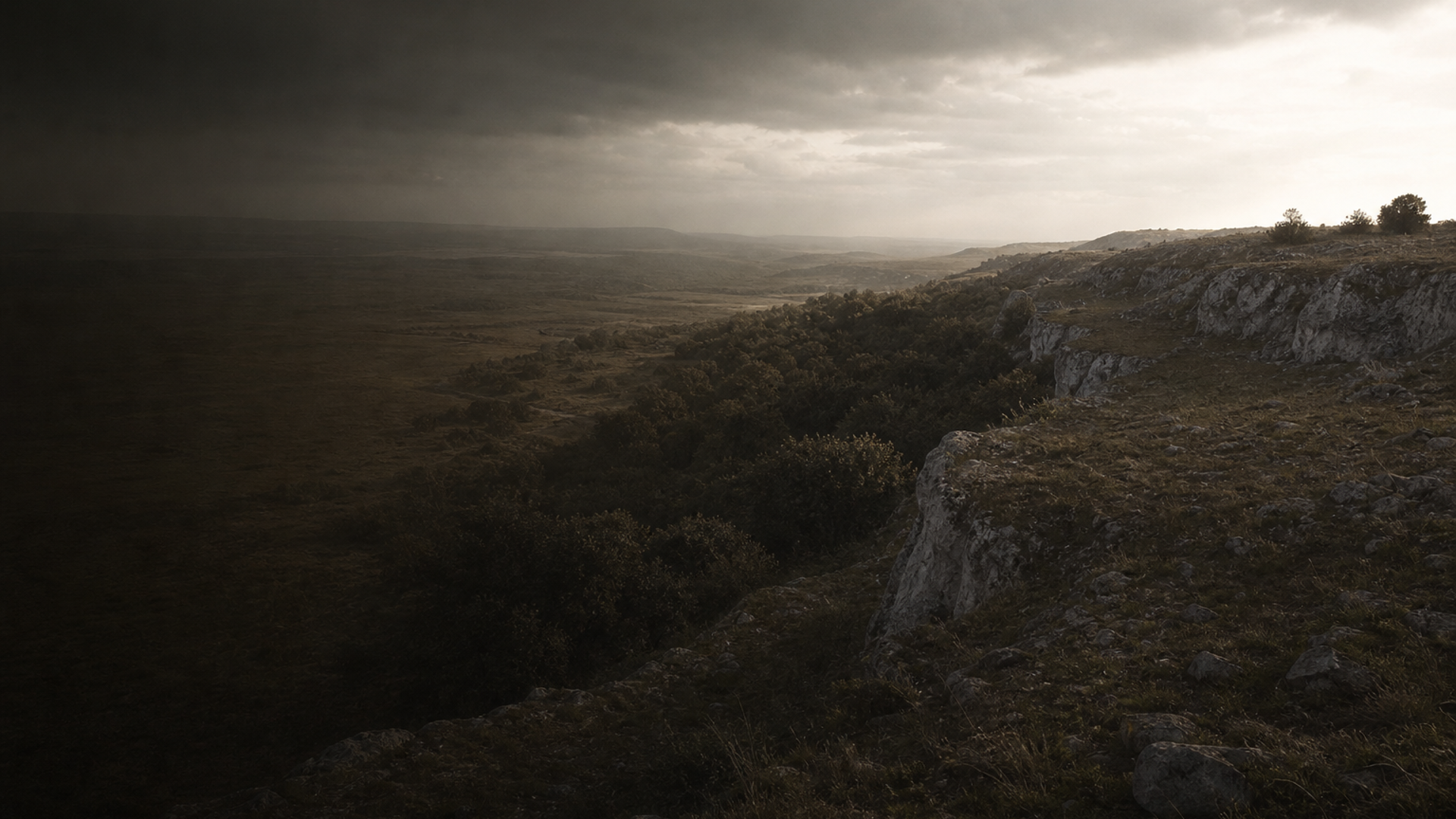
Brunn Wolfholz sits in the low hills of what is now eastern Austria, a landscape of river terraces and mixed forest during the early Neolithic. Archaeological data indicates occupation in the middle of the 6th millennium BCE — here dated between 5604 and 5230 BCE — when the first Linear Pottery (LBK) farmers were expanding into Central Europe and encountering persistent local hunter-gatherer groups. The cultural label "Austria_N_HG_LBK" captures this liminal identity: individuals whose material traces sit at the intersection of Neolithic farming traditions and older forager lifeways.

Limited evidence suggests that Brunn Wolfholz was part of a mosaic of small settlements and seasonal camps where exchange, intermarriage, and the transmission of technologies (pottery, polished stone axes) took place. Lithic scatter and isolated ceramic fragments at contemporaneous sites point to overlapping use of the landscape; however, the single genetic sample from Brunn Wolfholz requires us to be cautious. The site offers a cinematic snapshot — a solitary human genome that hints at the processes of migration, cultural contact, and local persistence shaping early Central Europe.

  • Dated 5604–5230 BCE, Brunn Wolfholz lies in eastern Austria
  • Represents contact zone between Mesolithic hunter-gatherers and LBK farmers
  • Single-sample dataset; interpretations are preliminary
Capítulo IV

Daily Life & Society

Daily life in the Brunn Wolfholz horizon would have unfolded at the edge of cultivated fields and wildwood. Archaeological analogies from the region indicate a mixed economy: small-scale cultivation of cereals and pulses introduced by LBK groups, alongside hunting, fishing, and gathering strategies retained from local hunter-gatherer knowledge. Pottery styles and domestic tools associated with LBK settlements appear in nearby assemblages, yet continuity in hunter-gatherer tool types has been documented at other contemporaneous Austrian sites, suggesting coexistence rather than abrupt replacement.

Social scenes may have been intimate and mobile — extended families tending plots in river valleys, exchanging pottery or flint, and negotiating alliances through marriage and ritual. The Brunn Wolfholz individual, preserved in the genetic record, likely lived within these intertwined lifeways: a world of dawn fires, wooden mortars, and the slow, tactile work of sowing and harvesting, layered atop older practices of riverine hunting and foraging. Archaeological data indicates cultural blending, but the full texture of daily life remains partly obscured by the limited number of human remains and the uneven preservation of organic materials.

  • Economy likely mixed: early farming combined with hunting and gathering
  • Material culture shows hallmarks of LBK alongside persistent forager tools
Capítulo V

Genetic Profile

The genetic signal from Brunn Wolfholz is based on a single sampled genome (sample count = 1), so any inference must be framed as provisional. The male-line marker is reported at the broad haplogroup CT, a basal clade that sits upstream of many Eurasian Y lineages; at this resolution CT does not pinpoint a specific descendant branch and likely reflects either limited coverage or conservatively assigned Y-haplogroup calls. The mitochondrial lineage is haplogroup U, a maternal haplogroup commonly associated with European hunter-gatherer populations in the Mesolithic and early Neolithic.

When placed in the wider genomic landscape of the 6th millennium BCE, this combination is evocative: mtDNA U suggests continuity of hunter-gatherer maternal ancestry, while the ambiguous CT result prevents firm conclusions about paternal origins. Broadly, ancient DNA work across Central Europe documents substantial admixture between incoming Anatolian-derived farmers (associated with LBK) and local hunter-gatherers — a process producing gradient-like ancestry patterns. At Brunn Wolfholz, archaeological indicators of LBK influence plus a hunter-gatherer-associated mtDNA hint at local admixture or cultural assimilation. Because only one genome is available, these patterns remain hypotheses to be tested by larger sample sets; low sample count (<10) means population-level claims are premature.

  • mtDNA U indicates maternal links to European hunter-gatherer lineages
  • Y-DNA called as CT at low resolution; paternal origin remains uncertain
Capítulo VI

Legacy & Modern Connections

The solitary genome from Brunn Wolfholz speaks to processes that shaped the genetic and cultural fabric of Europe: the spread of farming, sustained contact with forager populations, and complex patterns of admixture. Elements of this deep history — hunter-gatherer maternal lineages, farmer-derived cultural practices — are woven into the ancestry of many later Central European populations. Yet, because the dataset here is minimal, direct links to modern groups must be made cautiously.

Archaeologically, sites like Brunn Wolfholz demonstrate how early Neolithic frontiers were not simple lines of replacement but arenas of negotiation, exchange, and shared lifeways. Genetically, the presence of hunter-gatherer markers alongside farming-associated archaeology underscores the mosaic nature of Europe's Neolithic transformation. Future sampling from Brunn Wolfholz and nearby LBK and Mesolithic sites will clarify how representative this individual was and how these local dynamics contributed to the broader genomic legacy of Europe.

  • Reflects mixed heritage processes important to later European ancestry
  • Conclusions limited by single-sample evidence; more data needed
Con IA

Asistente de IA

Haz preguntas sobre la cultura Brunn Wolfholz — Neolithic Edge

Asistente de IA por DNAGENICS

Desbloquear esta función
Pregunta sobre la cultura Brunn Wolfholz — Neolithic Edge. El asistente con IA puede explicar hallazgos genéticos, contexto histórico, pruebas arqueológicas y conexiones modernas, con sus límites de interpretación.
Ejemplo de análisis con IA

La cultura Brunn Wolfholz — Neolithic Edge representa un capítulo de la historia humana...

El análisis genético permite estudiar similitudes con poblaciones anteriores y posibles adaptaciones. Las muestras de ADN antiguo aportan información para investigar patrones migratorios y relaciones entre poblaciones, con límites que dependen del estudio y del contexto arqueológico.

Esta es una vista previa del análisis con IA. Accede al asistente completo para explorar información sobre:

  • Composición y similitud genética
  • Patrones migratorios y orígenes
  • Vida cotidiana y prácticas culturales
  • Contexto genético moderno

Explora más culturas antiguas

Descubre la historia de civilizaciones de distintas partes del mundo antiguo