Preparando el informe

Cargando la información y las referencias disponibles

Consultando el registro arqueológico...

Recopilando registros antiguos

Saltar al contenido principal
Cimmerian Moldova: Edge of the Steppe
Cultura destacada

Cimmerian Moldova: Edge of the Steppe

Three late Iron Age individuals from Mokra and Glinoe Sad reveal archaeological and genetic traces of the Cimmerian horizon

1011 CE - 804 BCE
Moldova (Rybnitsa & Slobodzeya districts)
Desplázate para empezar
Capítulo I

La historia

Comprender la cultura Cimmerian Moldova: Edge of the Steppe

Archaeological remains from Mokra and Glinoe Sad (1011–804 BCE) tie local Cimmerian-era material culture to diverse maternal and paternal lineages. Limited sample size (n=3) makes conclusions preliminary, but early genetic signals hint at Steppe and eastern connections in northeastern Moldova.

Time Period

1011–804 BCE

Region

Moldova (Rybnitsa & Slobodzeya districts)

Common Y-DNA

R (1), Q (1)

Common mtDNA

R, H9a, C5c

Capítulo II

Cronología

Momentos clave de la historia de esta cultura

900 BCE

Cimmerian activity in the Pontic frontier

Regional archaeological horizons assign Cimmerian-style artifacts and burials in northeastern Moldova to the late first millennium BCE, reflecting mobility along river corridors and steppe margins.

Capítulo III

Origins & Emergence

On the broad stage of the Pontic-Caspian frontier, the Moldova_Cimmerian assemblage occupies a moment of mobility and cultural contact. Archaeological data indicates funerary features and material culture at Mokra (Rybnitsa District) and Glinoe Sad (Slobodzeya District) that are stylistically aligned with the regional Cimmerian horizon of the late first millennium BCE (commonly dated to the 11th–8th centuries BCE in local sequences).

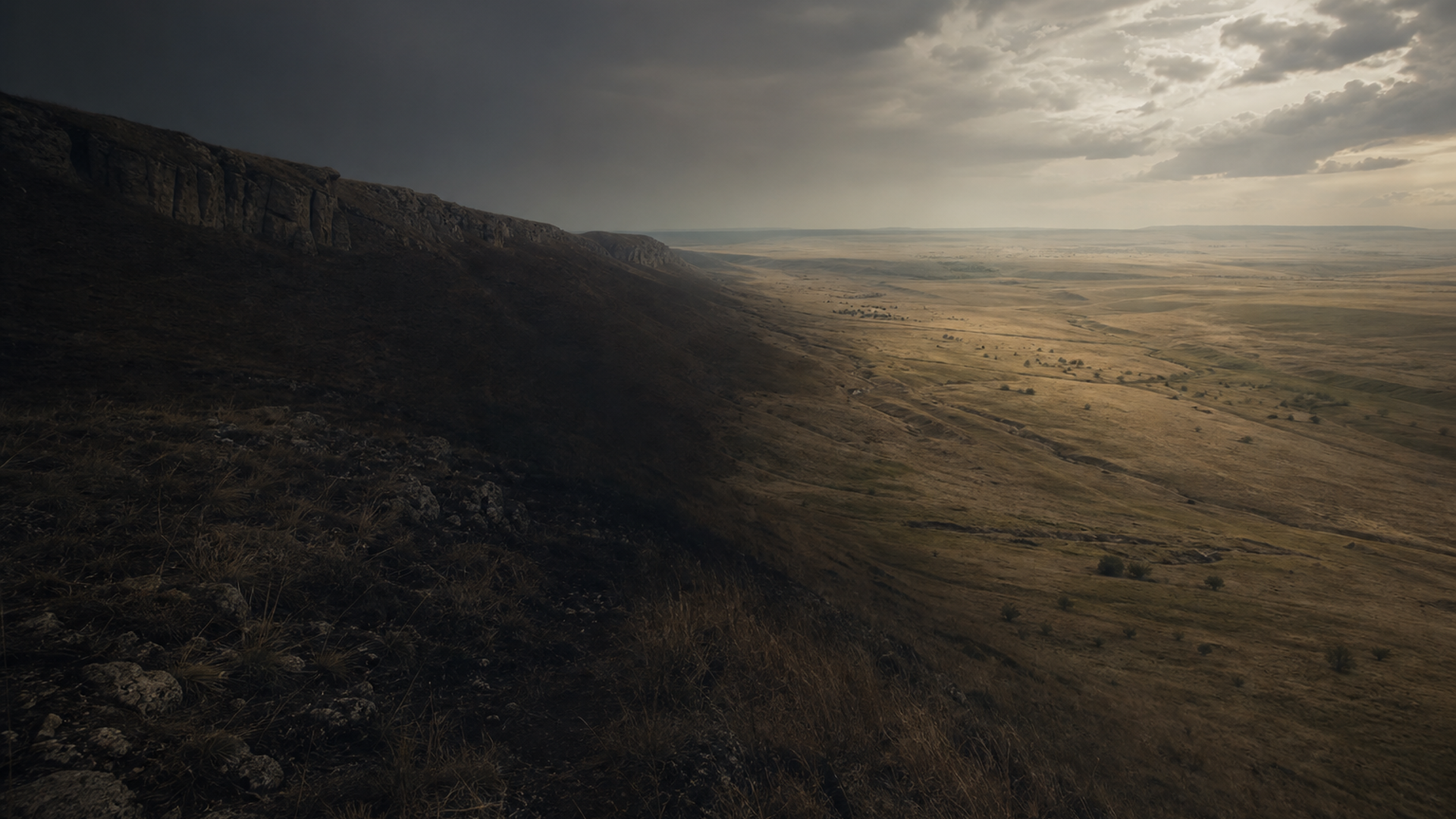
Cinematic landscapes of river valleys and steppe margins would have funneled people, goods, and ideas. The three dated samples (1011–804 BCE) come from two closely spaced sites in northeastern Moldova, suggesting localized activity or small communities in this borderland. Limited evidence suggests these individuals lived in communities shaped by pastoral mobility and contacts with neighboring Pontic and forest-steppe groups.

Genetic signals must be read alongside material culture: the presence of Y-haplogroup R is consistent with broader Eurasian Steppe male lineages that proliferated after the Bronze Age, while a Y-haplogroup Q and an mtDNA C5c point to eastern or northeastern Eurasian links at low frequency. Because the dataset is extremely small (n=3), any model of origin or migration remains provisional and should be tested with more samples and broader archaeological sampling.

  • Sites: Mokra (Rybnitsa District) and Glinoe Sad (Slobodzeya District), Moldova
  • Date range: 1011–804 BCE, within the local Cimmerian horizon
  • Small sample set (n=3) — interpretations are preliminary
Capítulo IV

Daily Life & Society

Material traces from nearby Cimmerian contexts in the Pontic fringe evoke a world of seasonal herding, ritualized burials, and exchange across open country. Archaeological data indicates that communities combined grazing economies with localized agriculture in sheltered valleys; settlement evidence in Moldova often clusters along rivers and lowland corridors that provided pasture and access to trade routes.

Artefacts typical of the Cimmerian sphere include metalwork with steppe-inspired motifs, simple pottery, and weapons or horse-gear in mortuary contexts. The three individuals sampled likely belonged to communities where mobility, cattle and horse husbandry, and intergroup networks mattered. Funerary placement and grave goods (where preserved) can reflect social roles — warriors, mounted herders, or kin groups — but for Mokra and Glinoe Sad the archaeological records are fragmentary.

Ethnographic analogies and landscape archaeology suggest social ties were negotiated through seasonal movement, alliances, and trade. Yet these portraits remain cinematic reconstructions: many details of diet, social stratification, and kinship require more direct evidence—stable isotopes, more burials, and wider excavation—to move from evocative possibility to tested hypothesis.

  • Economy likely pastoral with local agriculture along river valleys
  • Artifacts suggest connections to wider Pontic steppe material culture
Capítulo V

Genetic Profile

The Moldova_Cimmerian genetic snapshot is sparse but revealing. Among three individuals, Y-chromosome lineages include one R and one Q, while mitochondrial haplogroups are R, H9a, and C5c. Archaeogenetic research links Y-haplogroup R (broadly) to many Bronze-to-Iron Age Steppe-associated male lineages; its presence here aligns with archaeological indications of Steppe cultural influence.

The single Q lineage is notable because haplogroup Q is often found in eastern Eurasia and in some Steppe contexts; its occurrence at Glinoe Sad or Mokra may reflect low-frequency eastern connections or gene flow from more northerly or easterly groups. On the maternal side, H9a sits within the widespread H clade common across Europe, while C5c is typically associated with northeastern Eurasian maternal ancestry. The coexistence of West Eurasian and East Eurasian mitochondrial signals in this tiny sample hints at admixture or long-distance contact, but with only three genomes the pattern could reflect local heterogeneity rather than a broad population trend.

Given the small sample count (<10), conclusions must be tentative: archaeological and genetic data together suggest a community at the crossroads of Steppe and eastern influences, but further sampling is essential to clarify demographic processes, rates of admixture, and sex-biased mobility.

  • Y haplogroups: R and Q — suggests Steppe ancestry and possible eastern links
  • mtDNA: mixture of West Eurasian (H9a, R) and East Eurasian (C5c) maternal lines
Capítulo VI

Legacy & Modern Connections

The Moldova_Cimmerian individuals illuminate how the Pontic frontier functioned as a corridor of people and genes. Archaeological continuity in material motifs and genetic traces of both Western and Eastern Eurasian lineages suggest that modern genetic diversity in Moldova and adjacent regions is the product of long-standing blending across the steppe and forest-steppe margins.

Limited though the dataset is, the presence of eastern-affiliated maternal lineages alongside steppe-associated paternal markers echoes a broader millennia-long pattern: the region repeatedly absorbed and re-mixed diverse groups. These individuals are not direct ancestors of any single modern population but rather snapshots of processes that contributed to the genetic mosaic of northeastern Europe. Future sampling will clarify how these Cimmerian-era contacts fed into later Iron Age and historical populations in the Pontic region.

  • Signals of mixed West and East Eurasian ancestry contribute to the region's genetic mosaic
  • Current conclusions are provisional; more sampling needed to map long-term legacy
Con IA

Asistente de IA

Haz preguntas sobre la cultura Cimmerian Moldova: Edge of the Steppe

Asistente de IA por DNAGENICS

Desbloquear esta función
Pregunta sobre la cultura Cimmerian Moldova: Edge of the Steppe. El asistente con IA puede explicar hallazgos genéticos, contexto histórico, pruebas arqueológicas y conexiones modernas, con sus límites de interpretación.
Ejemplo de análisis con IA

La cultura Cimmerian Moldova: Edge of the Steppe representa un capítulo de la historia humana...

El análisis genético permite estudiar similitudes con poblaciones anteriores y posibles adaptaciones. Las muestras de ADN antiguo aportan información para investigar patrones migratorios y relaciones entre poblaciones, con límites que dependen del estudio y del contexto arqueológico.

Esta es una vista previa del análisis con IA. Accede al asistente completo para explorar información sobre:

  • Composición y similitud genética
  • Patrones migratorios y orígenes
  • Vida cotidiana y prácticas culturales
  • Contexto genético moderno

Explora más culturas antiguas

Descubre la historia de civilizaciones de distintas partes del mundo antiguo