Preparando el informe

Cargando la información y las referencias disponibles

Consultando el registro arqueológico...

Recopilando registros antiguos

Saltar al contenido principal
Fatyanovo Echoes
Cultura destacada

Fatyanovo Echoes

Bronze Age communities on the western edge of the Russian forests, seen through bones and genomes

2900 CE - 2200 BCE
Moscow region, Russia
Desplázate para empezar
Capítulo I

La historia

Comprender la cultura Fatyanovo Echoes

Archaeological and genetic evidence from six Fatyanovo-era burials (2900–2200 BCE) around Moscow reveals Corded Ware–linked steppe ancestry alongside local maternal lineages. Limited samples make conclusions preliminary but point to mobility and cultural fusion.

Time Period

c. 2900–2200 BCE

Region

Moscow region, Russia

Common Y-DNA

R (observed in 2 of 6 samples)

Common mtDNA

U (2), H (1), T2b (1) — 6 samples total

Capítulo II

Cronología

Momentos clave de la historia de esta cultura

2500 BCE

Fatyanovo presence in Moscow region

Burials and artifacts at Khanevo, Ivanovogorsky and Nikolo-Perevoz indicate a Fatyanovo horizon around 2500 BCE, reflecting steppe-influenced material culture north of the forest-steppe boundary.

Capítulo III

Origins & Emergence

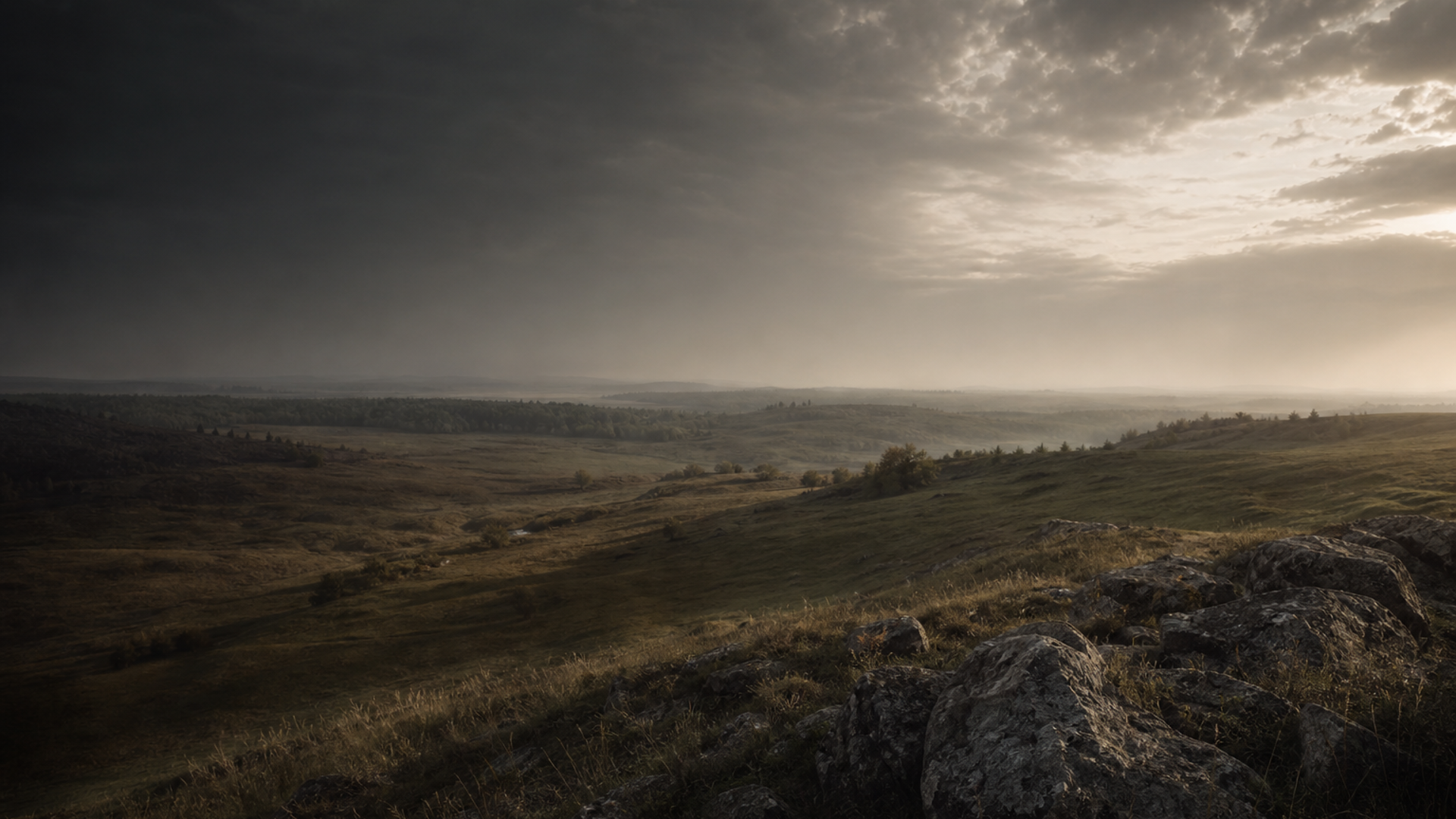
In the cinematic borderland between open steppe and dense taiga, the Fatyanovo horizon emerges around the late 3rd millennium BCE. Archaeological data from sites near Moscow—Khanevo, Ivanovogorsky and Nikolo-Perevoz—show burial rites, pottery shapes and metal objects that archaeologists link to the wider Corded Ware phenomenon stretching across northern Europe. Radiocarbon-dated contexts in this dataset fall between about 2900 and 2200 BCE, placing these communities squarely in the early Bronze Age transition. Material culture suggests a fusion: elements derived from steppe-derived pastoralist traditions juxtaposed with local forest-zone adaptations.

Limited evidence cautions against grand narratives. With just six analyzed individuals, patterns of migration, social organization and cultural transmission remain hypotheses supported by converging archaeological signals rather than definitive proofs. Still, even this small sample evokes a story of movement — people traveling along river corridors and forest margins, carrying new technologies and ways of burial into the Moscow region.

  • Sites: Khanevo, Ivanovogorsky, Nikolo-Perevoz (Moscow Oblast)
  • Dates: c. 2900–2200 BCE, early Bronze Age Fatyanovo horizon
  • Material links to Corded Ware traditions and steppe-influenced items
Capítulo IV

Daily Life & Society

Archaeological remains paint a textured portrait of everyday existence at the forest-steppe interface. Settlements associated with the Fatyanovo complex are often ephemeral; more durable traces come from burials where grave goods—pottery with corded impressions, polished stone tools and occasional metal objects—reveal craft practices and belief. The economy likely blended mobile pastoralism with seasonal exploitation of forest resources: hunting, fishing and small-scale cultivation may have supported communities living along river systems that threaded the Moscow landscape.

Social life can be glimpsed through mortuary variability. Individual burials sometimes carry personal items that signal status or identity, and the presence of steppe-style artifacts suggests either the movement of people or the adoption of new cultural markers. Yet, preservation biases and sparse settlement data mean daily routines remain partly conjectural; isotopic and botanical studies at these sites would help clarify diets and mobility patterns.

  • Economy: mixed pastoralist and forest-resource strategies
  • Mortuary evidence shows individual variation and external influences
Capítulo V

Genetic Profile

Genetic data from six Fatyanovo-period individuals around Moscow provide a tantalizing, if preliminary, window into ancestry. The two observed Y-DNA entries categorized as R align with broader patterns seen in Corded Ware–related and steppe-descended male lineages across Eurasia, consistent with migrations that dispersed steppe ancestry into northern and eastern Europe. Mitochondrial results are mixed: two U lineages (often associated in ancient contexts with long-standing hunter-gatherer or eastern hunter-gatherer maternal lineages), one H and one T2b lineage (haplogroups frequently found among Neolithic farmer-descended populations). This combination suggests admixture between steppe-derived groups and local or farmer-descended maternal lines.

Crucially, sample size is small (n=6). Statistical power is limited and any prevalence estimates should be treated as tentative. Nonetheless, the genetic signal coheres with archaeological expectations: a significant steppe-related contribution paired with maternal diversity that likely reflects local continuity and interactions with farming communities. Future larger datasets and genome-wide analyses would clarify proportions of steppe, hunter-gatherer and early farmer ancestry in the Fatyanovo population around Moscow.

  • Male lineages include haplogroup R (2/6), consistent with steppe-associated ancestry
  • Maternal diversity (U, H, T2b) points to admixture with local hunter-gatherer and farmer-descended women
Capítulo VI

Legacy & Modern Connections

The Fatyanovo presence in the Moscow region is a chapter in a larger story of Bronze Age mobility and cultural mixing. Genomes and grave goods together suggest that people linked to steppe expansions entered forested landscapes and blended with resident groups, leaving genetic traces that contributed to the ancestral mosaic of later Northeastern Europeans. Some modern genetic lineages in the region may partly descend from these early Bronze Age populations, but direct continuity is complex: millennia of migration, replacement and local change have reshaped gene pools.

Because these conclusions rely on a small number of samples, they serve best as hypotheses guiding further excavation and sequencing. Each new burial, isotope result or ancient genome will sharpen the picture of how Fatyanovo communities shaped the human landscape around Moscow.

  • Contributed to the genetic and cultural mosaic of Northeastern Europe
  • Current inferences are preliminary; more samples needed to test continuity
Con IA

Asistente de IA

Haz preguntas sobre la cultura Fatyanovo Echoes

Asistente de IA por DNAGENICS

Desbloquear esta función
Pregunta sobre la cultura Fatyanovo Echoes. El asistente con IA puede explicar hallazgos genéticos, contexto histórico, pruebas arqueológicas y conexiones modernas, con sus límites de interpretación.

Ejemplo de análisis con IA

La cultura Fatyanovo Echoes representa un capítulo de la historia humana...

El análisis genético permite estudiar similitudes con poblaciones anteriores y posibles adaptaciones. Las muestras de ADN antiguo aportan información para investigar patrones migratorios y relaciones entre poblaciones, con límites que dependen del estudio y del contexto arqueológico.

Esta es una vista previa del análisis con IA. Accede al asistente completo para explorar información sobre:

  • Composición y similitud genética
  • Patrones migratorios y orígenes
  • Vida cotidiana y prácticas culturales
  • Contexto genético moderno

Explora más culturas antiguas

Descubre la historia de civilizaciones de distintas partes del mundo antiguo