Preparando el informe

Cargando la información y las referencias disponibles

Consultando el registro arqueológico...

Recopilando registros antiguos

Saltar al contenido principal
Goyet Magdalenian Ancestor
Cultura destacada

Goyet Magdalenian Ancestor

A single Late Upper Paleolithic genome from Troisième caverne, Goyet — a glimpse into Magdalenian life

13305 CE - 12976 BCE
Troisième caverne, Goyet cave, Belgium
Desplázate para empezar
Capítulo I

La historia

Comprender la cultura Goyet Magdalenian Ancestor

Single sample (13305–12976 BCE) from Troisième caverne, Goyet, Belgium. Archaeological evidence links this individual to the Magdalenian cultural horizon; genetic signals show Y-haplogroup I and mtDNA U8a. Limited sample size makes conclusions preliminary but evocative of post‑glacial Europe.

Time Period

13305–12976 BCE (Late Upper Paleolithic)

Region

Troisième caverne, Goyet cave, Belgium

Common Y-DNA

I

Common mtDNA

U8a

Capítulo II

Cronología

Momentos clave de la historia de esta cultura

13140 BCE

Deposition of the Goyet individual

An individual associated with Magdalenian artifacts was deposited in Troisième caverne, Goyet; later sampled and dated to 13305–12976 BCE, providing a genomic window into post‑glacial Belgium.

Capítulo III

Origins & Emergence

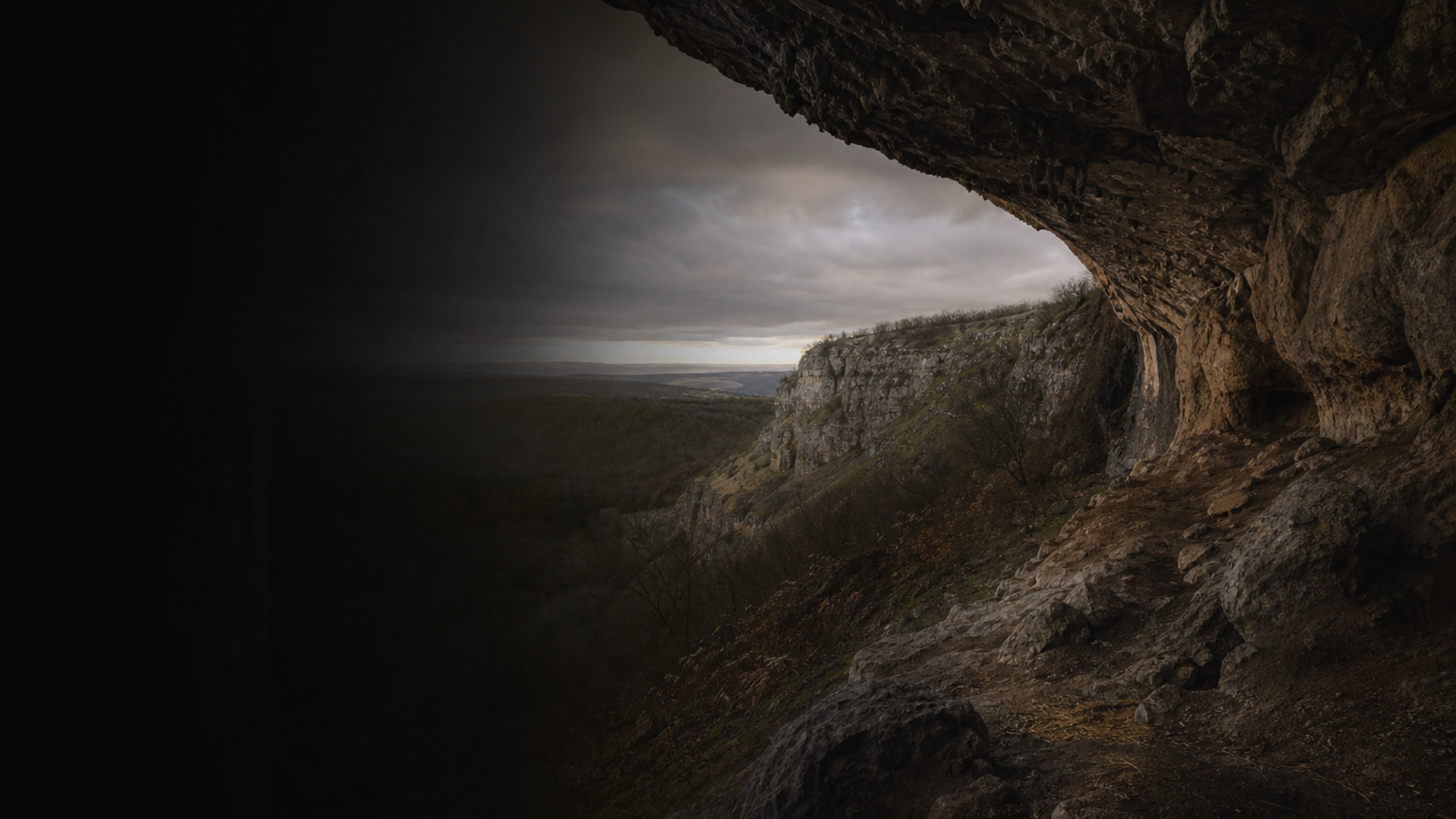
The individual from the Troisième caverne at Goyet emerges from the waning ice of the Last Glacial Maximum into a world of thawing valleys and expanding tundra-steppe. Dated to roughly 13305–12976 BCE, this human rests within the archaeological horizon we label Magdalenian — a culture known across Western Europe for elaborated bone and antler technologies and spectacular cave art. Archaeological excavations at Goyet, in central Belgium, have revealed stratified Magdalenian horizons, hearth features, and abundant faunal remains that point to highly mobile hunters exploiting reindeer, horse, and cold-adapted game.

Archaeological data indicates that Magdalenian groups spread rapidly as glacial conditions relaxed, reoccupying river valleys and limestone cave systems. Troisième caverne is one of several Goyet cavities that preserve both human burials and a rich toolkit, offering a cinematic portrait of people moving through a sculpted glacial landscape. Limited evidence suggests these people practiced complex mortuary behaviors and maintained regional interaction networks.

Because only a single genetic sample is available from this precise context, inferences about population origins must remain cautious. The skeleton and its surroundings provide an important archaeological anchor, but larger sample sizes across sites are needed to resolve the full story of Magdalenian emergence in the Low Countries.

  • Sample dated 13305–12976 BCE, Late Upper Paleolithic
  • Found in Troisième caverne, Goyet cave system, Belgium
  • Magdalenian technological and ritual signatures present
Capítulo IV

Daily Life & Society

The Magdalenian world at Goyet would have been stark, luminous and intensely seasonal. Archaeological remains from the cave complex show concentrated hearths, knapping floors, and dense scatters of antler, bone and stone tools. These artifacts speak to a daily economy geared toward long-distance hunting and efficient processing of large game; reindeer bones and butchery marks indicate communal carcass processing and shared consumption.

Artistic expression — portable figurines, incised bones and engraved lithics — punctuated the routine of survival. While grand paintings are better known from southwestern Europe, Magdalenian portable art and carved objects recovered in Belgium suggest regional tastes for representation and possibly ritual display. The cave context itself may have served as a focal point for seasonal aggregation, exchange and remembrance.

Archaeological data indicates flexible group sizes and high mobility: small bands followed migrating herds along river corridors and recolonized productive niches exposed by retreating ice. Material culture suggests specialized craft production (barbed points, harpoons) and knowledge transmission across generations. Yet many details of social organization remain unclear in Goyet, and interpreting social life from a single skeletal genome requires restraint.

  • Economy focused on large-game hunting (e.g., reindeer)
  • Caves functioned as seasonal aggregation and ritual spaces
Capítulo V

Genetic Profile

The lone genomic sample from Troisième caverne carries Y-haplogroup I and mitochondrial haplogroup U8a. Both markers are consistent with broader patterns observed among Upper Paleolithic and early post‑glacial hunter-gatherers in Europe, where lineages such as I and diverse U subclades appear repeatedly. Y-haplogroup I is commonly associated with European hunter-gatherer paternal ancestries, while U8a is one of the older maternal lineages detected in Paleolithic contexts.

Because this dataset represents a single individual (sample count = 1), any genetic generalization to all Magdalenian groups in Belgium must be tentative. Limited evidence suggests continuity of certain hunter-gatherer genetic components across western Europe after the ice retreated, but additional samples from Goyet and nearby Magdalenian sites are required to test models of local continuity versus migration.

When integrated with archaeology, the genetic data provides a human voice to material remains: it helps tie an individual to continental post‑glacial demography and suggests connections with other hunter-gatherer groups. However, low sample numbers mean that population structure, kinship practices, and micro-regional diversity remain poorly constrained. Future paleogenomic sampling of multiple Magdalenian burials in Belgium and neighbouring regions will be necessary to transform these preliminary signals into robust narratives.

  • Y-haplogroup I and mtDNA U8a present in this individual
  • Single-sample result — conclusions are preliminary
Capítulo VI

Legacy & Modern Connections

This Goyet genome connects the lowlands of Belgium to the wider tapestry of post‑glacial Europe. Haplogroups such as I and U8a leave faint echoes in later populations, but direct lines of descent are complex: millennia of migrations, expansions and population turnovers have reshaped Europe's genetic landscape. Archaeogenetic data from a single Magdalenian individual offers a powerful but tentative bridge linking tangible artifacts to deep ancestry narratives.

For modern DNA ancestry platforms, the Goyet sample functions as a localized reference point that can help refine models of Late Upper Paleolithic ancestry. It emphasizes how regional hunter-gatherer lineages contributed to the genetic foundation upon which later Neolithic and Bronze Age demographic transformations were layered. Researchers and the public should treat this genomic portrait as evocative and informative, yet provisional — a cinematic glimpse rather than a comprehensive census.

  • Provides a localized Paleolithic reference for ancestry models
  • Highlights long-term complexity: continuity and later population turnover
Con IA

Asistente de IA

Haz preguntas sobre la cultura Goyet Magdalenian Ancestor

Asistente de IA por DNAGENICS

Desbloquear esta función
Pregunta sobre la cultura Goyet Magdalenian Ancestor. El asistente con IA puede explicar hallazgos genéticos, contexto histórico, pruebas arqueológicas y conexiones modernas, con sus límites de interpretación.
Ejemplo de análisis con IA

La cultura Goyet Magdalenian Ancestor representa un capítulo de la historia humana...

El análisis genético permite estudiar similitudes con poblaciones anteriores y posibles adaptaciones. Las muestras de ADN antiguo aportan información para investigar patrones migratorios y relaciones entre poblaciones, con límites que dependen del estudio y del contexto arqueológico.

Esta es una vista previa del análisis con IA. Accede al asistente completo para explorar información sobre:

  • Composición y similitud genética
  • Patrones migratorios y orígenes
  • Vida cotidiana y prácticas culturales
  • Contexto genético moderno

Explora más culturas antiguas

Descubre la historia de civilizaciones de distintas partes del mundo antiguo