Preparando el informe

Cargando la información y las referencias disponibles

Consultando el registro arqueológico...

Recopilando registros antiguos

Saltar al contenido principal
Imperial Rome: Threads of Empire
Cultura destacada

Imperial Rome: Threads of Empire

Ancient genomes and archaeology reveal mobility, mixture, and regional ties across the Roman world

802 BCE - 1400 CE
Italy-centred Mediterranean & connected provinces
3 Muestras antiguas
Desplázate para empezar
Capítulo I

La historia

Comprender la cultura Imperial Rome: Threads of Empire

A synthesis of archaeological sites and 252 ancient genomes (802 BCE–1400 CE) spanning Italy, Iberia, the Balkans, Anatolia and the Levant. Evidence shows local continuity with recurring inputs from Near Eastern and northern Mediterranean sources, reflecting trade, soldiers, and urban migration.

Time Period

802 BCE – 1400 CE

Region

Italy-centred Mediterranean & connected provinces

Common Y-DNA

J (25), R (16), G (15), T (7), E (4)

Common mtDNA

H (33), T (23), U (21), K (14), HV (9)

Capítulo II

Cronología

Momentos clave de la historia de esta cultura

27 BCE

Augustan Principate established

Octavian (Augustus) consolidates power, inaugurating imperial administration that accelerates population movement and city-building across the Mediterranean.

79 CE

Vesuvius erupts at Pompeii

The eruption buries Pompeii and Herculaneum, preserving urban life at a precise moment and providing archaeogenetic snapshots of Campanian residents.

312 CE

Constantine's reign and increased eastern ties

Constantine's policies and the founding of Constantinople intensify east-west connections that are reflected in archaeological and genetic exchange.

476 CE

Western Roman imperial collapse

The end of centralized western imperial rule begins new patterns of migration and regionalization observed in later genetic layers.

800 CE

Carolingian consolidation in the West

Charlemagne's empire reshapes western political geography during the medieval intervals covered by later samples.

Capítulo III

Origins & Emergence

The Roman world arose from a braided landscape of Italic peoples, coastal Phoenician and Greek settlements, and inland communities across the Italian peninsula. Archaeological layers sampled here span early historic centuries through the height of empire: sites include Rome (Casal Bertone), Pompeii (Campania), coastal Sardinia (Alghero; Sant'Imbenia), and Anatolian centres such as Boğazköy-Ḫattuša, Iznik and Gölyazı. Material culture — ceramics, inscriptions and urban plans — shows how city foundations and colonization tied diverse peoples into shared economic and administrative networks.

Genetic data covering 252 individuals provide a long temporal arc (802 BCE to 1400 CE). These samples capture population continuities in central Italy alongside recurrent gene flow from the eastern Mediterranean and northern provinces. Archaeological evidence indicates the movement of peoples through soldier deployments, merchant communities, and freedmen who settled in port cities and urban neighborhoods. For example, cemeteries at Empúries (Spain) and the necropoleis at Gölyazı (Apollonia, Marmara) show material links to broader trade networks that genetic signatures can help illuminate.

Limited evidence remains for some provinces and later medieval layers; while the sample set is substantial, spatial and chronological biases persist. Archaeology frames plausible movement and contact routes; genetics quantifies them, revealing a patchwork of local continuity and episodic admixture across the empire.

  • Samples span urban and provincial sites: Rome, Pompeii, Iznik, Empúries, Alghero, Munich Freiham-Nord.
  • Material culture indicates long-distance trade, military movements, and colonial foundations that enabled gene flow.
  • 252 genomes give a robust overview but regional gaps and temporal clustering require cautious interpretation.
Capítulo IV

Daily Life & Society

Cities of the Roman world were sensory and social crossroads. Streets threaded workshops, bakeries, shrines and taverns; ports handled grain, olive oil and luxury imports that shaped diets and livelihoods. Osteological and isotopic data from sites such as Pompeii, Casal Bertone and the Isola Sacra necropolises point to varied diets and mobility: coastal consumers show marine protein signals, while inland burials hint at cereal-based subsistence. Funerary architecture — tombs, columbaria and monumental mausolea — records social status, origins and family networks.

Archaeological contexts reveal occupational diversity: sailors, soldiers, craftsmen and administrators often lived cheek-by-jowl in neighborhoods, and freedmen formed distinct economic niches. In frontier and provincial towns like Mursa and Sisak (Croatia), material assemblages include Roman military equipment and locally produced wares, indicating cultural syncretism. Urban graffiti, epitaphs and inscriptions provide individual voices, sometimes noting foreign origins or military units — corroborating genetic findings of mixed ancestry in urban populations.

The archaeological record stresses mobility as a fact of life for many Romans; genetic sampling confirms that some city populations were genetically heterogeneous. However, daily life also involved strong local traditions and kin networks that maintained continuity across generations.

  • Urban neighborhoods combined diverse occupations, promoting local admixture.
  • Dietary and isotopic evidence complements DNA to reveal movement and lifetime mobility.
Capítulo V

Genetic Profile

The genomic portrait of the Roman world is one of layered continuity and repeated injections of ancestry from outside the Italian core. Among 252 analyzed individuals, Y-chromosome haplogroups are dominated by J (25), R (16), G (15), with smaller counts of T (7) and E (4). These distributions reflect the empire's Mediterranean orientation: haplogroup J is frequent in Near Eastern and eastern Mediterranean contexts, while R lineages are common in continental Europe. G lineages, often associated with Anatolian and Caucasus-related ancestry, appear in several Anatolian and Adriatic samples.

Mitochondrial haplogroups show strong European matrilineal continuity: H (33), T (23), U (21), K (14) and HV (9) are the most common. This pattern suggests that many female lineages in sampled urban centers had deep European roots, while male-line diversity reflects a higher contribution from immigrant males in some contexts — a pattern consistent with historical records of soldier and mercantile mobility.

Spatially, eastern sites (Boğazköy, Iznik, Apollonia) display higher frequencies of J and G, while western sites (Alghero, Empúries, Pompeii) show stronger H and U maternal lineages and a mix of R paternal lineages. Formal tests and admixture modeling indicate significant heterogeneity: some communities are genetically close to pre-Roman local populations, whereas port cities show greater eastern Mediterranean affinity.

Because sample numbers vary by site and period, and temporal span extends into the medieval era, conclusions about province-wide demography should be treated as probabilistic rather than definitive.

  • Y-DNA: J prominent (Near East/anatolian links); R and G indicate European and Anatolian inputs.
  • mtDNA: Predominantly European matrilines (H, U, T), suggesting local continuity with male-biased admixture events.
Capítulo VI

Legacy & Modern Connections

The Roman period set demographic and cultural patterns that echo into modern Mediterranean and European populations. Archaeology traces roads, ports and colonies that reshaped settlement geography; genetics reveals the long-term signals of those transformations. Many modern populations across Italy, the Iberian Peninsula and the Balkans carry mixed ancestries that include components documented in Roman-era samples: European matrilines, Near Eastern paternal inputs, and regional admixture gradients.

These ancient genomes help explain linguistic, cultural and biological continuities and discontinuities across the former empire. They confirm that urban centers were engines of mobility and mixture, and that frontier zones often preserved distinct local ancestries even as they adopted Roman institutions. Ongoing sampling, especially in under-represented provinces and chronological windows, will refine how imperial dynamics produced the genetic map of later medieval and modern Europe.


  • Modern Mediterranean genetic diversity partly reflects Roman-era admixture and continued post-Roman movements.
  • Archaeology plus ancient DNA links urban mobility to long-term regional genetic patterns.
Capítulo VII

Catálogo de muestras

3 muestras de ADN antiguo asociadas con la cultura Imperial Rome: Threads of Empire que aportan datos de referencia sobre las poblaciones de este periodo.

3 / 3 muestras
Retrato Muestra País Época Fecha Cultura Sexo ADN-Y ADNmt
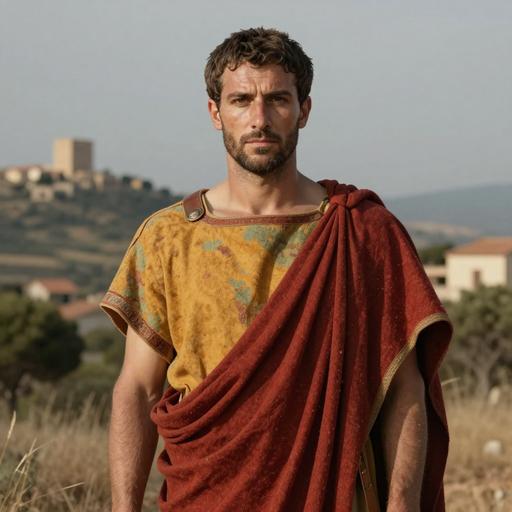
Retrato reconstruido de Sardinia Imperial Roman Roman individual, Italy
Sardinia Imperial Roman Roman individual, Italy
Italy Italy_Sardinia_Roman 126-310 calCE (1837±26 BP, MAMS-39522) Roman Empire M G-PF3230 T2b
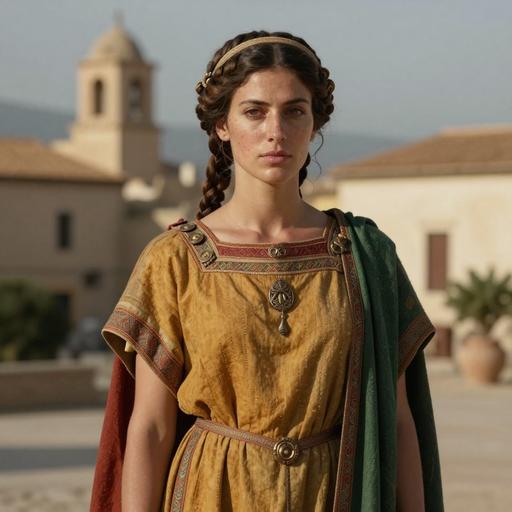
Retrato reconstruido de Sardinia Imperial Roman Roman-o individual, Italy
Sardinia Imperial Roman Roman-o individual, Italy
Italy Italy_Sardinia_Roman 125-234 calCE (1863±22 BP, MAMS-39519) Roman Empire F - U6a7a*
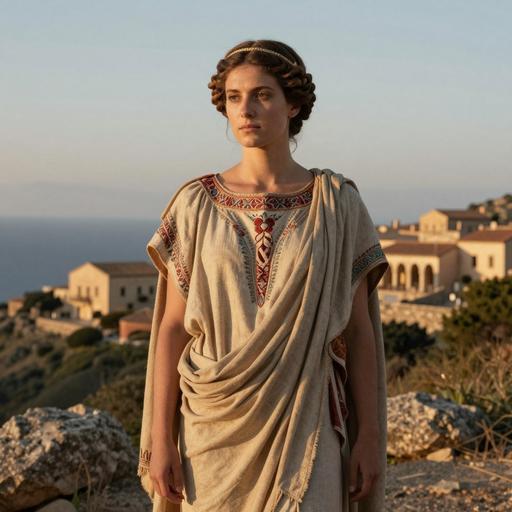
Retrato reconstruido de Sardinia Imperial Roman Roman individual, Italy
Sardinia Imperial Roman Roman individual, Italy
Italy Italy_Sardinia_Roman 100-250 CE Roman Empire F - L2a1
Con IA

Asistente de IA

Haz preguntas sobre la cultura Imperial Rome: Threads of Empire

Asistente de IA por DNAGENICS

Desbloquear esta función
Pregunta sobre la cultura Imperial Rome: Threads of Empire. El asistente con IA puede explicar hallazgos genéticos, contexto histórico, pruebas arqueológicas y conexiones modernas, con sus límites de interpretación.
Ejemplo de análisis con IA

La cultura Imperial Rome: Threads of Empire representa un capítulo de la historia humana...

El análisis genético permite estudiar similitudes con poblaciones anteriores y posibles adaptaciones. Las muestras de ADN antiguo aportan información para investigar patrones migratorios y relaciones entre poblaciones, con límites que dependen del estudio y del contexto arqueológico.

Esta es una vista previa del análisis con IA. Accede al asistente completo para explorar información sobre:

  • Composición y similitud genética
  • Patrones migratorios y orígenes
  • Vida cotidiana y prácticas culturales
  • Contexto genético moderno

Explora más culturas antiguas

Descubre la historia de civilizaciones de distintas partes del mundo antiguo