Preparando el informe

Cargando la información y las referencias disponibles

Consultando el registro arqueológico...

Recopilando registros antiguos

Saltar al contenido principal
Jordanów Neolithic of Bohemia
Cultura destacada

Jordanów Neolithic of Bohemia

Three early Neolithic genomes illuminate a fragile window into Bohemia, 4326–3995 BCE

4326 CE - 3995 BCE
Bohemia, Czech Republic
Desplázate para empezar
Capítulo I

La historia

Comprender la cultura Jordanów Neolithic of Bohemia

Archaeological and genetic data from three Neolithic individuals (Neratovice, Tuchoměřice, Vliněves) dated 4326–3995 BCE reveal a Jordanów cultural presence in Bohemia. Limited samples suggest mixture of local hunter‑gatherer and incoming farmer ancestries, but conclusions remain preliminary.

Time Period

4326–3995 BCE

Region

Bohemia, Czech Republic

Common Y-DNA

I (1)

Common mtDNA

U (2), K (1)

Capítulo II

Cronología

Momentos clave de la historia de esta cultura

4300 BCE

Jordanów presence attested in Bohemia

Radiocarbon-dated finds from Neratovice, Tuchoměřice and Vliněves place Jordanów-associated individuals in Bohemia around 4326–3995 BCE, marking an early Neolithic foothold in the region.

Capítulo III

Origins & Emergence

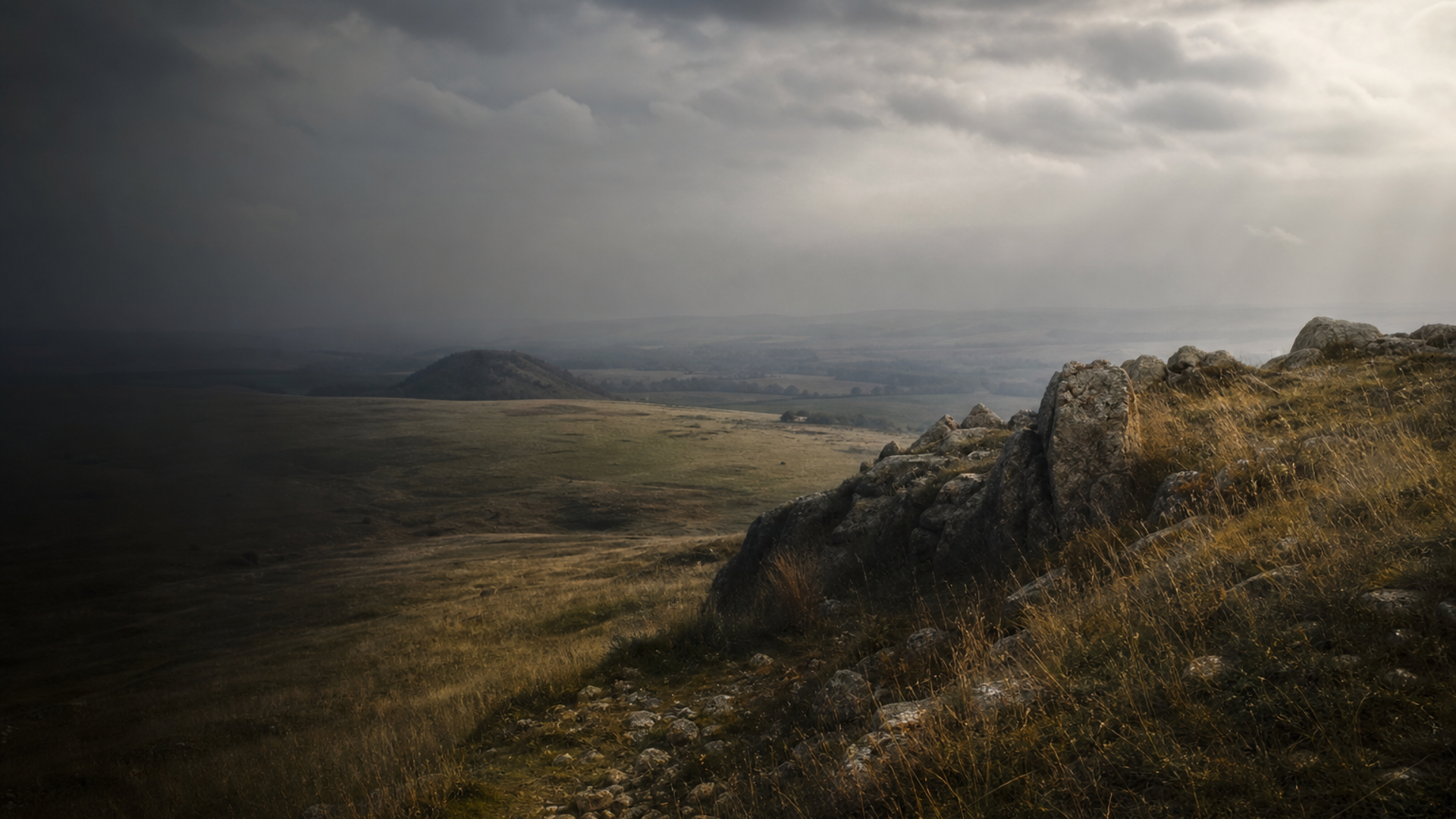
Between roughly 4326 and 3995 BCE, three human remains recovered from Bohemian localities—Neratovice, Tuchoměřice and Vliněves—fall into the Jordanów Neolithic horizon. Archaeological data indicates these sites contain pottery styles and settlement traces consistent with the broader Jordanów cultural network that stretches across parts of Central Europe. The landscape they occupied was a mosaic of river valleys and loess plains that would have favored early mixed farming economies.

Stratigraphic contexts and radiocarbon dates place these individuals firmly in the earlier Neolithic of Bohemia. Material culture signals link them to Jordanów ceramic traditions, though preservation and excavation intensity vary between sites. Limited evidence suggests local adaptation rather than wholesale cultural replacement: some artifact forms appear to echo earlier Mesolithic technologies while others align with Neolithic package elements.

Because only three genomes are available, these origins must be framed as an initial glimpse. Archaeological interpretation therefore remains cautious: the Jordanów presence in Bohemia appears real and archaeologically visible, but its demographic scale and precise relationship to neighboring Neolithic groups require more data.

  • Three individuals dated 4326–3995 BCE from Neratovice, Tuchoměřice, Vliněves
  • Material culture consistent with Jordanów Neolithic traditions in Bohemia
  • Limited sample size—archaeological signals are suggestive but not definitive
Capítulo IV

Daily Life & Society

The Jordanów-associated communities in Bohemia likely lived in small villages or seasonal hamlets near rivers and fertile soils. Archaeological traces in the region (pottery sherds, modified stone tools, and occasional ecofacts) indicate a mixed economic strategy: cultivated cereals and pulses plausibly supplemented by hunting, fishing and foraging. Hearths and isolated pits hint at domestic food preparation and storage, while ceramics—often stylistically diagnostic—would have been used for cooking, storage and possibly ritual.

Social organization can only be inferred indirectly. Craft specialization was likely limited; pottery and lithic production were community-centered activities. Mobility appears moderate: people exploited local resources but maintained connections with neighboring Jordanów groups through exchange of styles and perhaps marriage networks. Burials are sparse in the Bohemian record for this phase, so household composition, social hierarchy and mortuary customs remain poorly understood.

Archaeobotanical and zooarchaeological data are thin or uneven from these sites, so statements about diet and seasonality are provisional. The cinematic image is of small, resilient communities shaping riverside landscapes—adaptive, connected, and embedded within wider Neolithic transformations across Central Europe.

  • Mixed farming economy with supplemental hunting and foraging
  • Pottery and stone tools suggest community-level craft production
Capítulo V

Genetic Profile

Three genomes from Bohemia provide a tentative genetic portrait of Jordanów Neolithic populations in this region. Y-chromosome diversity is minimal in this assemblage (one individual carrying haplogroup I), while mitochondrial lineages include two U types and one K type. These markers fit within broader patterns seen across early Neolithic Europe, where mtDNA K is often associated with farming communities and some U lineages reflect deeper Mesolithic ancestry.

Haplogroup I on the Y-chromosome has pre-Neolithic roots in Europe and can indicate continuity with local hunter‑gatherer male lineages or admixture between incoming farmers and resident groups. The coexistence of U and K mtDNA in these three samples suggests maternal lineages of mixed origins. Population genomic analyses (admixture proportions, shared drift statistics) would be required to quantify hunter‑gatherer vs farmer ancestry; with only three individuals, any such inferences are preliminary and should be treated cautiously.

Archaeogenetic context: these Bohemian Jordanów genomes likely represent a mosaic—local hunter‑gatherer heritage interacting with Neolithic farmer influxes that swept through Central Europe. Future sampling across more burials and settlements will be essential to test whether the patterns seen here reflect broader regional processes or site‑level variation.

  • Y-DNA: haplogroup I (1); mtDNA: U (2), K (1)
  • Small sample size (n=3) — genetic interpretations are preliminary
Capítulo VI

Legacy & Modern Connections

The Jordanów Neolithic of Bohemia occupies a subtle place in the deep history of Central Europe. Archaeological traditions—pottery styles, settlement choices and subsistence strategies—contributed to a cultural palimpsest that later Neolithic and Bronze Age groups built upon. Genetically, the region shows threads of continuity: components of Mesolithic and Neolithic ancestry that persist, diluted and reshaped, into later populations of the Czech lands.

Direct lines between these three individuals and modern Czech populations cannot be drawn from such a small dataset. However, they contribute to a growing picture in which modern genomes in Central Europe are composites of multiple ancient inputs. The romantic image of an unbroken local lineage should be replaced by a nuanced one: small communities, population interactions, and transient cultural horizons all left traces in material culture and DNA that survive in fragmentary form.

  • Cultural contributions to later Neolithic and Bronze Age traditions in Bohemia
  • Genetic signals may persist in modern populations, but links are complex and indirect
Con IA

Asistente de IA

Haz preguntas sobre la cultura Jordanów Neolithic of Bohemia

Asistente de IA por DNAGENICS

Desbloquear esta función
Pregunta sobre la cultura Jordanów Neolithic of Bohemia. El asistente con IA puede explicar hallazgos genéticos, contexto histórico, pruebas arqueológicas y conexiones modernas, con sus límites de interpretación.
Ejemplo de análisis con IA

La cultura Jordanów Neolithic of Bohemia representa un capítulo de la historia humana...

El análisis genético permite estudiar similitudes con poblaciones anteriores y posibles adaptaciones. Las muestras de ADN antiguo aportan información para investigar patrones migratorios y relaciones entre poblaciones, con límites que dependen del estudio y del contexto arqueológico.

Esta es una vista previa del análisis con IA. Accede al asistente completo para explorar información sobre:

  • Composición y similitud genética
  • Patrones migratorios y orígenes
  • Vida cotidiana y prácticas culturales
  • Contexto genético moderno

Explora más culturas antiguas

Descubre la historia de civilizaciones de distintas partes del mundo antiguo