Preparando el informe

Cargando la información y las referencias disponibles

Consultando el registro arqueológico...

Recopilando registros antiguos

Saltar al contenido principal
Körös Neolithic Echoes
Cultura destacada

Körös Neolithic Echoes

Early farmers of the Hajdú‑Bihar plains revealed by archaeology and ancient DNA

5800 CE - 5300 BCE
Hungary (Carpathian Basin)
Desplázate para empezar
Capítulo I

La historia

Comprender la cultura Körös Neolithic Echoes

Neolithic farmers of the Körös horizon (5800–5300 BCE) in eastern Hungary are glimpsed through four ancient samples from Szentpéterszeg‑Körtvélyes‑2. Archaeology and maternal lineages (T, T2b, J) hint at Early Neolithic networks across the Carpathian Basin; conclusions remain preliminary.

Time Period

5800–5300 BCE

Region

Hungary (Carpathian Basin)

Common Y-DNA

Not reported (limited data)

Common mtDNA

T (2), T2b (1), J (1)

Capítulo II

Cronología

Momentos clave de la historia de esta cultura

5800 BCE

Settlement at Szentpéterszeg‑Körtvélyes‑2

Beginning of Körös occupation in Hajdú‑Bihar; pottery, domestic features, and early farmer material culture appear in the floodplain.

Capítulo III

Origins & Emergence

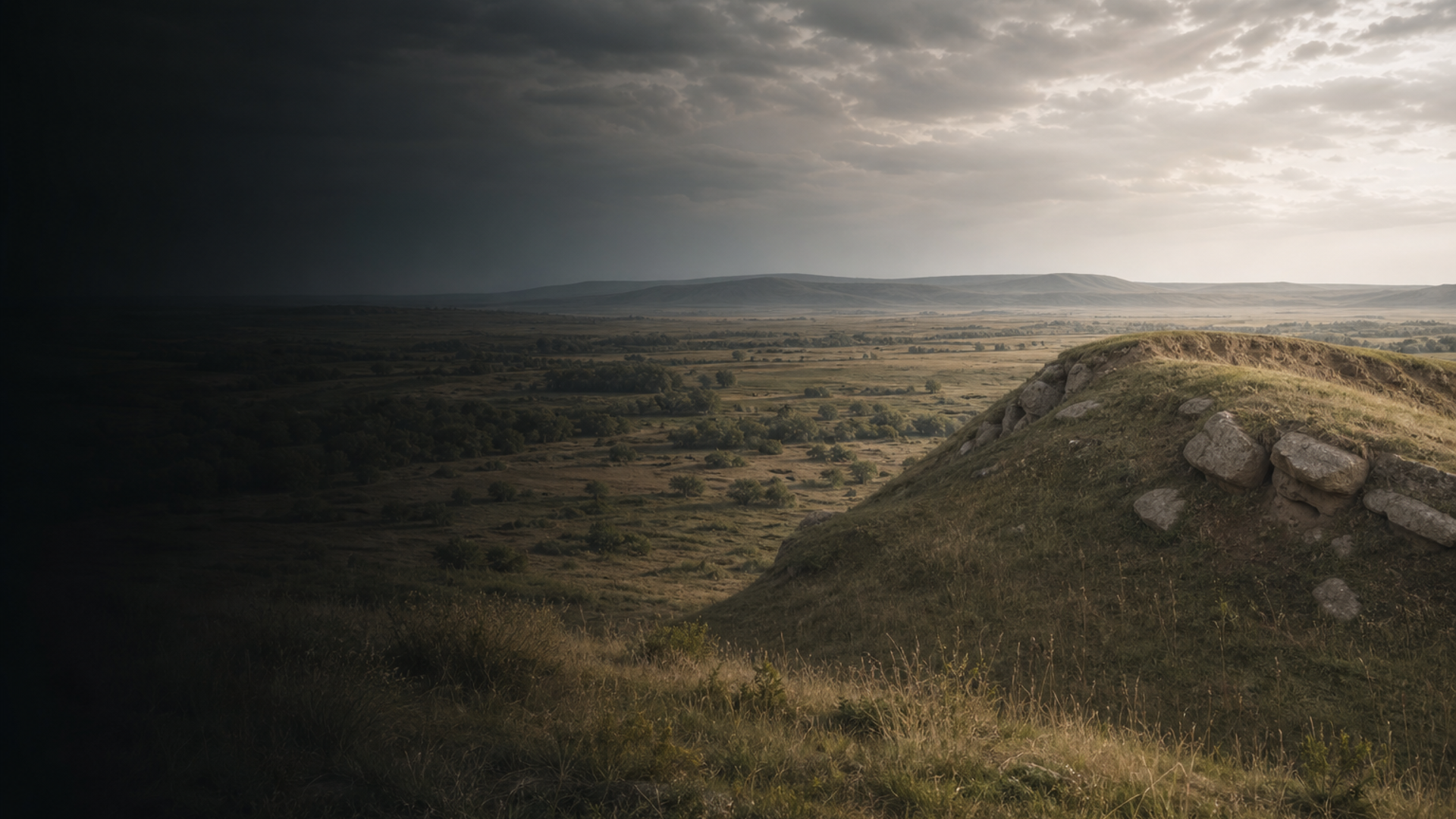
The Körös horizon in eastern Hungary emerges at the dawn of the Neolithic, a landscape reworked by the first farming communities after 6000 BCE. Archaeological survey and excavation at sites such as Szentpéterszeg‑Körtvélyes‑2 (Hajdú‑Bihar County, near Berettyóújfalu) reveal small, often ephemeral settlements with characteristic early Neolithic pottery and evidence for domesticated plants and animals. The material culture links this region into the broader Starčevo–Körös–Criș interaction sphere that spread farming from the Balkans into the Carpathian Basin.

Cinematic in its transformation, the floodplain and loess fields would have been reshaped into fields and enclosures by communities whose lives centered on seasonal cycles. Archaeological data indicates pit features, hearths, and pottery assemblages, but preservation is variable and many interpretations remain tentative. Limited radiocarbon sequences bracket activity of the Körös horizon here roughly between 5800 and 5300 BCE, but settlement intensity and continuity likely varied across the region.

Genetically, the picture is still fragmentary: only four genome samples currently tie directly to the Szentpéterszeg‑Körtvélyes‑2 locality. These remains offer promising links between archaeological horizons and maternal lineages, but the small sample count requires caution. Limited evidence suggests this community participated in early Neolithic demographic expansions, yet many questions about origins, mobility, and interaction remain open.

  • Part of the early Neolithic Starčevo–Körös–Criș complex
  • Site: Szentpéterszeg‑Körtvélyes‑2 (Hajdú‑Bihar County)
  • Dates: ca. 5800–5300 BCE; interpretations are preliminary
Capítulo IV

Daily Life & Society

Life in a Körös settlement would have been intimate and labor‑intensive: households tended small plots, managed herds of sheep and goats, and processed grains with simple stone tools. Pottery—often coarse and sometimes decorated with impressed motifs—served for cooking and storage, while flint tools and polished stone axes reflect both local craft and exchange. Archaeological remains at Szentpéterszeg‑Körtvélyes‑2 include domestic features and discard pits that suggest cyclical occupation and repair rather than large, permanent urban centers.

Social organization was likely kin‑based and flexible. Burials in the broader Körös horizon are variable: some inhumations show careful placement of bodies and grave offerings, while other deposits are sparse—this variability signals differing mortuary practices and possibly social differentiation across communities. The landscape itself—rivers, wetlands, and loess soils—would have structured movement, seasonal foraging, and trade routes.

We must stress the fragmentary nature of the record at this locality. Artifacts and features offer evocative glimpses, but preservation and sampling bias mean reconstructions remain models rather than certainties. Interdisciplinary work—archaeobotany, zooarchaeology, and aDNA—continues to refine our sense of daily life among Körös farmers.

  • Mixed farming economy: cereals, legumes, sheep/goats
  • Small household sites with pottery, hearths, and pits
Capítulo V

Genetic Profile

The genetic window into the Körös community at Szentpéterszeg‑Körtvélyes‑2 is narrow but telling. Four ancient individuals produced mitochondrial haplogroups dominated by haplogroup T (two samples), one T2b, and one J. These maternal lineages are commonly observed in Early Neolithic Europe and are consistent with demic diffusion of farming populations originating from southeastern Europe and Anatolia. Such mtDNA lineages suggest maternal continuity with other early farming groups, but they do not alone resolve paternal ancestries or later admixture dynamics.

Notably, no consistent Y‑DNA signal is reported for these four samples, so any statements about paternal lineages must be withheld; absence of evidence is not evidence of absence. The small sample count (<10) makes population‑level inferences preliminary: limited evidence suggests these Körös individuals carried maternal lineages typical of Early Neolithic Europe, but broader sampling would be required to test hypotheses about migration routes, kinship patterns within settlements, and interaction with neighboring hunter‑gatherer groups.

Genomic analyses from contemporaneous regions show mixtures of Anatolian farmer ancestry with variable local hunter‑gatherer input; the Körös samples likely fit within this spectrum. Future aDNA work, especially more Y‑chromosome data and genome‑wide analyses, is essential to move from evocative portrait to robust population history.

  • mtDNA: T (2), T2b (1), J (1) — typical of Early Neolithic farmers
  • Y‑DNA: not reported for these four samples; conclusions are preliminary
Capítulo VI

Legacy & Modern Connections

The human story at Körös sites like Szentpéterszeg‑Körtvélyes‑2 is part of a larger chapter in European prehistory: the emergence of farming reshaped diets, demography, and landscapes and set deep ancestral roots in the Carpathian Basin. Maternal lineages observed here (T, T2b, J) persist at varying frequencies in modern European populations, reflecting the long shadow of Early Neolithic migrations. However, genetic continuity is complex—later movements (Bronze Age migrations, medieval population shifts) layered new ancestries onto these early foundations.

For the public, the evocative image of Neolithic households along the Hajdú‑Bihar plains connects to modern landscapes and communities in Hungary, but scientific caution is vital: the small number of ancient samples means direct genealogical links to living individuals cannot be asserted. Instead, these remains illuminate broad patterns of mobility and cultural exchange. Ongoing archaeological and aDNA studies will continue to refine how these early farmers contributed to the genetic and cultural mosaic of Europe.

  • Maternal lineages from Körös contribute to the ancestral tapestry of Europe
  • Small sample size prevents direct genealogical claims to modern populations
Con IA

Asistente de IA

Haz preguntas sobre la cultura Körös Neolithic Echoes

Asistente de IA por DNAGENICS

Desbloquear esta función
Pregunta sobre la cultura Körös Neolithic Echoes. El asistente con IA puede explicar hallazgos genéticos, contexto histórico, pruebas arqueológicas y conexiones modernas, con sus límites de interpretación.
Ejemplo de análisis con IA

La cultura Körös Neolithic Echoes representa un capítulo de la historia humana...

El análisis genético permite estudiar similitudes con poblaciones anteriores y posibles adaptaciones. Las muestras de ADN antiguo aportan información para investigar patrones migratorios y relaciones entre poblaciones, con límites que dependen del estudio y del contexto arqueológico.

Esta es una vista previa del análisis con IA. Accede al asistente completo para explorar información sobre:

  • Composición y similitud genética
  • Patrones migratorios y orígenes
  • Vida cotidiana y prácticas culturales
  • Contexto genético moderno

Explora más culturas antiguas

Descubre la historia de civilizaciones de distintas partes del mundo antiguo