Preparando el informe

Cargando la información y las referencias disponibles

Consultando el registro arqueológico...

Recopilando registros antiguos

Saltar al contenido principal
Kudruküla Comb Ceramic of Estonia
Cultura destacada

Kudruküla Comb Ceramic of Estonia

Neolithic coastal communities at Narva-Jõesuu seen through pottery, stone, and DNA

3785 CE - 3376 BCE
Kudruküla, Ida‑Viru (Narva‑Jõesuu), Estonia
Desplázate para empezar
Capítulo I

La historia

Comprender la cultura Kudruküla Comb Ceramic of Estonia

Archaeological and ancient DNA evidence from Kudruküla (Ida‑Viru, Estonia) links Comb Ceramic lifeways (c. 3785–3376 BCE) to hunter‑gatherer maternal lineages (mtDNA U/U4a) and a single Y‑haplogroup R. Small sample sizes make conclusions provisional.

Time Period

3785–3376 BCE

Region

Kudruküla, Ida‑Viru (Narva‑Jõesuu), Estonia

Common Y-DNA

R (n=1; limited sample)

Common mtDNA

U4a, U (n=2; limited sample)

Capítulo II

Cronología

Momentos clave de la historia de esta cultura

3785 BCE

Comb Ceramic occupation at Kudruküla

Radiocarbon‑dated activity at Kudruküla marks Comb Ceramic presence on the northeastern Estonian coast; pottery and tools indicate seasonal coastal lifeways.

Capítulo III

Origins & Emergence

A shoreline people forged from ancient foragers

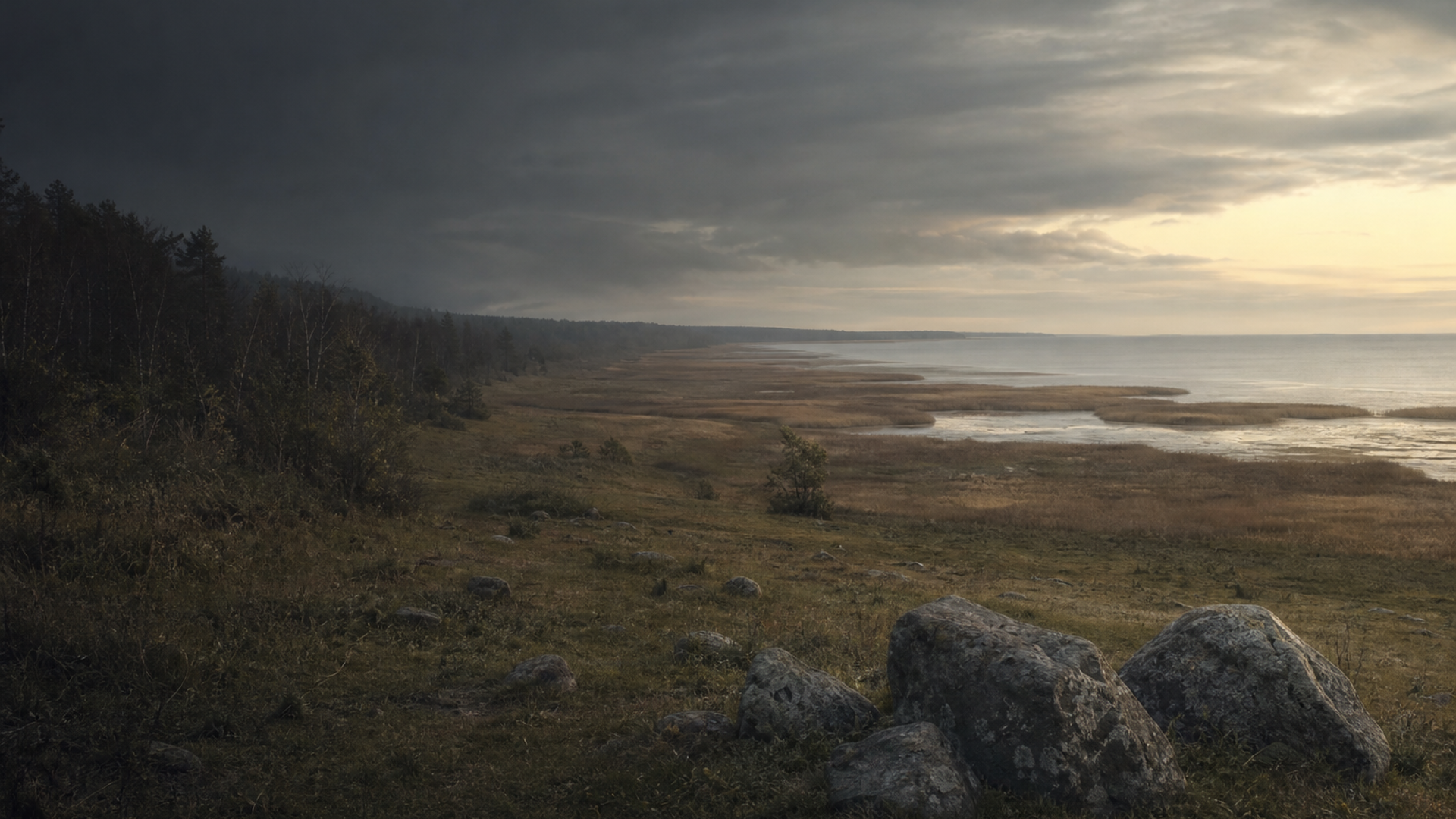
Wind and water shaped the first Comb Ceramic enclaves along the northeastern Baltic. Archaeological data from Kudruküla (Ida‑Viru County; Narva‑Jõesuu Municipality) place human activity here between ca. 3785 and 3376 BCE, squarely within the wider Neolithic Comb Ceramic tradition that spread across Finland, the eastern Baltic, and parts of northwestern Russia.

Material culture—thin, organic‑tempered pottery imprinted with comb impressions, microlithic stone tools and evidence of seasonal camps—speaks to long familiarity with coastal and riverine resources. Radiocarbon and stratigraphic work at this and comparable sites indicate repeated occupation rather than a single settlement episode.

Limited evidence suggests the local manifestation at Kudruküla represents a continuation of Mesolithic subsistence adapted to Neolithic technologies rather than a wholesale replacement by incoming farming communities. The archaeological picture is fragmentary but evocative: hearths near the shore, pottery fragments rubbed smooth by use, and discarded fish and elk bones hint at a resilient, mobile lifeway anchored to the sea and river.

Bulleted signals from the field:

  • Comb‑impressed pottery and microliths define the cultural horizon.
  • Coastal location indicates a mixed economy centered on fishing and foraging.
  • Radiocarbon range 3785–3376 BCE ties the local site to the broader Comb Ceramic phenomenon.
  • Comb‑impressed pottery and microliths define the cultural horizon.
  • Coastal location indicates a mixed economy centered on fishing and foraging.
  • Radiocarbon range 3785–3376 BCE ties Kudruküla to the regional Comb Ceramic phenomenon.
Capítulo IV

Daily Life & Society

Daily rhythms where river meets sea

At Kudruküla the archaeological record paints a portrait of small, flexible communities whose calendar revolved around seasonal abundance. Fish bones, burnt sea‑mammal and terrestrial game remains, and specialized bone and antler tools indicate expertise in marine and littoral subsistence. Comb‑impressed pottery—often coarse and thin—was likely used for storage, cooking, and processing fish oils and plant foods.

Stone tool assemblages show continuity with Late Mesolithic technologies: carefully flaked microliths and scrapers suited to hide processing and woodworking. Settlement traces appear ephemeral in places, suggesting repeated short‑term camps or seasonal aggregations rather than large, permanent villages. The presence of hearths and specialized waste areas implies organized domestic spaces with routine craft activities.

Social life can only be inferred indirectly: the material economy points to small kin networks with mobility, partnership ties along waterways, and shared knowledge of coastal resources. Burial evidence for this specific locality is sparse, so mortuary practices and social ranking remain largely unknown.

Bulleted takeaways:

  • Economy centered on fishing, hunting, and foraging with specialized bone tools.
  • Mobility and seasonal aggregation likely structured social life; burial data are limited.
  • Economy centered on fishing, hunting, and foraging with specialized bone tools.
  • Mobility and seasonal aggregation likely structured social life; burial data are limited.
Capítulo V

Genetic Profile

DNA threads connecting shorelines and deep time

Ancient DNA from four individuals recovered at Kudruküla offers a tantalizing but preliminary glimpse into the genetic makeup of Comb Ceramic inhabitants in northeastern Estonia (dated 3785–3376 BCE). Among these four samples, mitochondrial lineages include U4a and a broader U lineage—both of which are commonly associated with Mesolithic and Neolithic hunter‑gatherer groups across northern and eastern Europe. A single male carries a Y‑chromosome haplogroup assigned to R.

These markers align qualitatively with broader patterns seen in Baltic and northeastern European Mesolithic/Neolithic contexts: enduring hunter‑gatherer maternal lineages (mtDNA U subclades) and a more variable picture for paternal lineages. The presence of Y‑haplogroup R in a single individual could indicate local continuity, contact, or incoming male‑mediated gene flow; however, R is a broad haplogroup with many sublineages, and the exact phylogeographic interpretation requires denser sampling.

Crucially, the small sample count (n=4) demands caution: statistical inference is limited and susceptible to sampling bias. Archaeological data combined with these genetic signals suggest a community rooted in hunter‑gatherer traditions but participating in wider regional networks. Larger sample sets would be required to resolve ancestry proportions, sex‑biased admixture, and continuity with later Baltic populations.

Key genetic points:

  • mtDNA U/U4a present, consistent with hunter‑gatherer maternal ancestry.
  • Y‑haplogroup R found in one male; interpretation is tentative given tiny sample size.
  • mtDNA U/U4a present, consistent with hunter‑gatherer maternal ancestry.
  • Y‑haplogroup R found in one male; interpretation is tentative given tiny sample size.
Capítulo VI

Legacy & Modern Connections

Echoes in the Baltic landscape

Archaeological and genetic traces from Kudruküla contribute to a larger story of the Baltic Neolithic: communities anchored to coasts and rivers who maintained hunter‑gatherer lifeways even as new technologies and contacts circulated across northern Europe. The mtDNA U lineages observed here resonate with a pattern of deep maternal continuity in the region, while the single Y‑R signal hints at more complex demographic interactions.

Over millennia, later migrations—Bronze Age movements, metalworking societies, and historical population shifts—reshaped the genetic tapestry of Estonia. Nevertheless, elements of Comb Ceramic lifeways endure in regional archaeology: pottery motifs, coastal economies, and a cultural memory of littoral subsistence. From a genetic perspective, the Kudruküla samples suggest that components of hunter‑gatherer ancestry likely contributed to the ancestral pool of later Baltic populations, but the magnitude of that contribution remains unresolved until more samples are analyzed.

Legacy bullets:

  • Genetic signals suggest contribution of hunter‑gatherer maternal lineages to later regional ancestry.
  • Cultural traditions (comb pottery, coastal subsistence) persist in the archaeological record, informing modern understandings of Baltic prehistory.
  • Genetic signals suggest contribution of hunter‑gatherer maternal lineages to later regional ancestry.
  • Cultural traditions (comb pottery, coastal subsistence) persist in the archaeological record.
Con IA

Asistente de IA

Haz preguntas sobre la cultura Kudruküla Comb Ceramic of Estonia

Asistente de IA por DNAGENICS

Desbloquear esta función
Pregunta sobre la cultura Kudruküla Comb Ceramic of Estonia. El asistente con IA puede explicar hallazgos genéticos, contexto histórico, pruebas arqueológicas y conexiones modernas, con sus límites de interpretación.
Ejemplo de análisis con IA

La cultura Kudruküla Comb Ceramic of Estonia representa un capítulo de la historia humana...

El análisis genético permite estudiar similitudes con poblaciones anteriores y posibles adaptaciones. Las muestras de ADN antiguo aportan información para investigar patrones migratorios y relaciones entre poblaciones, con límites que dependen del estudio y del contexto arqueológico.

Esta es una vista previa del análisis con IA. Accede al asistente completo para explorar información sobre:

  • Composición y similitud genética
  • Patrones migratorios y orígenes
  • Vida cotidiana y prácticas culturales
  • Contexto genético moderno

Explora más culturas antiguas

Descubre la historia de civilizaciones de distintas partes del mundo antiguo