Preparando el informe

Cargando la información y las referencias disponibles

Consultando el registro arqueológico...

Recopilando registros antiguos

Saltar al contenido principal
Longlin Cave: Epipaleolithic Guangxi
Cultura destacada

Longlin Cave: Epipaleolithic Guangxi

A 10,000‑year maternal lineage from Longlin Cave — single ancient mtDNA M sample

9853 CE - 9319 BCE
Guangxi, southern China (Longlin Cave)
Desplázate para empezar
Capítulo I

La historia

Comprender la cultura Longlin Cave: Epipaleolithic Guangxi

Ancient remains from Longlin Cave, Guangxi (c. 9853–9319 BCE) yield a single mtDNA M lineage. Archaeological context and genetics hint at deep East Asian maternal roots, but conclusions remain highly preliminary due to one sample.

Time Period

c. 9853–9319 BCE

Region

Guangxi, southern China (Longlin Cave)

Common Y-DNA

Unknown / not recovered

Common mtDNA

M (1 sample)

Capítulo II

Cronología

Momentos clave de la historia de esta cultura

9586 BCE

Longlin human presence (approx.)

Radiocarbon-anchored remains at Longlin Cave date to c. 9853–9319 BCE, yielding one mtDNA M genome — a preliminary genetic snapshot of Epipaleolithic Guangxi.

Capítulo III

Origins & Emergence

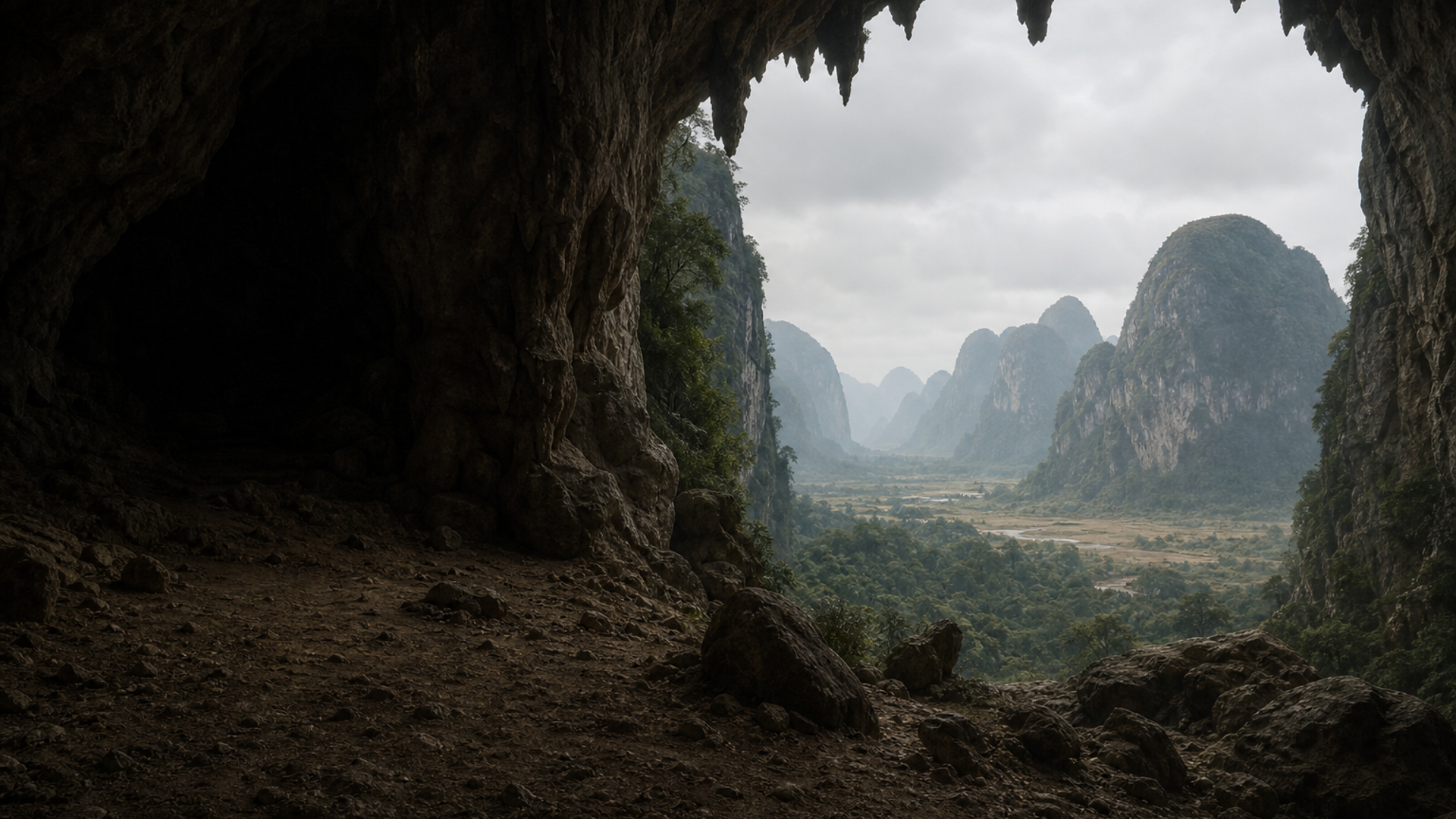
Longlin Cave sits within the karst hills of Guangxi in southern China, a landscape of limestone cliffs, caverns and rivers that framed human lives at the end of the Pleistocene. Radiocarbon dates associated with the material in the cave place at least one burial or deposit between about 9853 and 9319 BCE. Archaeological data indicates episodic use of the cave during the Epipaleolithic — the transitional period after the Last Glacial Maximum when hunter‑gatherer groups adapted to changing climates and environments.

Material culture from comparable Guangxi sites typically includes chipped stone tools, bone fragments and charred botanical remains; however, the Longlin evidence record is sparse. Limited evidence suggests seasonal mobility linked to riverine and forest resources rather than large, sedentary villages. The single ancient DNA sample recovered from Longlin anchors a human presence at this time and place, offering a direct genetic window into a population otherwise visible only through fragmentary artifacts.

Because the genetic dataset is extremely small, we must treat broader population narratives with caution. Nevertheless, the Longlin deposit illuminates a human story at the margin of Pleistocene landscapes — people negotiating a warming world, moving through karst corridors, and leaving both stone and a maternal genetic trace for the future to read.

  • Karst cave context in Guangxi, southern China
  • Direct dates: c. 9853–9319 BCE
  • Sparse archaeological assemblage; evidence of Epipaleolithic occupation
Capítulo IV

Daily Life & Society

The people who used Longlin Cave lived in a world of dense forests, intermittent rivers and limestone shelters. Archaeological indicators from the region point to mixed foraging strategies: tracking game in upland forests, fishing and collecting freshwater resources, and exploiting seasonal plant foods in river valleys. Cave sites like Longlin likely functioned as episodic camps or ritual places — shelters where tool repair, food processing and social exchange intersected under a single roof of stone.

Stone flake tools, if present, would have been central to daily tasks: preparing hides, cutting plants, and butchering animals. Bone fragments and charcoal in similar sites suggest hearths and small-scale food preparation rather than large, permanent architecture. Social groups were probably small and flexible, with kin networks moving across a mosaic of microhabitats.

Because Longlin’s material record is limited, many details of social structure remain hypothetical. Nevertheless, the site evokes a cinematic image: small bands of people gathering in a cool cave mouth at dusk, exchanging stories and toolcraft as the rivers below sustained their rhythms of life.

  • Mixed subsistence: hunting, fishing, plant foraging
  • Likely small, mobile social groups using the cave episodically
Capítulo V

Genetic Profile

Ancient DNA from Longlin Cave currently consists of a single sequenced individual dated to c. 9853–9319 BCE. The mitochondrial genome belongs to haplogroup M. Haplogroup M is one of the major deep maternal lineages of Asia and is widespread across prehistoric and modern East, South and Southeast Asian populations. Its presence in a 10,000‑year‑old Guangxi individual is consistent with long‑standing maternal continuity in the region.

Crucially, no Y‑chromosome (paternal) data are reported for this sample, and the sample count is one. With fewer than 10 samples, any population‑level inference is highly tentative. The mtDNA M lineage indicates maternal ancestry that ties into pan‑Asian Paleolithic dispersals, but it does not by itself resolve questions about population structure, migration routes, or interactions with neighboring groups.

Comparisons with later Neolithic and historic DNA from southern China and Southeast Asia may eventually show continuity or turnover; however, such synthesis requires many more genomes. At present, Longlin contributes a solitary, evocative data point: a maternal thread reaching back into the Epipaleolithic of Guangxi that invites deeper sampling rather than firm conclusions.

  • mtDNA: Haplogroup M (single ancient sample)
  • No Y‑DNA recovered; population conclusions are preliminary
Capítulo VI

Legacy & Modern Connections

The Longlin mtDNA M sample offers a poetic but cautious bridge between deep-time inhabitants of Guangxi and the genetic tapestry of present-day East and Southeast Asia. Haplogroup M’s broad distribution today means this ancient genome could represent an ancestral maternal lineage that persisted locally, spread regionally, or belonged to a group that was later assimilated or replaced. Without additional ancient genomes from Guangxi and adjacent regions, direct links to specific modern populations remain speculative.

The chief legacy of Longlin Cave is methodological and inspirational: it demonstrates that tropical and subtropical cave contexts in southern China can preserve ancient human DNA, and it underscores the need for expanded sampling. Each additional genome will help transform the solitary voice from Longlin into a chorus that can speak to migration, adaptation and cultural continuity across millennia.

  • mtDNA M suggests deep maternal roots in East/Southeast Asia
  • Single sample highlights need for more regional ancient DNA
Con IA

Asistente de IA

Haz preguntas sobre la cultura Longlin Cave: Epipaleolithic Guangxi

Asistente de IA por DNAGENICS

Desbloquear esta función
Pregunta sobre la cultura Longlin Cave: Epipaleolithic Guangxi. El asistente con IA puede explicar hallazgos genéticos, contexto histórico, pruebas arqueológicas y conexiones modernas, con sus límites de interpretación.
Ejemplo de análisis con IA

La cultura Longlin Cave: Epipaleolithic Guangxi representa un capítulo de la historia humana...

El análisis genético permite estudiar similitudes con poblaciones anteriores y posibles adaptaciones. Las muestras de ADN antiguo aportan información para investigar patrones migratorios y relaciones entre poblaciones, con límites que dependen del estudio y del contexto arqueológico.

Esta es una vista previa del análisis con IA. Accede al asistente completo para explorar información sobre:

  • Composición y similitud genética
  • Patrones migratorios y orígenes
  • Vida cotidiana y prácticas culturales
  • Contexto genético moderno

Explora más culturas antiguas

Descubre la historia de civilizaciones de distintas partes del mundo antiguo