Preparando el informe

Cargando la información y las referencias disponibles

Consultando el registro arqueológico...

Recopilando registros antiguos

Saltar al contenido principal
Malibu Coast Foragers (c.3400 BP)
Cultura destacada

Malibu Coast Foragers (c.3400 BP)

Coastal lifeways at Paradise Cove seen through archaeology and ancient DNA

2000 CE - 1000 BCE
Paradise Cove, Malibu, California, USA
Desplázate para empezar
Capítulo I

La historia

Comprender la cultura Malibu Coast Foragers (c.3400 BP)

Archaeological and genetic data from Paradise Cove (Malibu, California) illuminate coastal foragers dated 2000–1000 BCE. Limited ancient DNA (4 samples) shows Native American haplogroups (Y Q; mtDNA A, D1). Findings are preliminary but suggest continuity with California coastal populations.

Time Period

2000–1000 BCE

Region

Paradise Cove, Malibu, California, USA

Common Y-DNA

Q (observed)

Common mtDNA

A, D1 (observed)

Capítulo II

Cronología

Momentos clave de la historia de esta cultura

2000 BCE

Established coastal occupations

Radiocarbon-dated shell midden layers indicate repeated occupation and marine-focused subsistence at Paradise Cove around 2000 BCE.

Capítulo III

Origins & Emergence

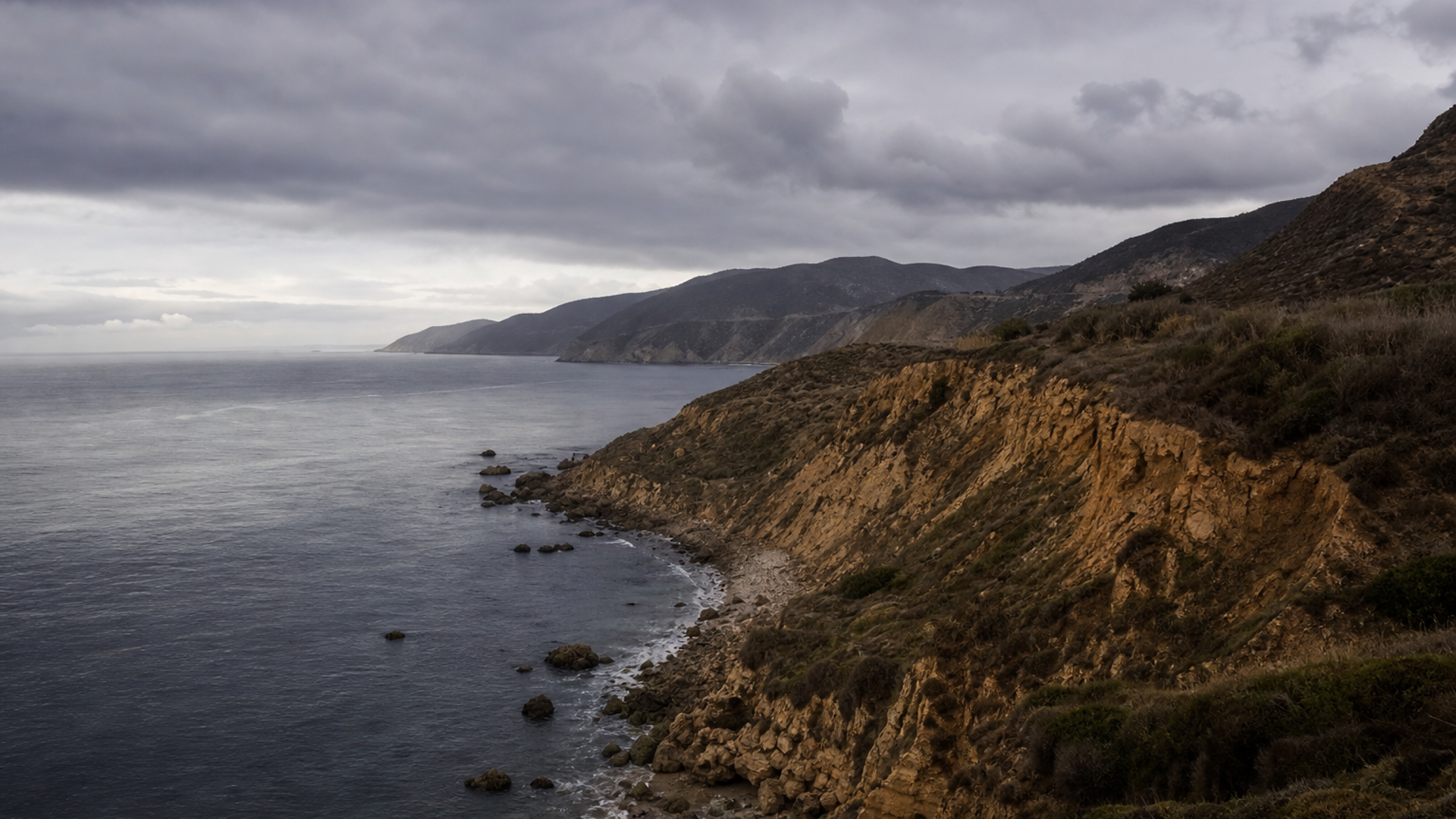
The human story at Paradise Cove unfolds where surf meets shell midden: wind-scoured beaches, layers of mussel and abalone, and hearth lenses that record repetitive, seasonal use. Radiocarbon dates associated with the shell deposits and buried features place these occupations within the late Holocene between roughly 2000 and 1000 BCE. Archaeological data indicate a long-standing tradition of coastal foraging and marine resource specialization in this part of southern California, part of a wider continuum of Native American Coastal California lifeways.

Material culture from the site — dense shell middens, fish bone assemblages, ground stone fragments, and occasional ornament fragments — suggests seasonal aggregation points where families collected mollusks, fished kelp-associated species, and processed plant resources. Limited evidence suggests these occupations were part of a resilient coastal adaptation rather than a single migrating group. Because preservation favors durable remains, we interpret the stratigraphic sequence cautiously: organic tools and soft textiles rarely survive, and site formation processes can bias what is visible.

With only four ancient genomes available from Paradise Cove, genetic inferences about origin and population continuity remain preliminary. Nevertheless, the combination of archaeological context and DNA begins to map how people used coastal landscapes and how those groups relate to later Native Californian communities.

  • Occupations dated by radiocarbon to c. 2000–1000 BCE
  • Shell middens and fish remains indicate marine-focused subsistence
  • Evidence suggests seasonal aggregation and long-term coastal use
Capítulo IV

Daily Life & Society

Imagine dawn light on kelp beds as small groups launch simple watercraft or fish from rocky points. Archaeological remains at Paradise Cove evoke a rhythm of daily tasks: collecting mussels and abalone, repairing netting or cordage, roasting fish on hearths, and crafting personal ornaments from shell. Ground stone tools hint at plant processing—acorns and other nuts likely complemented marine protein in a mixed economy common to Coastal California.

Social life is reconstructed from spatial patterning in the midden and feature distribution. Hearth clusters and discrete discard areas can indicate household loci or short-term camp sectors, while shell bead fragments and worked shell may point to social display, exchange, or status differentiation. Ethnographic parallels with historical Southern California Indigenous groups suggest networks of seasonal mobility, intergroup exchange, and a deep knowledge of tidal and marine ecology.

Archaeological data cannot by themselves reveal language or belief, but material traces reveal practices: intense marine foraging, skilled tool production, and social strategies tuned to coastal abundance and variability. Preservation biases and the small number of genetic samples mean reconstructions remain interpretive and should be integrated with Indigenous knowledge and consultation.

  • Marine foods (mollusks, fish) dominate the faunal record
  • Feature clustering suggests repeated seasonal camps and social organization
Capítulo V

Genetic Profile

Ancient DNA from four individuals recovered at Paradise Cove provides a first glimpse into the biological ancestry of these coastal foragers. Among the four samples, Y-chromosome haplogroup Q was observed in one male individual, while mitochondrial haplogroups A and D1 were each observed in one individual. These lineages are part of the canonical set of Native American founding haplogroups: Q is frequently found on the male side across the Americas, and mtDNA A and D1 are typical maternal lineages documented in both ancient and modern Indigenous populations.

Because the sample count is small (n = 4), any population-level statements must be treated as tentative. The limited dataset prevents confident estimates of diversity, population structure, or migration events. Nevertheless, the presence of these haplogroups is consistent with continuity between late Holocene coastal populations and broader Native American genetic lineages in North America.

Genetic data were obtained from well-dated contexts and cross-referenced with archaeological stratigraphy; however, low sample numbers mean signals of local continuity, admixture, or population turnover may be missed. Future sampling and collaborative research with descendant communities will be essential to refine kinship patterns, sex-biased mobility, and how Paradise Cove fits within regional genetic landscapes.

  • Y haplogroup Q detected (1 of 4) consistent with Native American paternal lineages
  • Mitochondrial haplogroups A and D1 observed; findings are preliminary due to small sample size
Capítulo VI

Legacy & Modern Connections

Archaeological layers of Paradise Cove are palimpsests of human lives whose descendants continue to steward California’s coast. While ancient DNA connects these remains to broad Native American lineages, scientific findings must be contextualized within living Indigenous histories and community knowledge. Limited genetic sampling offers initial clues to ancestry and continuity but cannot substitute for descendant perspectives.

Ongoing collaboration with Indigenous communities, expanded sampling that respects cultural protocols, and integration of archaeological, ecological, and oral histories will deepen understanding. The site’s legacy is both material—shell fragments, stone tools—and intangible: a coastline shaped by generations of people who harvested, managed, and cared for marine and terrestrial ecosystems.

  • Preliminary genetic signals suggest links to wider Native American lineages
  • Community collaboration and more samples are needed to clarify continuity
Con IA

Asistente de IA

Haz preguntas sobre la cultura Malibu Coast Foragers (c.3400 BP)

Asistente de IA por DNAGENICS

Desbloquear esta función
Pregunta sobre la cultura Malibu Coast Foragers (c.3400 BP). El asistente con IA puede explicar hallazgos genéticos, contexto histórico, pruebas arqueológicas y conexiones modernas, con sus límites de interpretación.
Ejemplo de análisis con IA

La cultura Malibu Coast Foragers (c.3400 BP) representa un capítulo de la historia humana...

El análisis genético permite estudiar similitudes con poblaciones anteriores y posibles adaptaciones. Las muestras de ADN antiguo aportan información para investigar patrones migratorios y relaciones entre poblaciones, con límites que dependen del estudio y del contexto arqueológico.

Esta es una vista previa del análisis con IA. Accede al asistente completo para explorar información sobre:

  • Composición y similitud genética
  • Patrones migratorios y orígenes
  • Vida cotidiana y prácticas culturales
  • Contexto genético moderno

Explora más culturas antiguas

Descubre la historia de civilizaciones de distintas partes del mundo antiguo