Preparando el informe

Cargando la información y las referencias disponibles

Consultando el registro arqueológico...

Recopilando registros antiguos

Saltar al contenido principal
Mondújar Nazari Community (1500s)
Cultura destacada

Mondújar Nazari Community (1500s)

Post‑Nasrid Muslim burials in Granada revealed by archaeology and ancient DNA

1500 CE - 1600 CE
Andalusia, Spain (Granada: Mondújar, Torna Alta)
Desplázate para empezar
Capítulo I

La historia

Comprender la cultura Mondújar Nazari Community (1500s)

Archaeological and genetic evidence from Mondújar (Lecrín) and Torna Alta (Granada) paints a picture of a small, mixed Muslim community in 1500–1600 CE. Limited samples suggest Iberian, North African, and occasional sub‑Saharan maternal ancestry.

Time Period

1500–1600 CE (post‑Nasrid/Muslim Spain)

Region

Andalusia, Spain (Granada: Mondújar, Torna Alta)

Common Y-DNA

R (2), E (1), CT (1) — 4 males sampled

Common mtDNA

U (3), H (2), H1 (1), L (1), W6a (1) — 8 individuals

Capítulo II

Cronología

Momentos clave de la historia de esta cultura

1492 CE

Fall of Granada

The Nasrid kingdom surrenders to Castile; political rule changes but Muslim communities continue locally.

1568 CE

Alpujarras (Morisco) Revolt

Revolt by Morisco communities in Granada and the Alpujarras reflects resistance to assimilation and forced policies.

1609 CE

Expulsion of the Moriscos (beginning)

Crown policy to remove Moriscos begins, profoundly reshaping demographic patterns in Andalusia.

Capítulo III

Origins & Emergence

The graves at Mondújar (Lecrín) and the Nécropolis de Torna Alta in Granada belong to communities living in the turbulent aftermath of the Nasrid kingdom's fall (1492 CE). Archaeological data indicates continued use of Islamic funerary spaces and material culture into the 16th century, reflecting cultural persistence under new political realities.

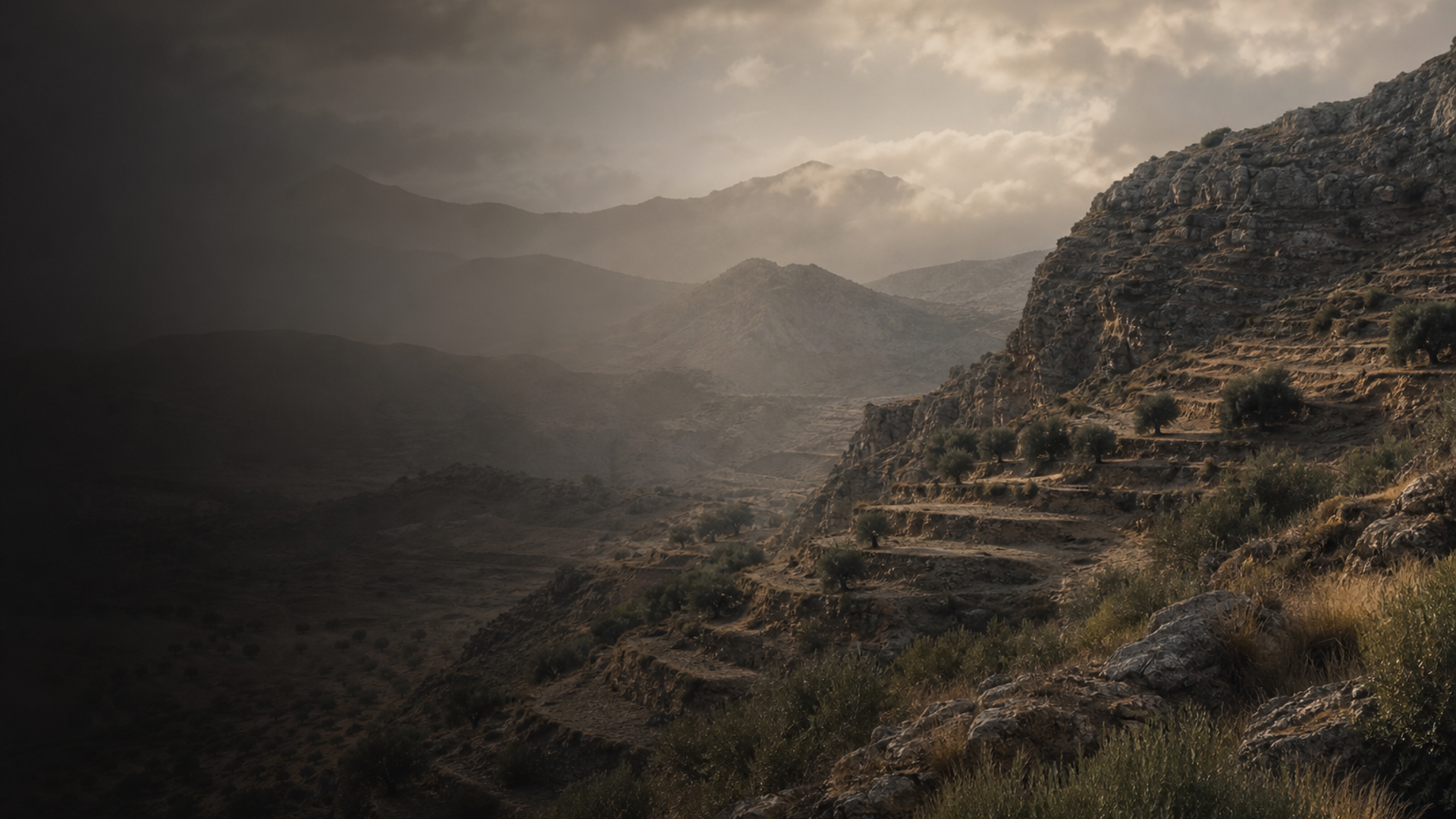
Limited evidence suggests these burials preserve a community that navigated shifting identities: outwardly Christianized in law yet maintaining local traditions. The landscape — terraced fields, olive groves, and watchful hills — framed a way of life shaped by centuries of Mediterranean exchange. Ceramic assemblages and burial orientation hint at continuity with earlier Nasrid practices, but the archaeological record remains fragmentary. Given only eight genetic samples, any reconstruction of population origins is provisional, and archaeological signals must be read alongside documentary silence and later upheavals.

  • Post‑Nasrid Muslim communities in Granada persisted into the 16th century
  • Grave contexts show continuity with earlier Islamic funerary practices
  • Interpretations are tentative due to limited archaeological and genetic samples
Capítulo IV

Daily Life & Society

Archaeology evokes a tactile world: villagers tending irrigated terraces, potters shaping red‑slip wares, and small domestic ensembles clustered near communal graves. Material traces from Mondújar and Torna Alta indicate mixed subsistence strategies — cereals, olives, and horticulture — and craft activity tied to local and regional markets.

Social life was compressed by political pressure: forced conversions, tribute demands, and periodic unrest altered household and community structures. Yet mundane objects — spindle whorls, cooking ceramics, personal adornment — speak to continuity. The cemeteries suggest tightly knit family groups or neighborhoods; their spatial organization and artifact associations provide clues to lineage and neighborhood identity. Archaeological data remains incomplete, and household patterns inferred from graves must be treated cautiously.

  • Agrarian and craft economy anchored in Lecrín valley terraces
  • Material culture hints at continuity amid social and political pressures
Capítulo V

Genetic Profile

Genetic data from eight individuals offers a preliminary window into the biological heritage of these Nazari‑period Muslim communities. Y‑DNA results (R: 2, E: 1, CT: 1) suggest mixed paternal ancestries: R lineages are common across Iberia and Europe, whereas haplogroup E is often associated with North African and Mediterranean populations. CT here denotes a broad upstream lineage where downstream resolution is limited in these samples.

Mitochondrial diversity (U:3, H:2, H1:1, L:1, W6a:1) reveals predominantly Western Eurasian maternal lineages (U, H, W6a) alongside one L lineage indicative of sub‑Saharan maternal input. This pattern is consistent with historical records of Mediterranean mobility, the trans‑Saharan and Atlantic slave trades, and centuries of Iberian–Maghrebi contact. Archaeological DNA indicates admixture at the household level, but with only eight samples conclusions are tentative. Sampling bias, preservation, and laboratory resolution affect haplogroup calls; broader datasets are needed to clarify kinship, population structure, and the timing of admixture events.

  • Male lineages show both European (R) and North African‑linked (E) signals
  • Maternal lineages include common Iberian types and one sub‑Saharan (L); sample size limits certainty
Capítulo VI

Legacy & Modern Connections

These burials and their genomes form a cinematic fragment of Andalusia's layered past: a small, mixed community living in the shadows of a collapsed kingdom, negotiating identity through burial, kinship, and daily work. Modern Andalusian populations retain genetic echoes of this complex history: North African and occasional sub‑Saharan components are detectable in regional genomes, but patterns vary widely across individuals and locales.

Because only eight individuals were analyzed, linking these samples directly to broad modern populations would overreach the data. Instead, they illuminate how Mediterranean mobility, slavery, and conversion left biological as well as cultural traces. Future sampling across multiple cemeteries and periods will be necessary to trace ancestry threads from Nazari communities into present‑day Iberia.

  • Genetic echoes align with known Iberian–Maghrebi interactions
  • Small sample set cautions against direct extrapolation to modern populations
Con IA

Asistente de IA

Haz preguntas sobre la cultura Mondújar Nazari Community (1500s)

Asistente de IA por DNAGENICS

Desbloquear esta función
Pregunta sobre la cultura Mondújar Nazari Community (1500s). El asistente con IA puede explicar hallazgos genéticos, contexto histórico, pruebas arqueológicas y conexiones modernas, con sus límites de interpretación.
Ejemplo de análisis con IA

La cultura Mondújar Nazari Community (1500s) representa un capítulo de la historia humana...

El análisis genético permite estudiar similitudes con poblaciones anteriores y posibles adaptaciones. Las muestras de ADN antiguo aportan información para investigar patrones migratorios y relaciones entre poblaciones, con límites que dependen del estudio y del contexto arqueológico.

Esta es una vista previa del análisis con IA. Accede al asistente completo para explorar información sobre:

  • Composición y similitud genética
  • Patrones migratorios y orígenes
  • Vida cotidiana y prácticas culturales
  • Contexto genético moderno

Explora más culturas antiguas

Descubre la historia de civilizaciones de distintas partes del mundo antiguo




