Preparando el informe

Cargando la información y las referencias disponibles

Consultando el registro arqueológico...

Recopilando registros antiguos

Saltar al contenido principal
Nuštar: Avar-Age Crossroads
Cultura destacada

Nuštar: Avar-Age Crossroads

Early medieval community in eastern Croatia where local and steppe threads meet

600 CE - 947 CE
Nuštar, Vukovar-Syrmia, Croatia
Desplázate para empezar
Capítulo I

La historia

Comprender la cultura Nuštar: Avar-Age Crossroads

Archaeological and ancient DNA evidence from Nuštar (600–947 CE) reveals a small, diverse Early Medieval community during the Avar period in Croatia. Limited samples hint at local European maternal lines with sporadic Near Eastern and steppe-associated paternal inputs; conclusions remain preliminary.

Time Period

600–947 CE

Region

Nuštar, Vukovar-Syrmia, Croatia

Common Y-DNA

J (2), Q (1), E (1)

Common mtDNA

H16 (2), H (2), J (2), K (1), H5 (1)

Capítulo II

Cronología

Momentos clave de la historia de esta cultura

600 CE

Onset of Avar-period burials at Nuštar

Archaeological contexts date burial activity around Nuštar to the early Avar period, marking increased regional connectivity.

800 CE

Integration and local continuity

Cemeteries and material culture indicate sustained local lifeways alongside imported elements, signaling cultural blending.

947 CE

Latest dated samples

The upper bound of the sampled date range; genetic signals remain preliminary and localized.

Capítulo III

Origins & Emergence

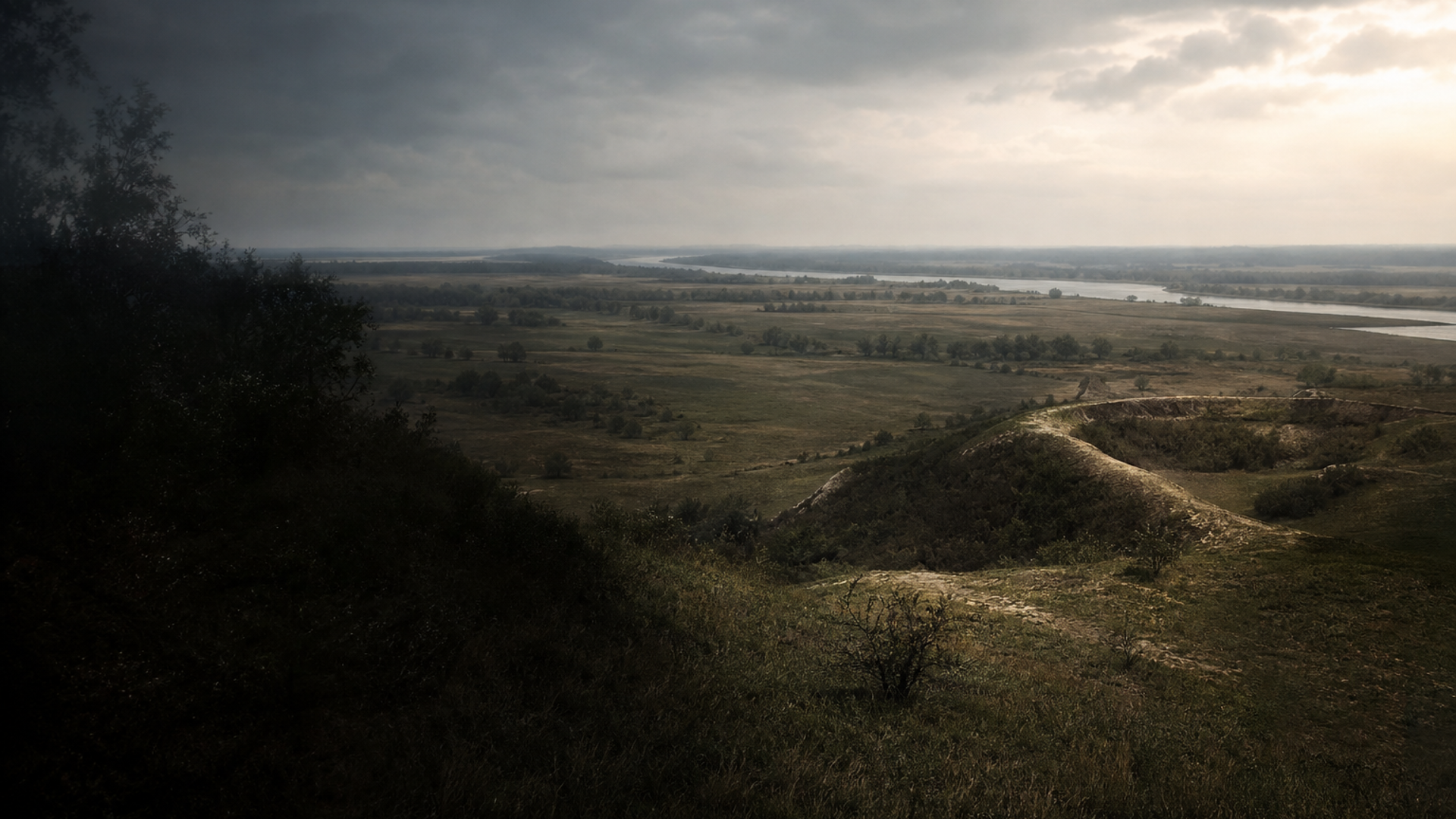
The Nuštar assemblage sits within the sweeping drama of the Avar period in the western Balkans (roughly 6th–9th centuries CE). Archaeological data from cemetery contexts around Nuštar (Vukovar-Syrmia County, including areas near the historic dvorac and the environs of Vinkovci) indicate occupation and burial activity between about 600 and 947 CE. In cinematic terms, this landscape was a meeting place of river valleys, trade routes and mobile polities — a stage on which local continental traditions encountered incoming groups from the Carpathian Basin and beyond.

Limited evidence suggests that the people interred at Nuštar belonged to a mosaic of cultural practices: local burial rites persisted alongside elements commonly associated with Avar-period communities across the Pannonian and Balkan zones. Material culture in the region often displays an interplay of indigenous Balkan forms and items or styles that trace back to steppe and northern Anatolian connections. The DNA samples from Nuštar add a human dimension to this picture: genetic markers point to predominantly European maternal lineages with a scattering of paternal haplogroups that hint at broader contacts.

Because the number of analyzed individuals is small, interpretations of origin and movement must remain cautious. Archaeological indicators and genetic signals together suggest a community shaped by long-standing local roots and episodic admixture — a frontier population forged between continuity and change.

  • Occupied and buried 600–947 CE in Nuštar, Vukovar-Syrmia County
  • Archaeological record shows blending of local Balkan and Avar-period traits
  • Small sample size requires cautious interpretation of origins
Capítulo IV

Daily Life & Society

Archaeological contexts in eastern Slavonia present a portrait of everyday life lived at a cultural crossroads. Settlement traces and cemeteries near Nuštar and Vinkovci suggest agrarian households tied to riverine landscapes, where winter grain, pastoral flocks, and seasonal mobility shaped subsistence strategies. Graves from the Avar period in the region often contain a range of items — personal ornaments, tools, and occasionally equestrian gear — that speak to status differences and networks of exchange.

Skeletal remains and burial organization indicate communities structured around kinship and perhaps small local elites. Funerary variability implies social distinctions: some burials follow modest, locally rooted practices while others include objects or orientations associated with wider Avar-period customs. The material palette and spatial ordering of cemeteries hint at negotiated identities — individuals who maintained local lifeways while participating in broader economic and social networks.

Archaeological data indicates that Nuštar’s inhabitants were neither isolated nor uniformly mobile conquerors; instead, they exemplify the hybrid tableau of Early Medieval Croatia, where continuity of daily subsistence met episodic cultural influxes. This liminal daily life would be reflected, in part, in the genetic signatures now emerging from ancient DNA.

  • Agrarian, river-valley lifeways with pastoral elements
  • Burial variability suggests kin-based communities with social differentiation
Capítulo V

Genetic Profile

Nine published samples from Nuštar provide a small but informative window into genetic diversity during the Avar period in Croatia. Because the sample count is fewer than ten, all conclusions are preliminary: population-level interpretations require larger, geographically broader datasets. Still, the observed uniparental markers paint a suggestive picture.

Mitochondrial DNA is dominated by H-lineage types (H16 and general H types accounting for five of the nine samples), with additional J (2), K (1) and H5 (1). These maternal haplogroups are commonly found across Europe and reflect deep continuity of Neolithic farmer and later European maternal lineages in the Balkans. The prevalence of H variants aligns with long-standing female-mediated continuity in the region.

Y-chromosome diversity in the Nuštar sample is limited but noteworthy: two individuals carry haplogroup J, one carries Q, and one carries E (with remaining males unreported or undetermined in this small set). Haplogroup J frequently appears in Near Eastern and Mediterranean contexts in ancient DNA studies and can indicate connections or male-mediated gene flow from southeastern directions. Haplogroup Q is rare in Europe and may signal limited steppe or Inner Asian ancestry entering paternal lines; haplogroup E has deep ties in the Mediterranean and Balkan gene pool. These paternal signals, contrasted with predominantly European maternal lines, suggest asymmetric admixture episodes where incoming males mixed with local female lineages.

Autosomal data would clarify the scale and timing of these admixture events; until then, the genetic narrative for Nuštar remains an evocative, preliminary mosaic reflecting local continuity with episodic external inputs.

  • mtDNA dominated by European H lineages (H16, H, H5) with some J and K
  • Y-DNA shows J (2), Q (1), E (1) — hints of Near Eastern and steppe/extra-European inputs
Capítulo VI

Legacy & Modern Connections

The Nuštar dataset illuminates how early medieval communities in Croatia were stitched together by both continuity and contact. Modern populations of eastern Croatia carry a deep layer of the same maternal lineages visible in these ancient samples, but direct lineage persistence is complex: centuries of migration, political change and demographic shifts have reshaped gene pools.

Genetic markers like Y-haplogroup J or sporadic Q in the Nuštar males may reflect episodes of male-biased movement into the region during the Avar period; however, their presence in a handful of individuals does not imply broad demographic replacement. Archaeological continuity in settlement and material culture combined with predominantly European mtDNA points to durable local roots with measurable, if limited, external influence.

Future sampling across cemeteries, paired autosomal analyses, and comparative studies with contemporaneous sites in the Carpathian Basin and Balkans will show whether Nuštar was typical or exceptional. For museum audiences, Nuštar offers a vivid lesson: genetic threads reveal contacts and migrations, but they also underscore human resilience and the slow weaving of modern populations from many past strands.

  • Modern eastern Croatians likely reflect long-term maternal continuity with episodic admixture
  • Small numbers of paternal markers suggest limited male-biased inputs rather than replacement
Con IA

Asistente de IA

Haz preguntas sobre la cultura Nuštar: Avar-Age Crossroads

Asistente de IA por DNAGENICS

Desbloquear esta función
Pregunta sobre la cultura Nuštar: Avar-Age Crossroads. El asistente con IA puede explicar hallazgos genéticos, contexto histórico, pruebas arqueológicas y conexiones modernas, con sus límites de interpretación.
Ejemplo de análisis con IA

La cultura Nuštar: Avar-Age Crossroads representa un capítulo de la historia humana...

El análisis genético permite estudiar similitudes con poblaciones anteriores y posibles adaptaciones. Las muestras de ADN antiguo aportan información para investigar patrones migratorios y relaciones entre poblaciones, con límites que dependen del estudio y del contexto arqueológico.

Esta es una vista previa del análisis con IA. Accede al asistente completo para explorar información sobre:

  • Composición y similitud genética
  • Patrones migratorios y orígenes
  • Vida cotidiana y prácticas culturales
  • Contexto genético moderno

Explora más culturas antiguas

Descubre la historia de civilizaciones de distintas partes del mundo antiguo