Preparando el informe

Cargando la información y las referencias disponibles

Consultando el registro arqueológico...

Recopilando registros antiguos

Saltar al contenido principal
Orkney Iron Age Mothers
Cultura destacada

Orkney Iron Age Mothers

Maternal lineages from Knowe of Skea connect island lives to Atlantic Europe

340 BCE - 250 CE
Orkney, United Kingdom
Desplázate para empezar
Capítulo I

La historia

Comprender la cultura Orkney Iron Age Mothers

Three ancient genomes (340 BCE–250 CE) from Knowe of Skea, Westray, Orkney reveal maternal haplogroups H1b and U. Limited samples suggest connections to broader Atlantic Europe and long-term island continuity; conclusions remain preliminary pending larger datasets.

Time Period

340 BCE–250 CE

Region

Orkney, United Kingdom

Common Y-DNA

Not reported (limited data)

Common mtDNA

H1b (2), U (1)

Capítulo II

Cronología

Momentos clave de la historia de esta cultura

340 BCE

Earliest sampled individual at Knowe of Skea

One of the three recovered genomes dates to about 340 BCE, anchoring this small dataset in the later Iron Age of Orkney.

Capítulo III

Origins & Emergence

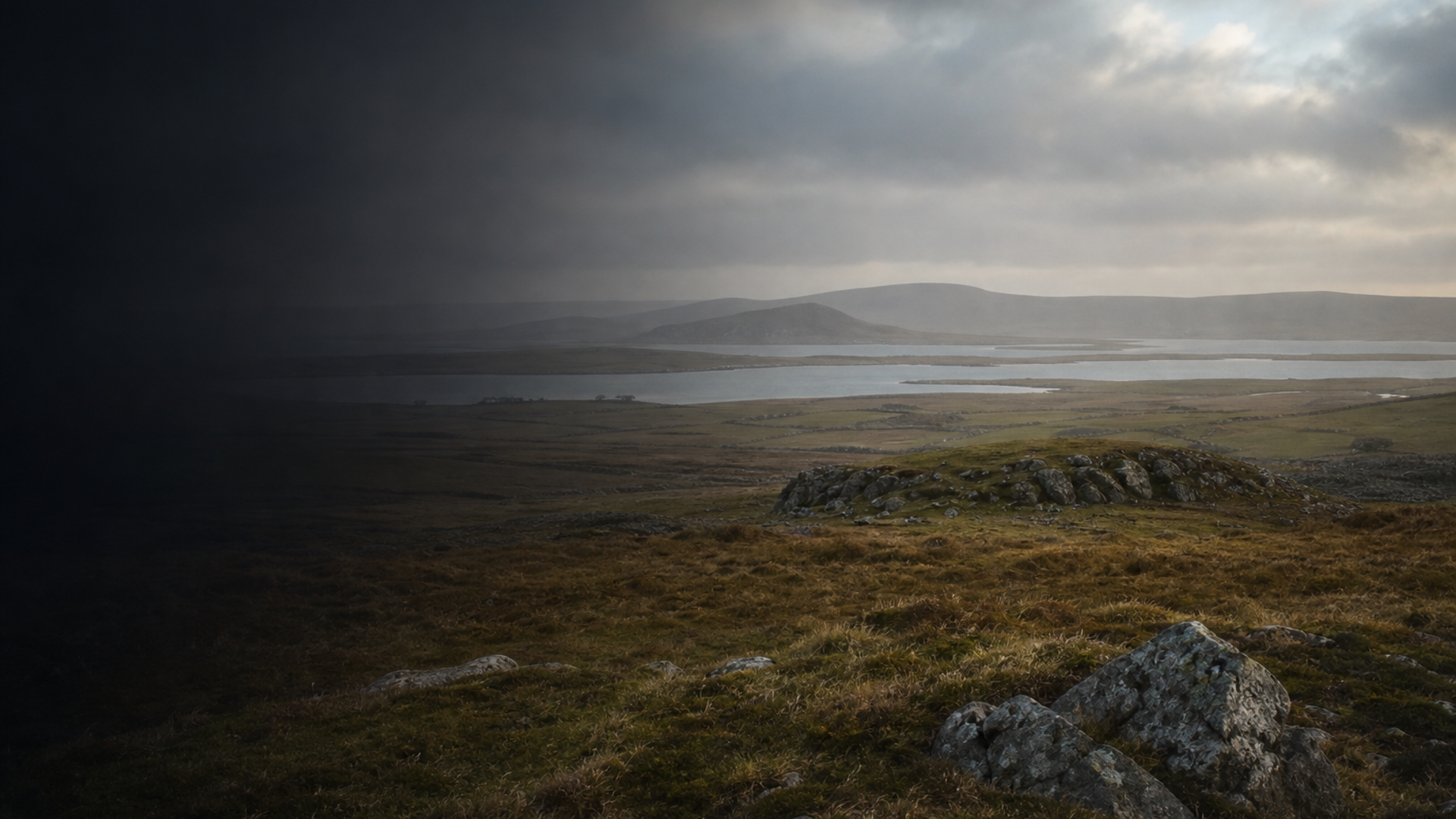
The Knowe of Skea individuals date between 340 BCE and 250 CE, placing them in the later Iron Age landscape of Orkney. Archaeological data indicates persistent island settlement through the Bronze and Iron Ages, with maritime lifeways focused on fishing, inter-island contact, and coastal resources. Knowe of Skea (Westray) sits within a tapestry of broch towers, settlement mounds, cairns and field systems that mark Orkney’s deep prehistory.

Genetically, the three sampled individuals provide glimpses of maternal ancestry: two carry H1b and one carries a U lineage. Haplogroup H1 subclades are widespread across Atlantic Europe in the later prehistoric and historic periods, while mtDNA U is an older European lineage tied to Neolithic and earlier populations. These maternal markers are consistent with long-term continuity of island communities that derived ancestry from earlier Neolithic and Bronze Age peoples, yet also absorbed wider Atlantic connections.

Because only three genomes are available, any reconstruction of population processes — migration, continuity, or gene flow — must remain tentative. Limited evidence suggests local continuity in female lines, but broader patterns (male-mediated movement, trade networks, and demographic shifts) require more samples for confirmation.

Bulleted archaeological highlights below synthesize current understanding from the site and region.

  • Samples from Knowe of Skea, Westray dated 340 BCE–250 CE
  • Archaeological landscape includes brochs, settlement mounds, and coastal exploitation
  • Maternal markers align with Atlantic European and older European lineages
Capítulo IV

Daily Life & Society

The material world of Iron Age Orkney was shaped by wind, sea and stone. Archaeological remains across the isles reveal dense settlements with hearths, worked bone and stone tools, and farmed landscapes that exploited mixed agriculture and maritime resources. At sites like Knowe of Skea, domestic features and midden deposits suggest diets rich in fish, shellfish and domesticated animals, and craft activities such as textile working and bone tool manufacture.

Social life likely revolved around kin groups tied to specific farmsteads or small clusters of dwellings. Architectural forms in Orkney — from roundhouses to more complex seatings and later broch structures — imply local expressions of status and communal organization. Ritual and burial practices are regionally variable; inhumations and curated deposits occasionally accompany settlement debris, hinting at beliefs anchored in ancestors and place.

Material culture and isotopic studies from Orkney more broadly show mobility of goods and people across the North Atlantic fringe. For the Knowe of Skea individuals, the archaeological context supports a coastal, interconnected island lifestyle where local continuity coexisted with episodic external contacts.

Bulleted social points summarize the lived environment.

  • Coastal economy: fishing, shellfish, pastoralism and small-scale farming
  • Settlements suggest kin-based household units with craft production
Capítulo V

Genetic Profile

Three mitochondrial genomes recovered from Knowe of Skea reveal two H1b and one U lineage. H1b is a subclade of haplogroup H, commonly observed across western and northern Europe in later prehistoric and historic periods; its presence here is compatible with longstanding Atlantic European maternal ancestry. Haplogroup U comprises deeper European maternal lineages tied to Mesolithic and Neolithic populations, so its occurrence signals continuity with earlier European genetic layers.

No robust Y-DNA signal is reported for these three individuals in the supplied dataset, so male-line patterns remain unresolved. Across the British Isles, other ancient DNA studies have shown that Bronze Age and Iron Age populations are often genetically mixed, reflecting both local continuity and influxes associated with earlier Bronze Age migrations. However, extrapolating those broad patterns to these Orkney individuals would be speculative given the very small sample size.

From a methodological standpoint, three samples are below the threshold to estimate population-level frequencies or recent demographic events. Limited evidence suggests maternal continuity and Atlantic affinities, but detailed modeling of ancestry proportions, sex-biased migration, or kinship at Knowe of Skea requires larger datasets and complementary isotopic or archaeological analyses.

Key genetic takeaways are summarized below.

  • mtDNA: H1b (2), U (1) — suggests Atlantic and older European maternal ancestry
  • Y-DNA: not reported in this small sample set; male-line patterns unresolved
Capítulo VI

Legacy & Modern Connections

These Orkney Iron Age mothers belong to a long arc of island ancestry that bridges Neolithic settlers, Bronze Age communities, and later historic populations. Modern Orcadian populations are genetically distinct in parts due to later Norse influence, but maternal continuity of certain lineages can persist across millennia in island settings. The presence of H1b and U in these Iron Age individuals resonates with broader Atlantic European genetic threads that continue to shape the gene pool of northern Britain.

Crucially, the small sample size tempers any direct link to modern groups; while these genomes enrich the narrative of Orkney’s deep past, they represent only initial glimpses. Ongoing sampling, integrated archaeological context, and multidisciplinary analyses will be necessary to trace how these Iron Age island lineages contributed to the genetic landscape of later centuries.

Bulleted legacy notes summarize the cautious connections to the present.

  • Signals of maternal continuity link Iron Age islanders to older Atlantic European ancestry
  • Small sample count means connections to modern Orcadians remain provisional
Con IA

Asistente de IA

Haz preguntas sobre la cultura Orkney Iron Age Mothers

Asistente de IA por DNAGENICS

Desbloquear esta función
Pregunta sobre la cultura Orkney Iron Age Mothers. El asistente con IA puede explicar hallazgos genéticos, contexto histórico, pruebas arqueológicas y conexiones modernas, con sus límites de interpretación.
Ejemplo de análisis con IA

La cultura Orkney Iron Age Mothers representa un capítulo de la historia humana...

El análisis genético permite estudiar similitudes con poblaciones anteriores y posibles adaptaciones. Las muestras de ADN antiguo aportan información para investigar patrones migratorios y relaciones entre poblaciones, con límites que dependen del estudio y del contexto arqueológico.

Esta es una vista previa del análisis con IA. Accede al asistente completo para explorar información sobre:

  • Composición y similitud genética
  • Patrones migratorios y orígenes
  • Vida cotidiana y prácticas culturales
  • Contexto genético moderno

Explora más culturas antiguas

Descubre la historia de civilizaciones de distintas partes del mundo antiguo