Preparando el informe

Cargando la información y las referencias disponibles

Consultando el registro arqueológico...

Recopilando registros antiguos

Saltar al contenido principal
Queensland Pre‑European Ancestors
Cultura destacada

Queensland Pre‑European Ancestors

Coastal lifeways in North Queensland revealed by archaeology and ancient DNA

410 CE - 1788 CE
North Queensland, Australia
3 Muestras antiguas
Desplázate para empezar
Capítulo I

La historia

Comprender la cultura Queensland Pre‑European Ancestors

Ancient DNA from three pre‑European individuals (410–1788 CE) from Cairns (Mulgrave District) and Weipa illuminates coastal Aboriginal lifeways in North Queensland. Archaeological traces and mtDNA P/M plus Y haplogroup F suggest regional continuity; findings are preliminary given small sample size.

Time Period

410–1788 CE

Region

North Queensland, Australia

Common Y-DNA

F (1)

Common mtDNA

P (2), M (1)

Capítulo II

Cronología

Momentos clave de la historia de esta cultura

1788 CE

First sustained European colonization in eastern Australia

European colonization (from 1788) marks the start of profound social and environmental change in coastal Queensland; it defines the end boundary for the pre‑European era in these samples.

Capítulo III

Origins & Emergence

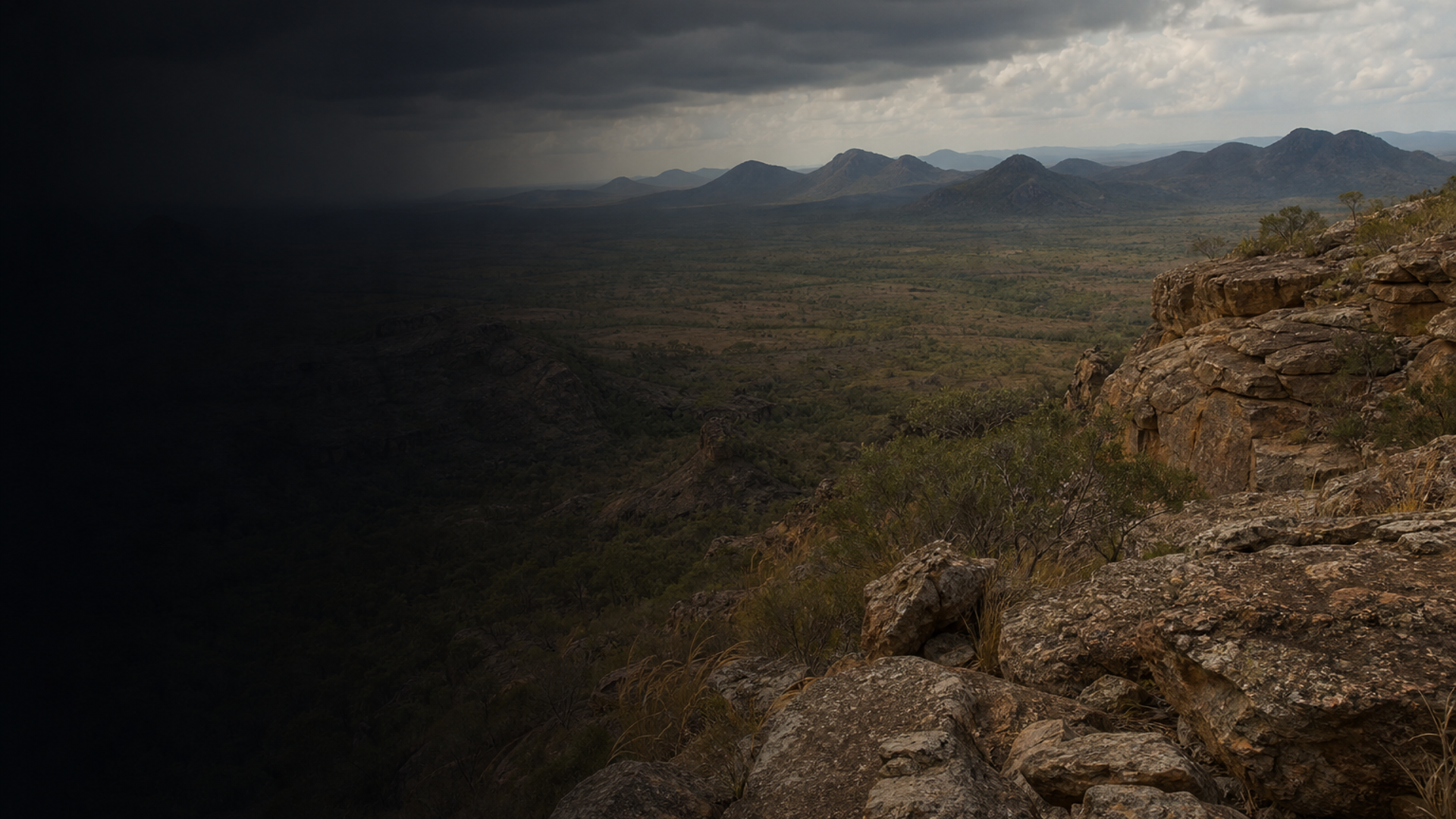
The human presence in North Queensland is layered like the coastal terraces and shell middens that mark ancient camp sites. Archaeological data from the Mulgrave District (Cairns) and the Weipa area attest to long‑standing coastal occupation through the late first millennium CE into the early modern era (410–1788 CE). While these samples sit late in a deep regional story of Aboriginal settlement, they capture lifeways shaped by monsoonal cycles, estuaries, and reef resources.

Limited evidence suggests continuity of local traditions rather than episodic replacement during this window, but the genetic dataset here is small (n=3) and must be treated as preliminary. Excavations and surface surveys in the region frequently recover shell middens, hearths, stone tools, and occasional painted rock art panels on headlands — all indicators of recurrent, place‑based use of the coastline. These material traces, when paired with genetic signals, allow cautious reconstructions of population persistence, mobility along river corridors, and long‑term connections between coastal and inland foraging groups.

Archaeological data indicates that the communities represented by these samples were part of a broader Aboriginal North Queensland cultural landscape with deep time roots; however, refining chronology and social dynamics will require more samples and collaborative research with descendant communities.

  • Samples from Cairns (Mulgrave District) and Weipa date to 410–1788 CE
  • Material culture: shell middens, hearths, stone tools, and rock art context
  • Small sample size (n=3) — interpretations remain provisional
Capítulo IV

Daily Life & Society

The coast of North Queensland is a cinematic stage of tide, mangrove and reef. Archaeological assemblages from the region depict communities intimately attuned to marine and estuarine resources: fish, shellfish, dugong, and seasonal plant harvests. Shell middens record repeated feasting and discard patterns, while hearths and stone tool scatters speak to food processing, tool maintenance, and episodic occupations of headlands and river mouths.

Ethnographic and archaeological parallels suggest highly organized knowledge systems for navigation, seasonal calendars, and resource stewardship. Rock art panels and carved objects (where present) imply expressive lives woven with songlines and ritual obligations tied to place. Social networks likely combined sedentary use of rich coastal strips with short‑range mobility into hinterlands for plant resources and trade. Leadership and social organization are archaeologically opaque here; however, the density of coastal sites indicates stable territories and long‑term landscape management.

Because the three genetic samples are spread across different localities and centuries, they hint at continuing use of known camps and shared coastal routes rather than one‑off occupations. Still, many facets of everyday life — kinship structures, ritual calendar specifics, and detailed craft traditions — are best reconstructed through collaborative studies that integrate oral histories and further excavation.

  • Coastal foraging economy focused on fish, shellfish, and seasonal plants
  • Sites indicate repeated, place‑based occupation with long‑term landscape management
Capítulo V

Genetic Profile

The genetic dataset for Australia_NQueensland_PreEuropean contains three individuals from two North Queensland localities: Cairns (Mulgrave District) and Weipa, dated between 410 and 1788 CE. Observed uniparental markers are one Y‑chromosome haplogroup F and mitochondrial haplogroups P (two individuals) and M (one individual).

MtDNA haplogroup P has been reported in ancient and modern sequences across Australia and parts of Near Oceania, and is commonly interpreted as a deeply rooted maternal lineage within the region. Haplogroup M is a broader Asian‑founding maternal lineage that has long been present in Australasia. The single Y‑haplogroup F call in this small set represents a deep paternal lineage node that gives rise to multiple downstream clades; without more genomes and higher resolution Y‑SNP data, assigning finer ancestral relationships is not possible.

Archaeological context and these genetic signals together are consistent with regional continuity of Aboriginal North Queensland populations into the pre‑contact era. However, with only three samples (fewer than 10), genetic inferences are necessarily tentative: observed haplogroups may not represent the full diversity of the past population, and demographic events (local admixture, drift) could skew patterns. Future sampling, higher coverage genomes, and comparison to broader Australian ancient DNA datasets will clarify how these individuals fit into continental population histories.

  • Uniparental markers: Y F (1); mtDNA P (2), M (1)
  • Sample size very small (n=3) — genetic conclusions are provisional
Capítulo VI

Legacy & Modern Connections

The human stories encoded in bone, shell and DNA are not relics but threads into living culture. Many contemporary Aboriginal communities of North Queensland maintain deep ties to coastal country, traditional ecological knowledge, and stories tied to place. Genetic signals that indicate continuity underscore kinship with the land, but they do not replace the authority of oral histories and cultural knowledge held by custodial groups.

Scientific study of ancient DNA in Australia raises important ethical obligations: research must proceed in partnership with descendant communities, respect cultural protocols, and communicate findings transparently. The preliminary genetic picture from these three pre‑European individuals points toward long‑standing regional presence and invites collaborative work to situate genetic patterns within cultural narratives, land management knowledge, and ongoing heritage practices.

When archaeology, genetics, and Indigenous knowledge are woven together respectfully, a richer and more accurate portrait of North Queensland's past and present emerges.

  • Genetic signals support regional continuity but must be integrated with Indigenous knowledge
  • Further work requires collaborative, respectful engagement with descendant communities
Capítulo VII

Catálogo de muestras

3 muestras de ADN antiguo asociadas con la cultura Queensland Pre‑European Ancestors que aportan datos de referencia sobre las poblaciones de este periodo.

3 / 3 muestras
Retrato Muestra País Época Fecha Cultura Sexo ADN-Y ADNmt
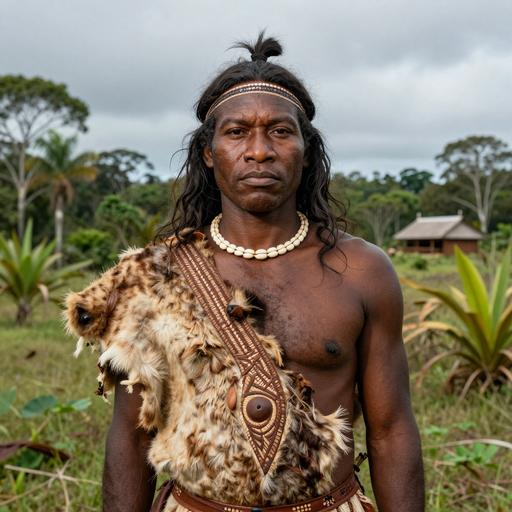
Retrato reconstruido de Aboriginal Australian individual, Australia
Aboriginal Australian individual, Australia
Australia Australia_NQueensland_PreEuropean 410 CE Aboriginal Australian M F M42a1b2
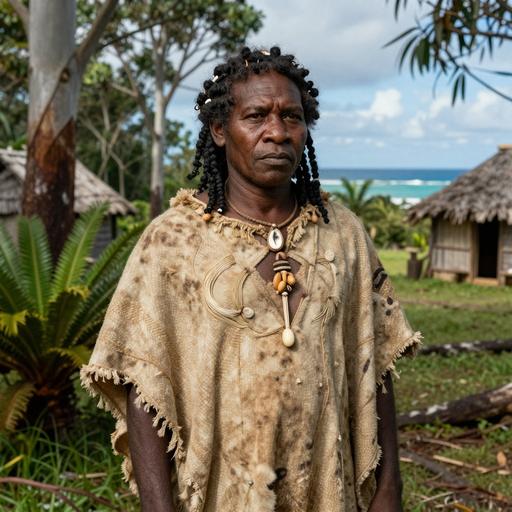
Retrato reconstruido de Pre European individual, Australia
Pre European individual, Australia
Australia Australia_NQueensland_PreEuropean 400-1800 CE Aboriginal Australian M S-Y26122 P12b
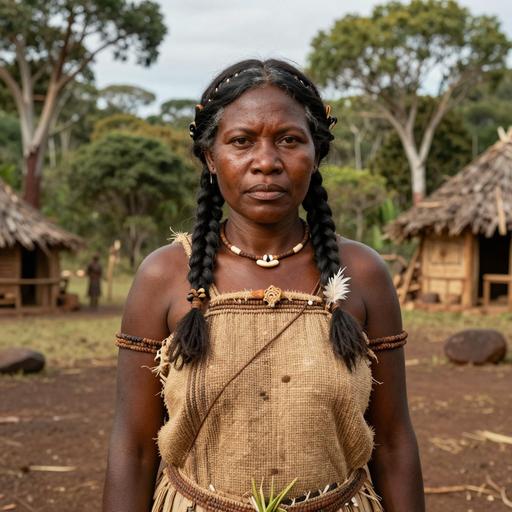
Retrato reconstruido de Aboriginal Australian individual, Australia
Aboriginal Australian individual, Australia
Australia Australia_NQueensland_PreEuropean 410 CE Aboriginal Australian F - P5a1a
Con IA

Asistente de IA

Haz preguntas sobre la cultura Queensland Pre‑European Ancestors

Asistente de IA por DNAGENICS

Desbloquear esta función
Pregunta sobre la cultura Queensland Pre‑European Ancestors. El asistente con IA puede explicar hallazgos genéticos, contexto histórico, pruebas arqueológicas y conexiones modernas, con sus límites de interpretación.

Ejemplo de análisis con IA

La cultura Queensland Pre‑European Ancestors representa un capítulo de la historia humana...

El análisis genético permite estudiar similitudes con poblaciones anteriores y posibles adaptaciones. Las muestras de ADN antiguo aportan información para investigar patrones migratorios y relaciones entre poblaciones, con límites que dependen del estudio y del contexto arqueológico.

Esta es una vista previa del análisis con IA. Accede al asistente completo para explorar información sobre:

  • Composición y similitud genética
  • Patrones migratorios y orígenes
  • Vida cotidiana y prácticas culturales
  • Contexto genético moderno

Explora más culturas antiguas

Descubre la historia de civilizaciones de distintas partes del mundo antiguo