Preparando el informe

Cargando la información y las referencias disponibles

Consultando el registro arqueológico...

Recopilando registros antiguos

Saltar al contenido principal
Rainforest Ancestors of Belize
Cultura destacada

Rainforest Ancestors of Belize

A lone early-Holocene individual from Mayahak Cab Pek opens a window into Belize 7,000 years ago.

5250 CE - 4900 BCE
Belize (Maya Lowlands)
Desplázate para empezar
Capítulo I

La historia

Comprender la cultura Rainforest Ancestors of Belize

Archaeological evidence from Mayahak Cab Pek (Belize) dated 5250–4900 BCE, combined with a single ancient genome, offers a cautious glimpse into early Maya-Lowland occupation. Limited genetic data suggest deep Native American ancestry but remain preliminary (sample n=1).

Time Period

5250–4900 BCE

Region

Belize (Maya Lowlands)

Common Y-DNA

Not reported (sample n=1)

Common mtDNA

Not reported (sample n=1)

Capítulo II

Cronología

Momentos clave de la historia de esta cultura

5100 BCE

Burial at Mayahak Cab Pek

A human burial dated within 5250–4900 BCE at Mayahak Cab Pek provides the sole ancient genome for Belize_7000BP (sample n=1).

Capítulo III

Origins & Emergence

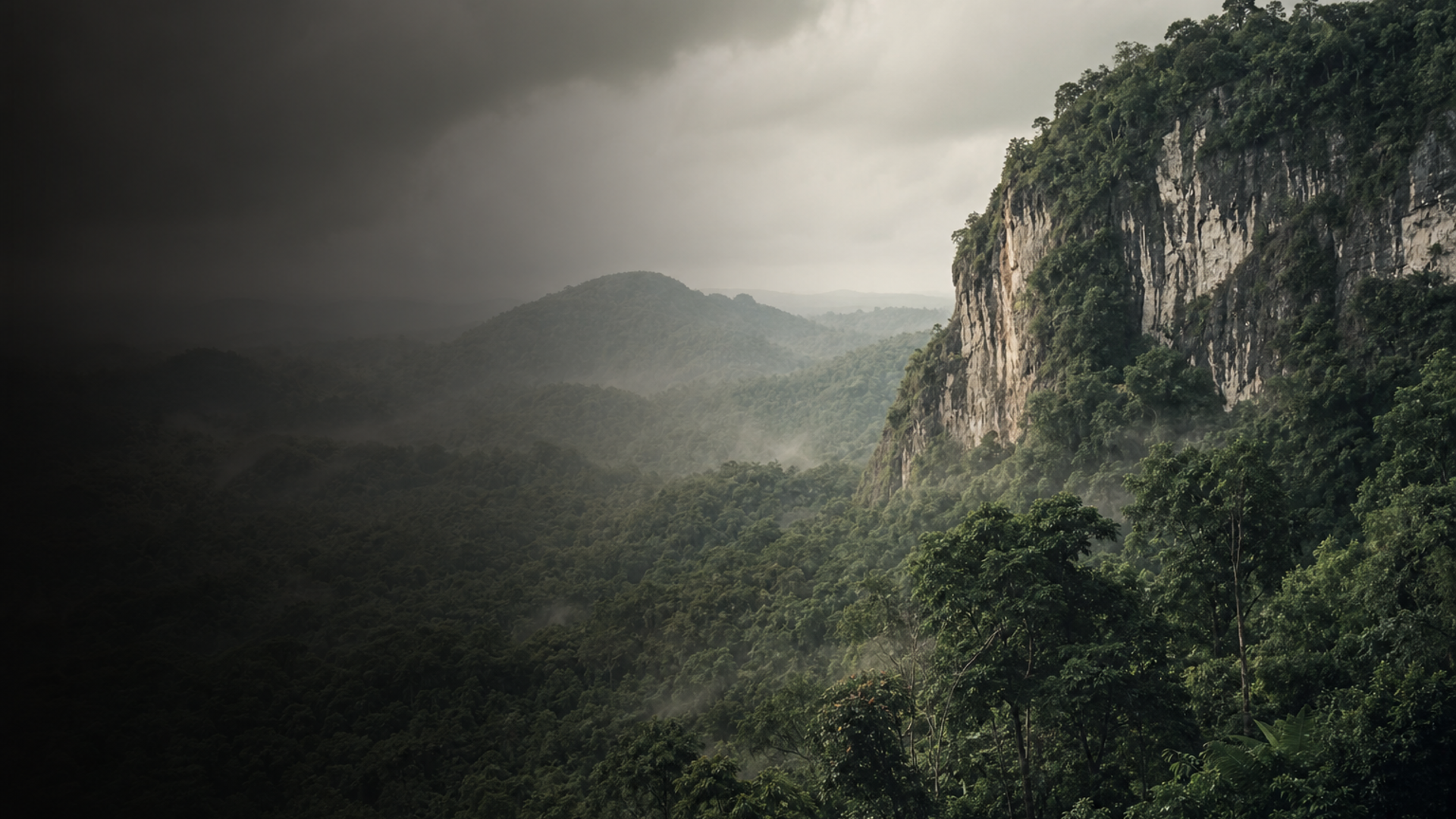
The human presence represented by the Belize_7000BP sample is rooted in a world of dense lowland rainforest, winding rivers and rich coastal lagoons. Mayahak Cab Pek, a burial locality in northern Belize, yielded a single dated human individual within the range 5250–4900 BCE (roughly 7,000 years before present). Archaeological data indicates that this interval in the southern Maya Lowlands was a time of adaptive foraging strategies and localized settlement rather than large, sedentary agricultural villages.

Limited evidence suggests continuity of human occupation in the region from earlier Pleistocene and early Holocene populations, but the cultural markers commonly associated with later Maya civilization—pottery, intensive maize agriculture, monumental architecture—are not present at this early horizon. Instead, material culture often includes chipped stone tools, shell and bone implements, and ephemeral camp or mortuary features.

Genetically and archaeologically, Belize_7000BP occupies a transitional moment: the long-term descendants who shaped Classic Maya landscapes lie in the far future, while the biological ancestors trace back to earlier founding populations of the Americas. Because the dataset for this period from Belize is sparse, any narrative of emergence must remain provisional and open to revision as new sites and genomes are recovered.

  • Sample recovered from Mayahak Cab Pek, northern Belize
  • Dated 5250–4900 BCE, early Holocene / ~7,000 BP
  • Evidence points to mobile foraging and localized occupation
Capítulo IV

Daily Life & Society

Imagining daily life around 5250–4900 BCE in the Maya Lowlands requires reading subtle traces: butchered animal bone, worked stone, and the spatial patterning of shallow features. Riverine and lagoon resources—fish, turtles, shellfish—would have been central to diet, supplemented by forest plants, tubers, and wild game. Archaeological data indicates seasonal rounds tied to water levels and fruiting cycles, with small groups exploiting a mosaic of ecological niches.

Material culture was practical and portable. Lithic assemblages at contemporaneous local sites show simple flaked tools and scraping implements suited to processing hides and plants. Shell ornaments and personal adornments are sometimes present in mortuary contexts, suggesting social identities and exchange networks across the Lowlands. There is little evidence for the dense settlement patterns or monumental constructions associated with later eras; social groups were likely small, kin-based, and flexible.

Cinematic fragments—an early-morning smoke over a lagoon, a fisher placing a trap, a family tending a temporary hearth—capture the lived world archaeologists reconstruct from modest traces. Yet every single scene is inferred from limited material and must be stated with caution.

  • Subsistence based on riverine and forest resources
  • Small, mobile kin groups with portable toolkits
Capítulo V

Genetic Profile

The genetic evidence for Belize_7000BP is extremely limited: only one ancient genome is currently available from Mayahak Cab Pek (sample count = 1). With such a small sample size, broad conclusions about population structure, migration, or continuity are necessarily provisional. Archaeogenetic data from this individual can nonetheless be informative when integrated with regional patterns.

Preliminary analyses indicate that the genome carries signatures consistent with deep Native American ancestry—the set of founding lineages that dispersed through the Americas after the initial Pleistocene migrations. However, specific haplogroup assignments (Y-DNA or mtDNA) are not reported in the submitted dataset, and thus unresolvable at present. Without corroborating genomes from nearby sites or additional individuals from the same horizon, it is not possible to robustly test hypotheses about local continuity into later Maya populations or detect fine-scale gene flow events.

Crucially, a single genome can act as a beacon: it anchors a point in space-time and allows future samples to be compared against it. As ancient DNA recovery in tropical contexts improves and sample numbers increase, researchers will be able to move from suggestive affinities to stronger inferences about demographic processes, kinship, and population continuity in the Maya Lowlands.

  • Only one ancient genome available — conclusions preliminary
  • Genetic signatures consistent with broader Native American ancestry
Capítulo VI

Legacy & Modern Connections

The Belize_7000BP individual represents an early thread in the deep tapestry of human occupation in the Maya Lowlands. While direct lineal links between this single early-Holocene person and later Maya populations cannot be demonstrated from one genome, the find underscores the long-term human presence and environmental knowledge that would, over millennia, shape the cultural landscapes of Belize.

For modern communities, such discoveries are a reminder of deep time—people living, adapting and moving across these landscapes long before ceramic technologies and agriculture. From a scientific standpoint, the primary legacy of Belize_7000BP is its potential to serve as a comparative reference: as more ancient genomes from Central America accumulate, this early data point will help illuminate population continuity, replacement, and interaction across 7,000 years of history. Until sample sizes grow, however, narratives must remain cautious and framed by the uncertainties inherent in single-sample studies.

  • Anchors long-term human presence in the Maya Lowlands
  • Serves as a preliminary reference for future ancient DNA comparisons
Con IA

Asistente de IA

Haz preguntas sobre la cultura Rainforest Ancestors of Belize

Asistente de IA por DNAGENICS

Desbloquear esta función
Pregunta sobre la cultura Rainforest Ancestors of Belize. El asistente con IA puede explicar hallazgos genéticos, contexto histórico, pruebas arqueológicas y conexiones modernas, con sus límites de interpretación.
Ejemplo de análisis con IA

La cultura Rainforest Ancestors of Belize representa un capítulo de la historia humana...

El análisis genético permite estudiar similitudes con poblaciones anteriores y posibles adaptaciones. Las muestras de ADN antiguo aportan información para investigar patrones migratorios y relaciones entre poblaciones, con límites que dependen del estudio y del contexto arqueológico.

Esta es una vista previa del análisis con IA. Accede al asistente completo para explorar información sobre:

  • Composición y similitud genética
  • Patrones migratorios y orígenes
  • Vida cotidiana y prácticas culturales
  • Contexto genético moderno

Explora más culturas antiguas

Descubre la historia de civilizaciones de distintas partes del mundo antiguo