Preparando el informe

Cargando la información y las referencias disponibles

Consultando el registro arqueológico...

Recopilando registros antiguos

Saltar al contenido principal
Rathlin: Bronze-Age Shores of Ireland
Cultura destacada

Rathlin: Bronze-Age Shores of Ireland

Three genomes from Rathlin Island illuminate coastal Early Bronze Age connections

2031 CE - 1539 BCE
Rathlin Island, County Antrim, Ireland
Desplázate para empezar
Capítulo I

La historia

Comprender la cultura Rathlin: Bronze-Age Shores of Ireland

Ancient DNA from three individuals (2031–1539 BCE) on Rathlin Island, County Antrim, shows paternal haplogroup R and maternal U and J. Archaeological contexts and genetics hint at Atlantic networks in Early Bronze Age Ireland; conclusions are highly preliminary given small sample size.

Time Period

2031–1539 BCE

Region

Rathlin Island, County Antrim, Ireland

Common Y-DNA

R (3)

Common mtDNA

U (2), J (1)

Capítulo II

Cronología

Momentos clave de la historia de esta cultura

2031 BCE

Earliest dated Rathlin samples

The oldest genomic date from Rathlin falls to 2031 BCE, anchoring these individuals in the Early Bronze Age coastal milieu.

1800 BCE

Height of Early Bronze Age connections

Archaeological evidence across Ireland indicates intensified metalworking and long-distance exchange around 1800 BCE, a context for Rathlin’s inhabitants.

Capítulo III

Origins & Emergence

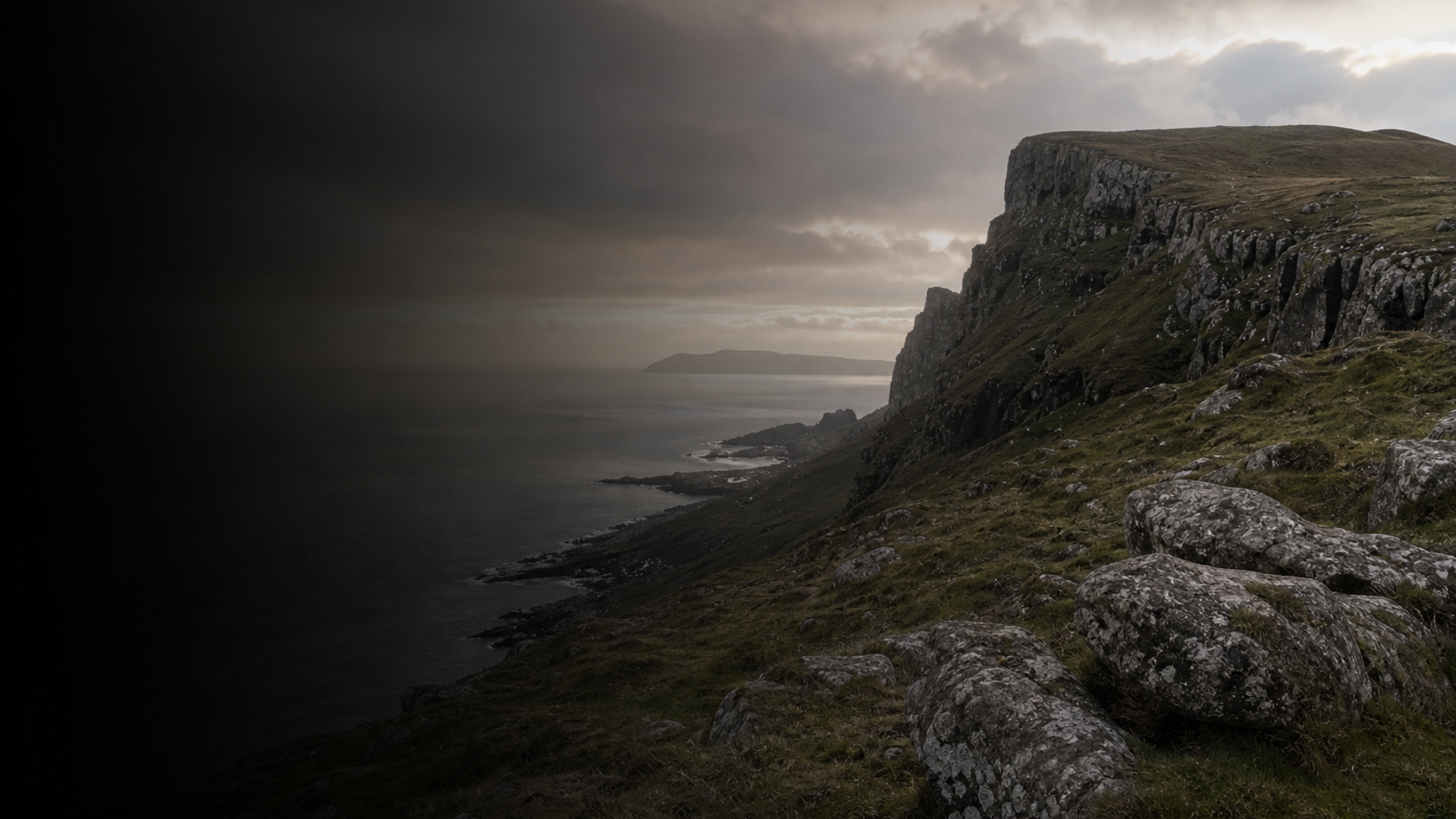
Rathlin Island sits off the north coast of County Antrim, a wind-swept outpost where sea and stone meet. Archaeological data indicates human activity here during the Early Bronze Age; the genetic samples from 2031–1539 BCE capture a narrow window of island life. Material culture across Ireland at this time shows the spread of metalworking, new burial practices, and long-distance exchange of objects such as copper and gold. These shifts reflect broader transformations after the Neolithic — demographic, technological, and social — that reshaped Atlantic Europe.

Limited evidence from Rathlin itself prevents a full narrative: three genomes cannot define migration routes or social structures. However, when placed beside regional archaeology — barrows, metal hoards, and kiln sites on the mainland — the Rathlin individuals join a mosaic suggesting coastal communities were tied into island-to-mainland networks. These networks may have facilitated movement of people, ideas, and goods along the Atlantic seaboard. Where archaeology is silent, genetics provides one lens; where genetics is thin, archaeology anchors interpretation. Together they allow cautious reconstructions of how Bronze Age lifeways emerged along Ireland’s northern shores.

  • Samples dated 2031–1539 BCE from Rathlin Island
  • Contemporaneous with Early Bronze Age Ireland metallurgical expansion
  • Small sample size limits broad population claims
Capítulo IV

Daily Life & Society

The island’s exposed landscape suggests a subsistence economy blended from sea and rock: fishing, seabird harvesting, limited pastoralism, and small-scale cereal cultivation are plausible given regional analogies. Archaeological parallels on the north coast of Ireland show roundhouse settlements, cremation and inhumation practices, and metalworking debris in nearby mainland sites — evidence of households invested in craft, agriculture, and ritual.

Social life in Early Bronze Age Ireland likely revolved around kin groups, seasonal rounds, and local leaders who controlled prestige goods like bronze tools and ornaments. Coastal communities such as those on Rathlin may have acted as nodes in maritime exchange: the movement of metal, salt, and ceramics along shorelines could have amplified social ties across islands and peninsulas. Mortuary variability in the wider region — from cairns to cist burials — indicates diverse expressions of identity and status. Archaeological data indicates that islanders participated in these broader cultural practices, though the precise social roles of the three sampled individuals remain unknown.

  • Economy likely mixed marine and pastoral resources
  • Islanders plausibly connected into wider coastal exchange networks
Capítulo V

Genetic Profile

Genetic analyses of the three Rathlin individuals reveal a striking paternal pattern: all three carry broad Y-chromosome haplogroup R. Mitochondrial lineages are U (two individuals) and J (one individual). These findings are consistent with regional trends in the British Isles where haplogroup R becomes common in the Bronze Age, but the small sample (n=3) requires cautious interpretation. The uniformity in Y-haplogroups may reflect local male-line homogeneity, patrilocal residence patterns, or sampling bias in a tiny dataset.

mtDNA diversity (U and J) suggests some maternal heterogeneity; haplogroup U has deep roots in European prehistory, while J is often associated with later Neolithic expansions. Taken together, the Rathlin genomes are consistent with an island population that shares affinities with broader Atlantic and insular Irish gene pools during the Early Bronze Age. Archaeological context supports mobility along coasts, and genetic patterns here are compatible with male-driven gene flow or local continuity — both remain hypotheses. Because only three genomes are available, any demographic model is preliminary: further sampling will be needed to resolve whether these patterns reflect local founder effects, regional population structure, or wider migratory events.

  • All three males carry Y haplogroup R — notable male-line homogeneity
  • mtDNA U and J indicate some maternal diversity; conclusions are preliminary
Capítulo VI

Legacy & Modern Connections

The genetic echoes from Rathlin Island reach into the present in subtle ways. Broad paternal lineages categorized as R play a major role in the later genetic landscape of Ireland, so the island’s Bronze Age profiles may represent early threads of continuity that contributed to the island’s genetic tapestry. Maternal lineages U and J likewise persist in Europe and reflect deep-time connections between Mesolithic, Neolithic, and Bronze Age peoples.

Caution is essential: three samples cannot map direct ancestry to modern groups. Yet by combining archaeological context — metalwork, settlement patterns, maritime ties — with these genomes, we gain a cinematic glimpse of lives shaped by sea, stone, and the newfound mobility of the Bronze Age. Future sampling across Northern Irish coastal sites will clarify how these early island communities contributed to the genetic and cultural foundations of Ireland.

  • Paternal R lineages echo later Irish genetic patterns
  • Current conclusions are tentative; more samples needed for firm links
Con IA

Asistente de IA

Haz preguntas sobre la cultura Rathlin: Bronze-Age Shores of Ireland

Asistente de IA por DNAGENICS

Desbloquear esta función
Pregunta sobre la cultura Rathlin: Bronze-Age Shores of Ireland. El asistente con IA puede explicar hallazgos genéticos, contexto histórico, pruebas arqueológicas y conexiones modernas, con sus límites de interpretación.
Ejemplo de análisis con IA

La cultura Rathlin: Bronze-Age Shores of Ireland representa un capítulo de la historia humana...

El análisis genético permite estudiar similitudes con poblaciones anteriores y posibles adaptaciones. Las muestras de ADN antiguo aportan información para investigar patrones migratorios y relaciones entre poblaciones, con límites que dependen del estudio y del contexto arqueológico.

Esta es una vista previa del análisis con IA. Accede al asistente completo para explorar información sobre:

  • Composición y similitud genética
  • Patrones migratorios y orígenes
  • Vida cotidiana y prácticas culturales
  • Contexto genético moderno

Explora más culturas antiguas

Descubre la historia de civilizaciones de distintas partes del mundo antiguo