Preparando el informe

Cargando la información y las referencias disponibles

Consultando el registro arqueológico...

Recopilando registros antiguos

Saltar al contenido principal
Shimao Citadel: Late Neolithic Shanxi
Cultura destacada

Shimao Citadel: Late Neolithic Shanxi

Monumental citadel life at Shengedaliang, revealed by stones and strands of DNA

2884 CE - 1950 BCE
Shanxi province, China (Shenmu, Shengedaliang)
Desplázate para empezar
Capítulo I

La historia

Comprender la cultura Shimao Citadel: Late Neolithic Shanxi

Late Neolithic Shimao (ca. 2884–1950 BCE) in Shanxi's Shengdaliang offers monumental architecture and early social complexity. Archaeology and three ancient genomes hint at local East Asian lineages, but limited samples mean conclusions remain provisional.

Time Period

ca. 2884–1950 BCE

Region

Shanxi province, China (Shenmu, Shengedaliang)

Common Y-DNA

O (1), C (1)

Common mtDNA

D (1), G (1), M (1)

Capítulo II

Cronología

Momentos clave de la historia de esta cultura

2500 BCE

Height of Shimao construction

Construction and expansion of stone ramparts and ritual precincts at Shengdaliang mark the site's prominence within regional exchange networks.

Capítulo III

Origins & Emergence

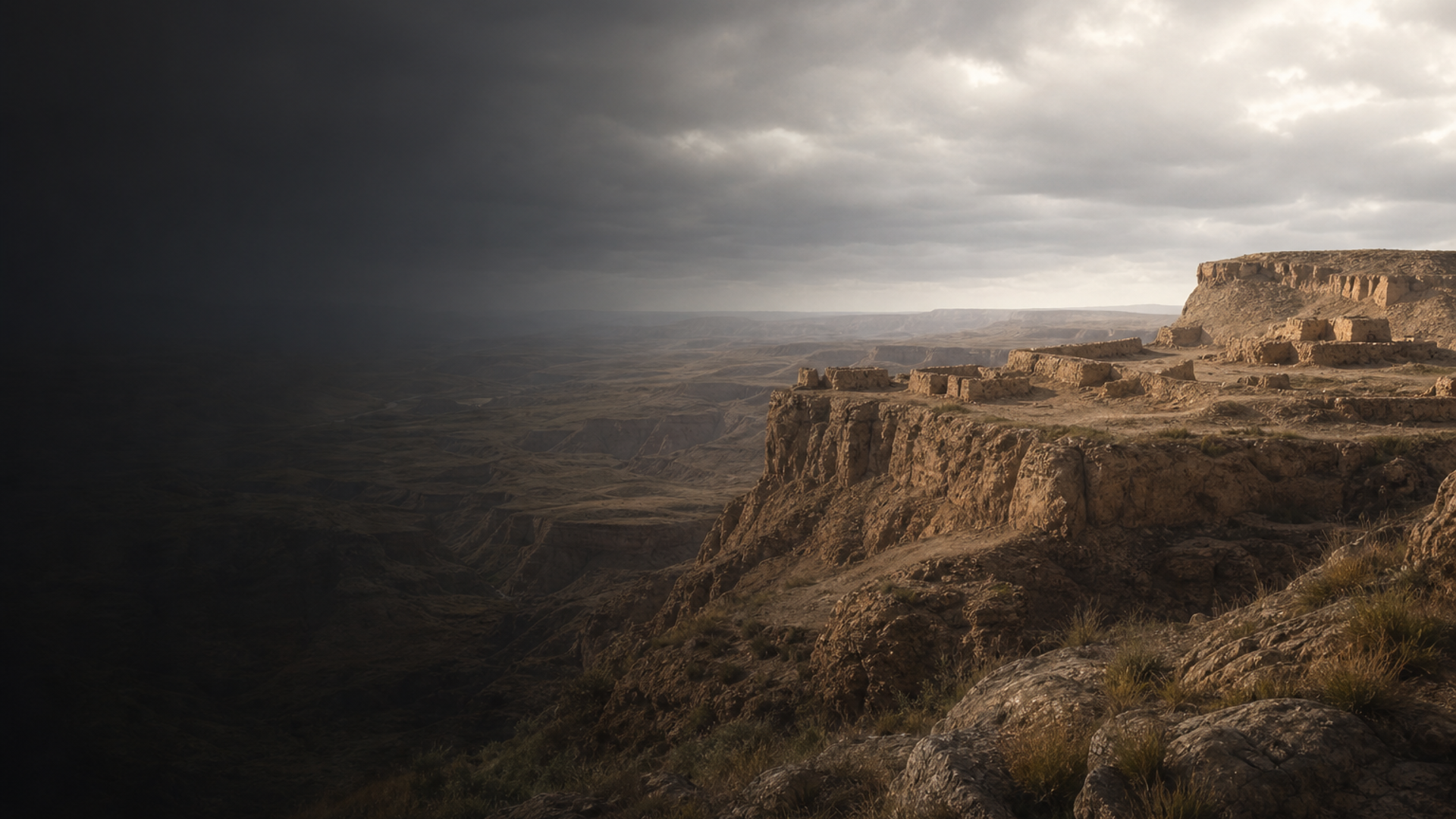
The Shimao phenomenon rises out of the rolling loess terraces of northern Shanxi and southern Shaanxi, with its heart at the citadel complex of Shengdaliang near Shenmu. Archaeological data indicates large-scale stone ramparts, densely packed residential districts, and ritual spaces dated across the Late Neolithic and into the early Bronze Age (roughly 3rd millennium BCE). Radiocarbon and stratigraphic evidence for Shengdaliang place human activity within the provided range (ca. 2884–1950 BCE), a time when settled millet agriculture, craft specialization, and long-distance exchange were intensifying in the Yellow River basin.

Cinematic in scale, the Shimao walls and towers evoke deliberate urban planning and centralized mobilization of labor. Material culture—jade carvings, finely made ceramics, and exotic goods—speaks to elite ritual and interregional contacts. Archaeological evidence suggests these were not transient hillforts but enduring centers with social differentiation. However, direct cultural genealogies remain debated: limited evidence ties Shimao explicitly to later state formations, and current genetic sampling is sparse. Preliminary genetic data from three individuals at Shengdaliang provide a first glimpse of biological affinities but cannot yet resolve population origins or the mechanisms of cultural change. Future excavations and additional aDNA will be essential to test models of local continuity versus migration and to place Shimao within the wider tapestry of Neolithic and Bronze Age East Asia.

  • Shengdaliang citadel in Shenmu, Shanxi—monumental stone defenses
  • Dates range ca. 2884–1950 BCE across Late Neolithic to early Bronze Age
  • Material culture suggests ritual elites and long-distance exchange
Capítulo IV

Daily Life & Society

Archaeological remains paint a vivid, tangible portrait of life inside and around Shimao. Streets and compound architecture preserved at Shengdaliang indicate organized neighborhoods and craft quarters. Millet agriculture—foxtail and broomcorn—anchored diet and surplus production, while animal husbandry and wild game supplemented protein needs. Pottery workshops, stone tool production, and specialized jade-working point to skilled artisans whose products circulated within and beyond the citadel.

Mortuary evidence shows variation in burial treatments: some interments include wealthier grave goods and ritual objects, others are modest. This differentiation suggests emerging social hierarchy consistent with monumental public architecture. Large communal constructions—ramps, terraces, and watch towers—require coordinated labor and leadership, implying institutions capable of organizing large communal projects. The abundance of ritual paraphernalia and constructed ceremonial spaces indicates that public ritual and display played a role in legitimizing authority.

Yet daily life was not only spectacle. Botanical remains and storage features reveal household economies dependent on grain storage and seasonal cycles. Archaeological data indicates a society balancing local agricultural stability with the demands of an increasingly complex, interconnected regional world. Much of this portrait, however, remains reconstructed from material traces; human behavior, beliefs, and language cannot be read directly from stone and pottery alone.

  • Millet-based agriculture and craft specialization supported urban life
  • Burial variability and monumental works point to emerging social hierarchies
Capítulo V

Genetic Profile

Three ancient genomes recovered from Shengdaliang (Shenmu, Shanxi) dated between ca. 2884 and 1950 BCE provide a first, cautious window into the people of Late Neolithic Shimao. Uniparental markers are simple but informative: Y-DNA observed includes haplogroups O (1 individual) and C (1 individual); mtDNA lineages include D, G, and M (one each). These haplogroups are commonly associated with prehistoric and modern East Asian and northern Asian populations—haplogroup O being widespread in Neolithic and later East Asia, and C appearing in northern and northeastern Eurasian contexts.

Important caveats frame interpretation. With only three samples, statistical power is minimal and any symmetry with modern populations may reflect shared deep ancestry rather than direct descent. Archaeological data indicates local cultural continuity in many aspects, and the genetic signals are broadly consistent with an East Asian substrate, but autosomal affinities, admixture events, and sex-biased processes cannot be resolved from this small dataset alone. The presence of both O and C Y-lineages suggests diversity in paternal lines, while the mtDNA diversity (D, G, M) indicates heterogeneous maternal ancestries compatible with regional Neolithic demographic patterns.

Integration with larger archaeogenetic datasets will be essential: genome-wide data could test for continuity with contemporaneous Yellow River populations, detect incoming gene flow, and illuminate demographic responses to social complexity. For now, conclusions must remain provisional—limited evidence suggests local East Asian genetic affinities, but more samples are required to move beyond tentative statements.

  • Three genomes (ca. 2884–1950 BCE) show Y haplogroups O and C, mtDNA D, G, M
  • Sample count is low (<10); findings are preliminary and require more data
Capítulo VI

Legacy & Modern Connections

Shimao's stone citadels and ritual complexes left a powerful archaeological legacy: they demonstrate early forms of urban planning and social complexity in northern China before the historically attested dynastic era. Monumental architecture at Shengdaliang foreshadows patterns of centralization that would later characterize Bronze Age polities in the Yellow River basin.

Genetic continuity between Shimao populations and modern groups in northern China remains an open question. The limited aDNA points toward East Asian lineages common in the region, but it cannot yet link Shimao directly to any specific modern ethnic group. Ongoing genetic sampling across time and space will clarify whether descendants of Shimao contributed substantially to the gene pool of later Bronze Age states or whether demographic shifts replaced or blended those ancestries.

For museums and public audiences, Shimao offers a dramatic narrative: a citadel of stone and ritual, whose people shaped landscapes and exchange networks. Scientifically, it is a reminder that combining archaeological context with genetic snapshots can illuminate human stories—while humility about sample limits keeps interpretations honest.

  • Architectural innovations anticipate later urban and state developments
  • Genetic affinities to modern populations are plausible but not yet proven
Con IA

Asistente de IA

Haz preguntas sobre la cultura Shimao Citadel: Late Neolithic Shanxi

Asistente de IA por DNAGENICS

Desbloquear esta función
Pregunta sobre la cultura Shimao Citadel: Late Neolithic Shanxi. El asistente con IA puede explicar hallazgos genéticos, contexto histórico, pruebas arqueológicas y conexiones modernas, con sus límites de interpretación.
Ejemplo de análisis con IA

La cultura Shimao Citadel: Late Neolithic Shanxi representa un capítulo de la historia humana...

El análisis genético permite estudiar similitudes con poblaciones anteriores y posibles adaptaciones. Las muestras de ADN antiguo aportan información para investigar patrones migratorios y relaciones entre poblaciones, con límites que dependen del estudio y del contexto arqueológico.

Esta es una vista previa del análisis con IA. Accede al asistente completo para explorar información sobre:

  • Composición y similitud genética
  • Patrones migratorios y orígenes
  • Vida cotidiana y prácticas culturales
  • Contexto genético moderno

Explora más culturas antiguas

Descubre la historia de civilizaciones de distintas partes del mundo antiguo