Preparando el informe

Cargando la información y las referencias disponibles

Consultando el registro arqueológico...

Recopilando registros antiguos

Saltar al contenido principal
Shorelines of Change: Denmark TRB–CWC
Cultura destacada

Shorelines of Change: Denmark TRB–CWC

Three genomes from Jutland and Funen illuminate a dramatic late-Neolithic transition

2868 CE - 1974 BCE
Denmark (Jutland: Toftum Mose; Funen: Stenderup Hage)
Desplázate para empezar
Capítulo I

La historia

Comprender la cultura Shorelines of Change: Denmark TRB–CWC

Genomes (n=3) dated 2868–1974 BCE from Toftum Mose and Stenderup Hage probe Denmark's shift from Funnel Beaker to Corded Ware. Archaeology and DNA hint at incoming Steppe ancestry layered onto established Neolithic farmers; conclusions are preliminary given small sample size.

Time Period

2868–1974 BCE (Late Neolithic–Early Bronze Age)

Region

Denmark (Jutland: Toftum Mose; Funen: Stenderup Hage)

Common Y-DNA

R (1), IJ (1), I (1) — n=3

Common mtDNA

K (1), U (1), H+ (1) — n=3

Capítulo II

Cronología

Momentos clave de la historia de esta cultura

2500 BCE

Corded Ware influence reaches Denmark

Archaeological markers and emerging genetic signals indicate Corded Ware cultural influences and Steppe-related ancestry begin to appear in southern Scandinavia.

Capítulo III

Origins & Emergence

The period captured by these three genomes sits at a hinge in Danish prehistory, when the long-established communities of the Funnel Beaker world (TRB) gave way to influences associated with the Corded Ware horizon (CWC). Archaeological sequences across southern Scandinavia show changing pottery styles, burial rites and settlement patterns between the late 3rd and early 2nd millennia BCE. The samples in this dataset span 2868–1974 BCE and come from Toftum Mose (Jutland) and Stenderup Hage (Funen), placing them squarely in the era of that transition.

Material culture changes recorded in soil, stone and ceramic fragments suggest mobility and new social practices reaching into Denmark. Genetic data from other regions link the Corded Ware phenomenon to incoming populations bearing Steppe-derived ancestry; however, local trajectories were uneven. Limited evidence in Denmark indicates a mixture of continuity and introduction rather than simple replacement. Given that only three genomes underpin this profile, any narrative must remain cautious: these individuals provide tantalizing snapshots rather than a complete movie of cultural emergence.

The broader picture is one of layered histories — populations rooted in early farming traditions encountering new networks of mobility and exchange. Archaeology gives us the settings and gestures; ancient DNA adds the actors' biological lineages, together revealing how shorelines, trade routes and human choices shaped a changing northern Europe.

  • Temporal focus: 2868–1974 BCE, late Neolithic to early Bronze Age
  • Sites: Toftum Mose (Jutland) and Stenderup Hage (Funen)
  • Evidence indicates cultural continuity with incoming influences, but interpretations are preliminary
Capítulo IV

Daily Life & Society

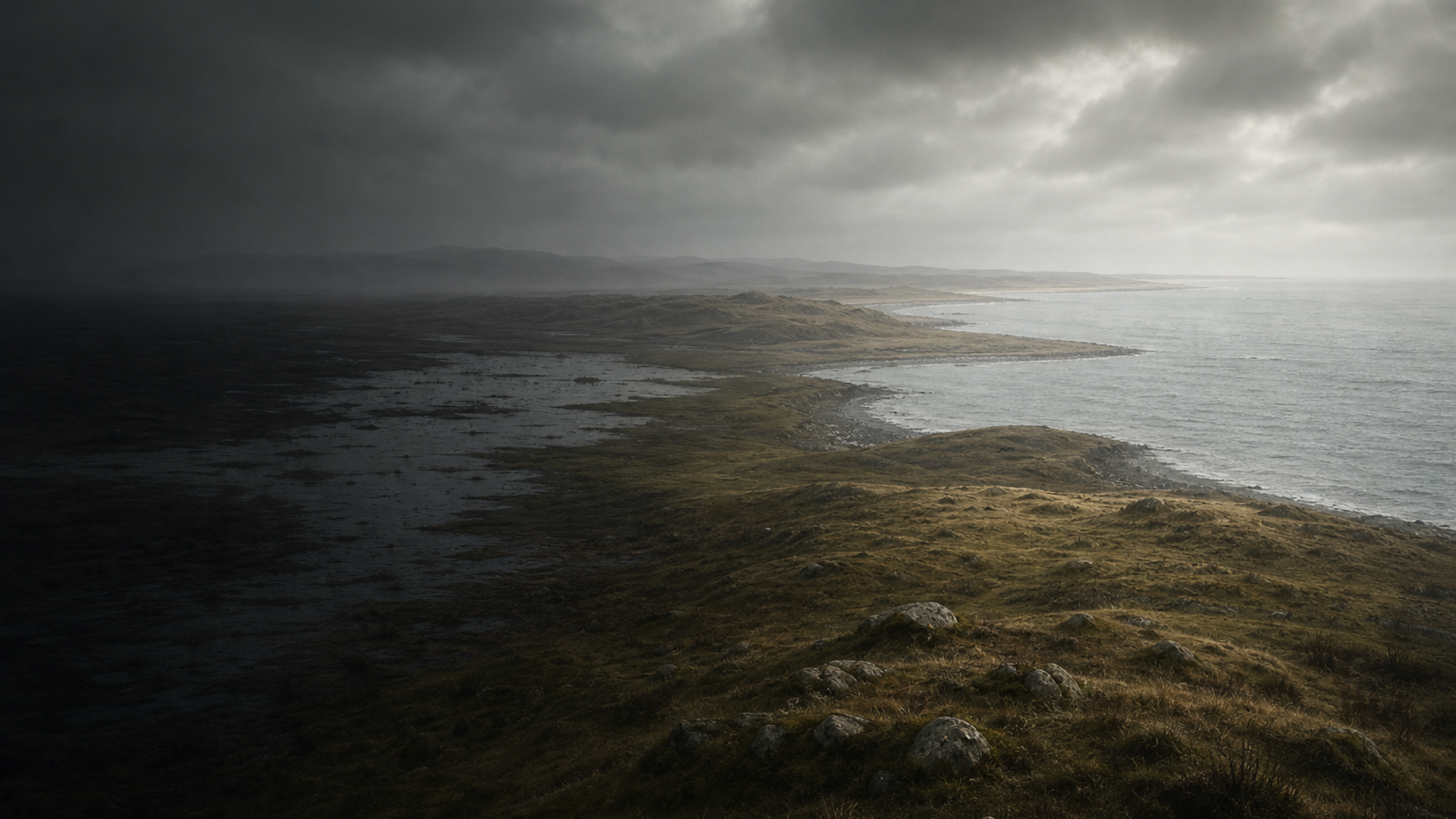
Imagine coastal settlements ringed by fields and reeds, where farmers tended barley and cattle while fishers and fowlers exploited the rich Danish littoral. The Funnel Beaker world left a visible imprint of longhouse farming, megalithic tomb-building and craft specializations. Pottery, polished flint and worked bone speak of domestic routines and seasonal rhythms.

As Corded Ware affinities appear in the archaeological record, burial customs shift toward single graves and new grave goods — signals of changing social emphasis, perhaps on individual identity, mobility and warrior status. These social shifts do not necessarily erase earlier lifeways: homes, fields and coastal resources continued to sustain communities even as exchange networks and mate-exchange broadened.

For the individuals sampled at Toftum Mose and Stenderup Hage, archaeological context matters. Depositional settings in Denmark often preserve organic material and stratigraphy that record episodes of ritual deposition, farming practice and landscape change. Yet, the small number of genetic samples means we cannot generalize household structure, diet or status across the region. Instead, these genomes should be read as intimate glimpses: human lives lived amid shifting traditions, networks and shorelines.

  • Economy: mixed farming, animal herding, and exploitation of marine resources
  • Social change: evolving burial practices and increased long-distance connections
Capítulo V

Genetic Profile

The genetic assemblage from these three Danish individuals is compact but narratively rich. Y-chromosome haplogroups recorded are R (1), IJ (1) and I (1); mitochondrial lineages include K (1), U (1) and H+ (1). Each marker carries different archaeological and population-history resonances.

Haplogroup R on the Y chromosome is often associated with Steppe-derived lineages that appear broadly across Corded Ware-associated burials in northern and central Europe; its presence here hints at incoming male-line ancestry during the late Neolithic. Haplogroups I and IJ reflect deeper European roots — I connects to Mesolithic and local northern lineages, while IJ can mark older West Eurasian diversity that predates the Steppe expansion. On the maternal side, mtDNA K is strongly associated with Neolithic farmers who dispersed from the Near East into Europe; U and H are widespread in both hunter-gatherer and later farming populations.

Taken together, the pattern suggests a mosaic: elements of local northern European ancestry coexisting with signals compatible with Steppe-related influx. However, with only three genomes (sample count <10), statistical resolution is low. We cannot reliably estimate admixture proportions, sex-biased migration patterns, or regional demographic models from this dataset alone. These genomes are best used as hypothesis-generating data points that should be integrated with larger ancient DNA datasets and the archaeological record to refine our understanding of the TRB-to-CWC transition in Denmark.

  • Presence of Y-haplogroup R suggests Steppe-associated male-line influence
  • mtDNA K aligns with Neolithic farmer maternal heritage; U and H indicate deeper European diversity
Capítulo VI

Legacy & Modern Connections

The threads visible in these genomes weave into long-term patterns that shaped northern Europe's genetic landscape. Steppe-derived ancestry associated with Corded Ware movements is a major strand in many later European populations; Neolithic farmer lineages persisted and recombined with incoming groups. In Denmark, this interplay contributed to the genetic foundation of populations that continued into the Bronze Age and beyond.

For modern Danes, the genetic legacy is complex and regionally varied. Ancient DNA shows that present-day genetic profiles are palimpsests of multiple migrations and local continuities. Yet, any direct claim linking these three individuals to specific modern communities would be premature. Instead, they remind us that biological ancestry and cultural identity are dynamic: small groups can introduce profound social and genetic change, but local traditions often endure and adapt.

These genomes therefore serve museum-like roles — intimate testimonies that invite further excavation, sampling and dialogue between archaeology and genetics. With larger sample sizes and integrated analyses, the cinematic scene hinted at by these three individuals can be filled in with greater resolution.

  • Modern implications: contributions to the layered ancestry of northern Europe
  • Caution: small sample size prevents direct links to specific contemporary populations
Con IA

Asistente de IA

Haz preguntas sobre la cultura Shorelines of Change: Denmark TRB–CWC

Asistente de IA por DNAGENICS

Desbloquear esta función
Pregunta sobre la cultura Shorelines of Change: Denmark TRB–CWC. El asistente con IA puede explicar hallazgos genéticos, contexto histórico, pruebas arqueológicas y conexiones modernas, con sus límites de interpretación.
Ejemplo de análisis con IA

La cultura Shorelines of Change: Denmark TRB–CWC representa un capítulo de la historia humana...

El análisis genético permite estudiar similitudes con poblaciones anteriores y posibles adaptaciones. Las muestras de ADN antiguo aportan información para investigar patrones migratorios y relaciones entre poblaciones, con límites que dependen del estudio y del contexto arqueológico.

Esta es una vista previa del análisis con IA. Accede al asistente completo para explorar información sobre:

  • Composición y similitud genética
  • Patrones migratorios y orígenes
  • Vida cotidiana y prácticas culturales
  • Contexto genético moderno

Explora más culturas antiguas

Descubre la historia de civilizaciones de distintas partes del mundo antiguo