Preparando el informe

Cargando la información y las referencias disponibles

Consultando el registro arqueológico...

Recopilando registros antiguos

Saltar al contenido principal
South Andros Ceramic Peoples
Cultura destacada

South Andros Ceramic Peoples

Ceramic-period islanders of South Andros, seen through archaeology and ancient DNA

900 CE - 1500 CE
South Andros, Bahamas
Desplázate para empezar
Capítulo I

La historia

Comprender la cultura South Andros Ceramic Peoples

Archaeological remains and ancient DNA from South Andros (900–1500 CE) illuminate Ceramic-period lifeways in the southern Bahamas. Limited samples from Sanctuary Blue Hole and Stargate Blue 166 hint at Indigenous American maternal and paternal lineages and connections across the Greater Antilles.

Time Period

900–1500 CE

Region

South Andros, Bahamas

Common Y-DNA

Q (6 of 8 samples)

Common mtDNA

A2 (3), B2e (2), C1b (1), C (1), A2h (1)

Capítulo II

Cronología

Momentos clave de la historia de esta cultura

900 CE

Onset of Ceramic-period occupations

Archaeological assemblages begin to show Ceramic-period pottery styles and coastal occupations in South Andros.

1200 CE

Deposits at Sanctuary Blue Hole

Burials and midden material accumulate in blue hole contexts, later sampled for archaeological and genetic study.

1500 CE

Late Ceramic-period continuities

Material culture and genetic signatures indicate continued Indigenous occupation just prior to intensifying post-contact changes.

Capítulo III

Origins & Emergence

In the hush of submerged sinkholes and coastal middens, the Ceramic-period communities of South Andros emerge in the archaeological record between roughly 900 and 1500 CE. Ceramic assemblages, shell tools, and settlement traces indicate participation in the wider Ceramic Period phenomenon that spread through the Greater Antilles and into the Bahamas. Archaeological data indicate pottery styles and subsistence strategies consistent with island adaptations of Arawakan-speaking groups, but direct cultural affiliations across islands remain debated.

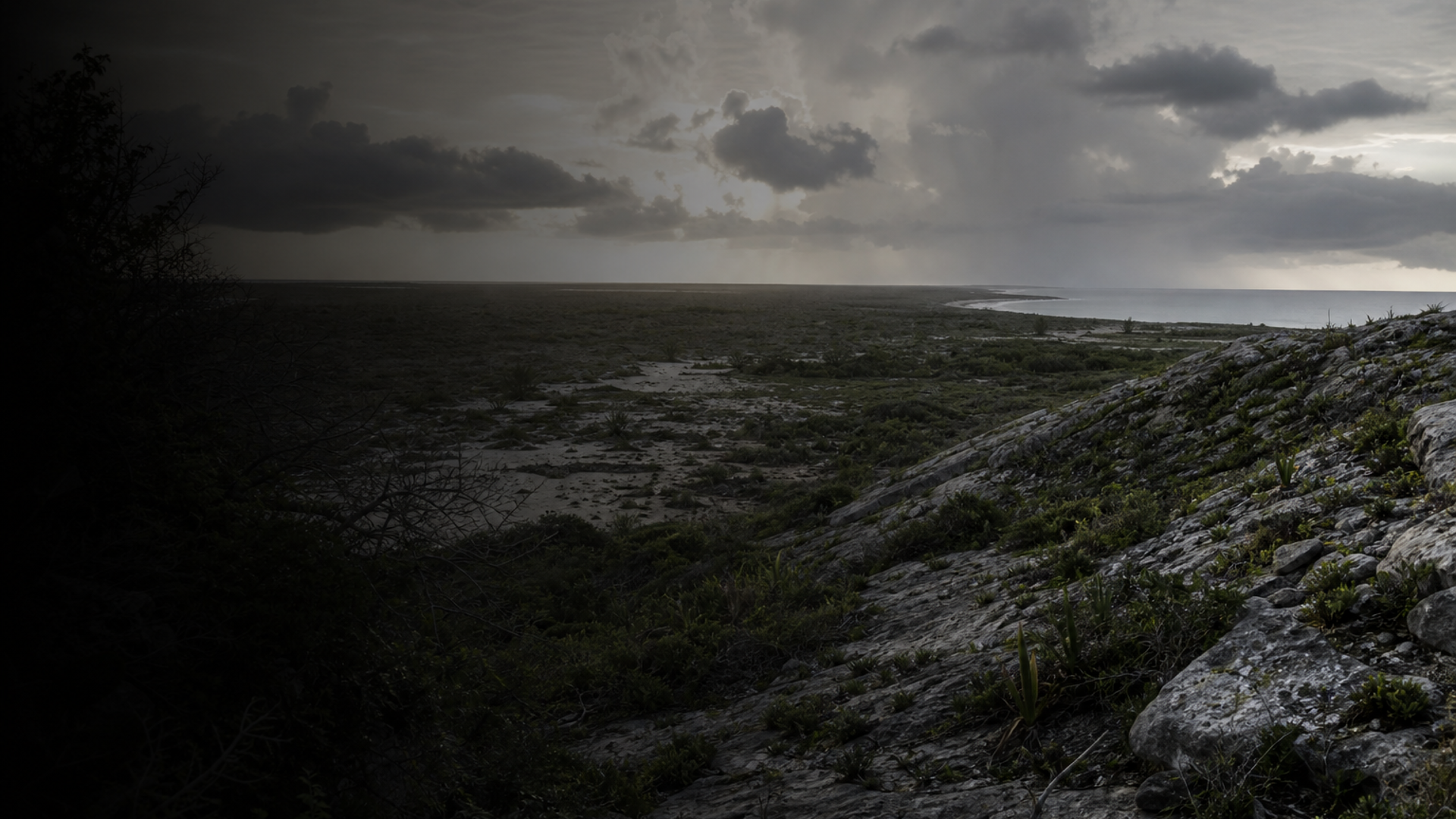
Excavations at Sanctuary Blue Hole and Stargate Blue 166 have yielded ceramics, faunal remains, and human skeletal material in stratified contexts. Radiocarbon dates from associated materials place occupations and deposits in the later first and second millennia CE. Limited evidence suggests that these communities practiced mixed foraging and horticulture, exploiting rich marine resources while maintaining inter-island ties by canoe. The dramatic seascape—broad mangrove flats and deep blue holes—shaped mobility, trade, and ritual life.

Genetic data now add a second layer to this narrative. While material culture points toward links with the Greater Antilles, ancient DNA provides biological signatures of ancestry and kinship that can confirm, nuance, or challenge archaeological models. Because the sample size from South Andros is small, caution is required: genetic patterns are provisional and best interpreted alongside continuing archaeological work.

  • Ceramic-period context across the Bahamas, 900–1500 CE
  • Key sites: Sanctuary Blue Hole; Stargate Blue 166
  • Archaeological signs of island foraging, fishing, and inter-island exchange
Capítulo IV

Daily Life & Society

Daily existence in South Andros would have been lived between reef and sky: canoes cutting lagoon surfaces at dawn, families drying fish on racks, and pottery fired near shingle beaches. Archaeological remains—pottery shards, shell middens, stone tools, and fish bone concentrations—suggest diets dominated by marine protein (fish, conch, and turtles) supplemented by domesticated or cultivated plants introduced during the Ceramic Period.

Social life likely revolved around kin groups and seasonal rounds. Architectural traces are subtle in the limestone environment, but hearth features and activity areas point to households oriented to coastal access and resource processing. Exotic objects and non-local ceramics recovered at regional Ceramic sites imply long-distance exchange networks linking the southern Bahamas with the Greater Antilles. Funerary deposits in blue holes and shallow burials indicate ritual uses of specific landscapes; human remains recovered from Sanctuary Blue Hole and Stargate Blue 166 testify to complex mortuary behaviors.

Archaeological data indicate resilience and adaptability in a dynamic maritime environment. However, precise social organization, political hierarchies, and linguistic identities remain inferential; combining DNA evidence with continued excavation offers the best path to richer reconstructions.

  • Marine-focused diet with evidence for seasonal exploitation
  • Household and ritual use of blue holes recorded in burials and deposits
Capítulo V

Genetic Profile

Ancient DNA from eight individuals recovered at Sanctuary Blue Hole and Stargate Blue 166 provides a first, tentative genetic portrait of South Andros Ceramic people. Six of eight male-associated Y-chromosome results belong to haplogroup Q, a lineage widely documented among Indigenous populations across the Americas. This prevalence of Q is consistent with a deep Native American paternal heritage rather than later European or African male ancestry.

Mitochondrial DNA (maternal lineages) in the sample set is diverse but characteristically Indigenous: A2 (3 samples), B2e (2), C1b (1), C (1), and A2h (1). These haplogroups—A2, B2, and C1b—are commonly observed in pre-contact Caribbean and northern South American contexts and support archaeological models of population movements into the Bahamas from the Greater Antilles and nearby mainland sources during the Ceramic Period.

Because the total sample count is small (n = 8), these patterns should be considered preliminary. Limited sampling can overrepresent particular family lines or local founder effects. Nevertheless, the concordance of Y and mtDNA with Indigenous American lineages strengthens the interpretation that South Andros communities derive primarily from ancestral Caribbean and mainland American populations rather than post-contact admixture. Ongoing sampling and genomic analyses (autosomal data, kinship testing) will be required to resolve migration timing, population structure, and degrees of inter-island relatedness more precisely.

  • Y-DNA dominated by haplogroup Q (6 of 8), indicating Indigenous paternal ancestry
  • mtDNA shows A2, B2e, C1b — consistent with pre-contact Caribbean maternal lineages
Capítulo VI

Legacy & Modern Connections

The genetic signals and archaeological traces of South Andros connect past islanders to broader Indigenous histories of the Caribbean and adjacent mainland. Modern descendants in the region may carry echoes of these lineages, but demographic upheavals after European contact—disease, migration, and admixture—complicate direct continuity. Archaeological data indicates deep island-rooted traditions of craft, seafaring, and place-based ritual that shaped Bahamian cultural landscapes.

Ancient DNA from South Andros contributes to a growing framework that helps communities and researchers trace ancestral ties and migration stories. Given the small number of samples, interpretations remain cautious and provisional, yet they offer powerful, tangible links between the visible archaeology of blue holes and the invisible threads of genetic ancestry. Future collaborative work with descendant communities, expanded sampling, and integrated analyses will refine how these Ceramic-period peoples are connected to living cultural identities across the Caribbean.

  • Genetic evidence ties South Andros to broader Indigenous Caribbean ancestries
  • Post-contact history complicates direct continuity; more data and community collaboration needed
Con IA

Asistente de IA

Haz preguntas sobre la cultura South Andros Ceramic Peoples

Asistente de IA por DNAGENICS

Desbloquear esta función
Pregunta sobre la cultura South Andros Ceramic Peoples. El asistente con IA puede explicar hallazgos genéticos, contexto histórico, pruebas arqueológicas y conexiones modernas, con sus límites de interpretación.
Ejemplo de análisis con IA

La cultura South Andros Ceramic Peoples representa un capítulo de la historia humana...

El análisis genético permite estudiar similitudes con poblaciones anteriores y posibles adaptaciones. Las muestras de ADN antiguo aportan información para investigar patrones migratorios y relaciones entre poblaciones, con límites que dependen del estudio y del contexto arqueológico.

Esta es una vista previa del análisis con IA. Accede al asistente completo para explorar información sobre:

  • Composición y similitud genética
  • Patrones migratorios y orígenes
  • Vida cotidiana y prácticas culturales
  • Contexto genético moderno

Explora más culturas antiguas

Descubre la historia de civilizaciones de distintas partes del mundo antiguo