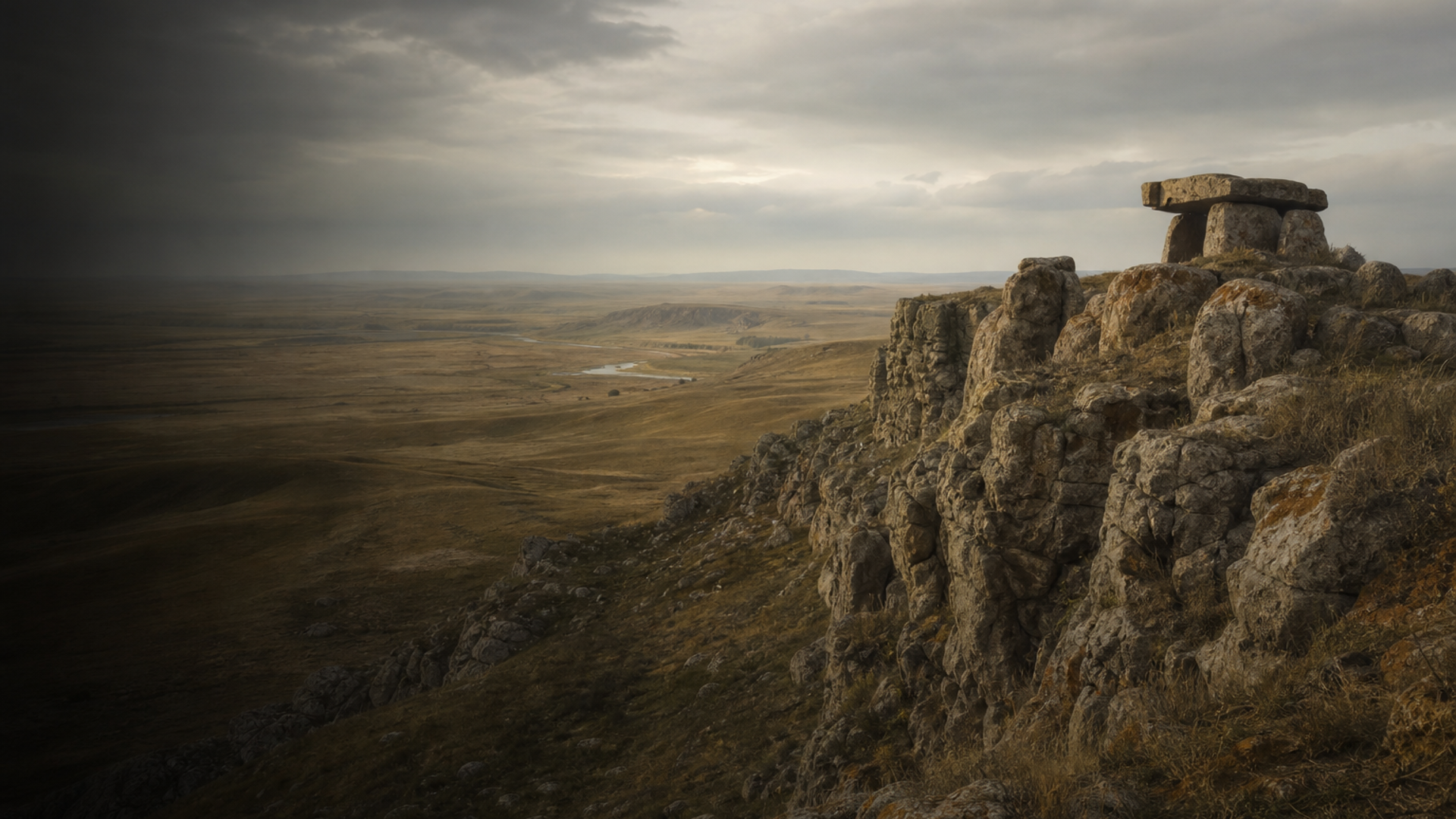
Life on the Kuban and North Caucasus steppe in the Early Bronze Age can be reconstructed as a choreography of herds, horizons, and mobility. Archaeological remains from the wider Yamnaya world — including stone and organic tool assemblages, grazing-related faunal remains, and evidence for wheeled transport in contemporaneous regions — suggest a pastoral economy focused on sheep, cattle, and horses, with seasonal movement to exploit pasture. In the Kuban sector, ephemeral camp structures and burials indicate communities organized around kin groups and ritualized funerary display: low kurgans, grave goods emphasizing practical items, and occasional prestige objects.
Social life likely pivoted on mobility and resource management rather than dense permanent settlements. Archaeobotanical traces are sparse on these steppe soils, but where present they hint at opportunistic use of cultivated cereals introduced earlier in the Neolithic transition. Craft activities — bone-working, leatherworking, simple metallurgy — would accompany pastoral rounds. Osteological signs in Yamnaya-associated burials elsewhere reveal stress patterns consistent with heavy physical workloads and an economy tied to animals. For the three sampled individuals here, archaeological context supports a pastoral lifeway, though direct evidence for household structure or rank within these specific graves remains limited.