Preparando el informe

Cargando la información y las referencias disponibles

Consultando el registro arqueológico...

Recopilando registros antiguos

Saltar al contenido principal
Sumidouro: Lagoa Santa, 10,100 BP
Cultura destacada

Sumidouro: Lagoa Santa, 10,100 BP

Early Holocene hunter-gatherers from Caverna do Sumidouro with genetic ties to Native American founders

8612 CE - 7607 BCE
Lagoa Santa (Caverna do Sumidouro), Brazil
Desplázate para empezar
Capítulo I

La historia

Comprender la cultura Sumidouro: Lagoa Santa, 10,100 BP

Archaeological and aDNA evidence from five individuals (8612–7607 BCE) at Caverna do Sumidouro, Lagoa Santa, Brazil, indicate early-Holocene hunter-gatherers carrying Y-haplogroup Q and mtDNA D/D1. Small sample sizes make conclusions preliminary but illuminate peopling processes in eastern South America.

Time Period

8612–7607 BCE (Early Holocene)

Region

Lagoa Santa (Caverna do Sumidouro), Brazil

Common Y-DNA

Q (predominant in 4/5 samples)

Common mtDNA

D1 (3), D (2)

Capítulo II

Cronología

Momentos clave de la historia de esta cultura

8612 BCE

Earliest dated individual at Sumidouro

One of the five aDNA samples dates to 8612 BCE, marking early-Holocene human presence in Lagoa Santa.

Capítulo III

Origins & Emergence

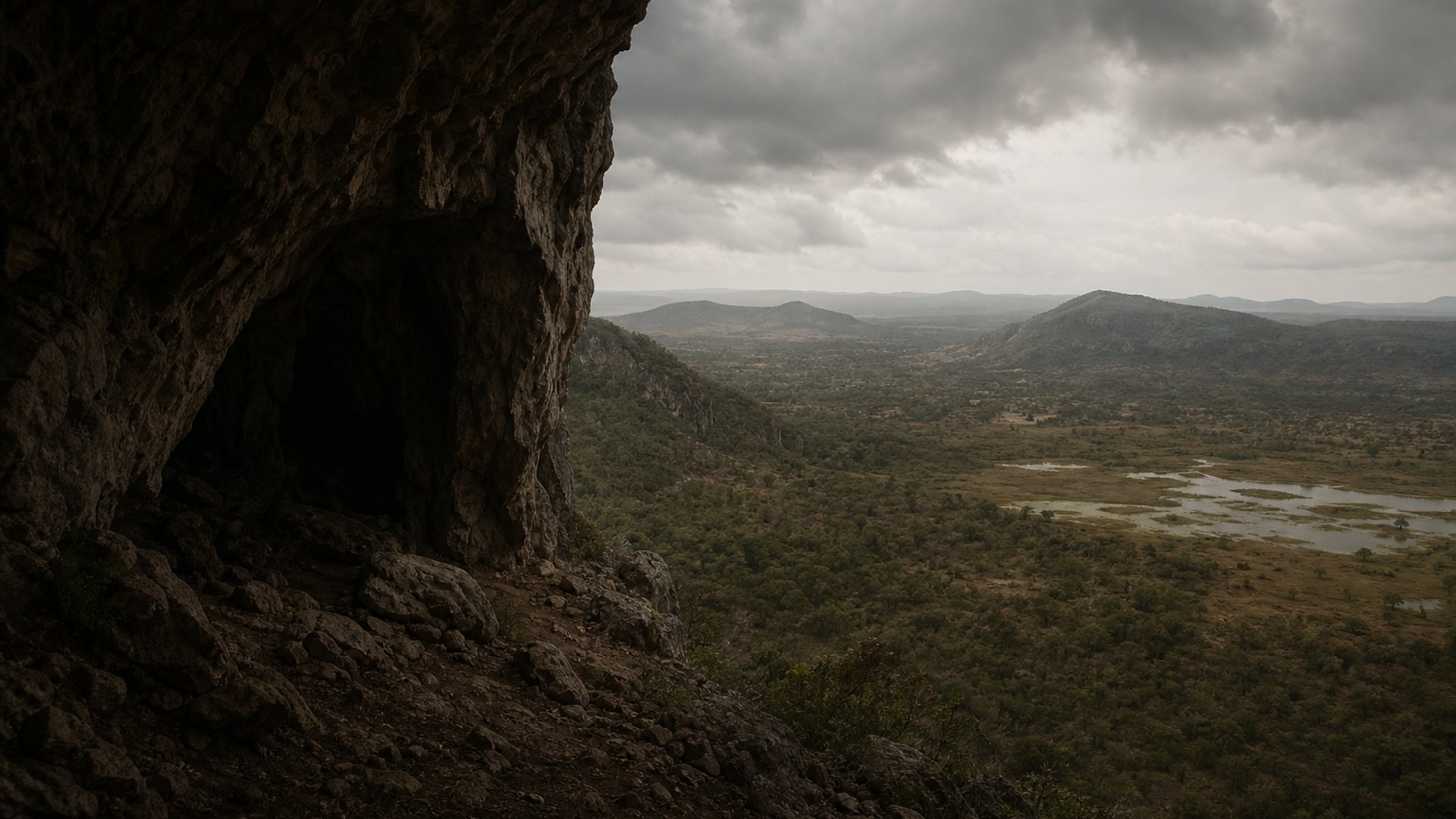
Beneath the limestone roof of Caverna do Sumidouro, the earth keeps a quiet archive of a cooling world at the end of the Pleistocene. Archaeological data indicates human presence in the Lagoa Santa region during the Early Holocene; the five dated individuals here fall between 8612 and 7607 BCE. These remains sit within a landscape of gallery forests, savanna patches, and freshwater lakes that framed human lifeways after the last glacial retreat.

Genetically, the assemblage ties to pan-American founding lineages: Y-chromosome haplogroup Q appears in four of the five males, while mitochondrial haplogroups D1 and D are represented across the sample. This pattern is consistent with broader models in which haplogroup Q dominates male lineages in many early and later Native American populations, and D1 is one of the canonical maternal founder clades. Archaeological contexts—fragmentary burials, stone tools, and faunal remains—suggest mobile hunter-gatherer lifeways, though preservation and excavation histories vary.

Limited evidence suggests population continuity in eastern Brazil across the Early Holocene, but with only five genetic samples the picture is provisional. Archaeological signatures and aDNA together paint an evocative origin story: small groups moving through postglacial environments, carrying genetic variants that would persist across the continent. Further sampling is required to resolve migration routes, local continuity, and possible interactions with contemporaneous groups.

  • Dates: 8612–7607 BCE from Caverna do Sumidouro, Lagoa Santa
  • Landscape: Early Holocene mosaic of lakes, forest and savanna
  • Preliminary genetic signal consistent with Native American founder lineages
Capítulo IV

Daily Life & Society

Archaeological traces at Lagoa Santa evoke a tactile world: the rasp of stone tools, hearth lenses dark with charcoal, and scattered bones of small mammals and fish. Excavations in Caverna do Sumidouro and nearby shelters have produced human skeletal remains alongside lithic debris, indicating repeated use of caves and rock shelters as living places and perhaps as mortuary locales. Wear patterns on stone points and the assortment of flakes suggest versatile hunting and butchery strategies adapted to wetlands and gallery forests.

Social organization can only be inferred indirectly. Small burial assemblages and spatial clustering of remains imply low-density populations organized around kin groups and seasonal resource patches. The use of caves for interment or secondary deposition hints at ritualized treatment of the dead; ochre use has been reported in some Lagoa Santa contexts elsewhere in the region, though documentation varies by site. Craft specialization appears limited — tool production seems household-level rather than communal industry.

Archaeological data indicates mobility, flexible subsistence, and intimate knowledge of local ecologies. However, with a small number of directly dated individuals and uneven preservation, reconstructions of daily life remain cautious and general rather than definitive.

  • Mobile hunter-gatherer adaptations to lakes and forests
  • Caves and shelters used for living and mortuary activities
Capítulo V

Genetic Profile

The recovered aDNA from five individuals at Caverna do Sumidouro provides a rare window into early-Holocene genetics in eastern South America. Y-chromosome data show haplogroup Q in four male samples — a lineage widely observed among Native American populations and interpreted as part of the initial male-mediated colonizing pool. Maternal lineages are dominated by mitochondrial haplogroup D: three samples assigned to D1 and two to broader D clades. Haplogroup D1 is one of the established founder mtDNA lineages in the Americas.

These results align with continental patterns where Q and D-derived mtDNA lineages are common, supporting models of rapid dispersal and subsequent local differentiation. Nevertheless, low sample count (n=5) and potential limits in sequencing coverage constrain resolution: subclade assignments (e.g., Q sublineages or specific D1 variants) may be unresolved, and genetic diversity estimates are sensitive to sampling error. Admixture signals, if present, would require larger datasets and genome-wide SNP data to detect and date reliably.

Archaeogenetics thus offers a complementary narrative to the material record: it suggests continuity with broader Native American ancestry yet leaves open questions about regional structure, migration routes into eastern South America, and demographic changes through the Holocene. In short: suggestive, consistent with expectations, but preliminary.

  • Y-DNA: haplogroup Q in 4 of 5 males (consistent with Native American founders)
  • mtDNA: D1 and D present; sample size (n=5) makes conclusions provisional
Capítulo VI

Legacy & Modern Connections

The genetic echoes from Sumidouro connect ancient occupants of Lagoa Santa to the deep ancestry of Indigenous peoples across the Americas. Haplogroup Q and mtDNA D/D1 link these Early Holocene individuals into the broad tapestry of Native American founder lineages seen from the Arctic to Tierra del Fuego. For modern communities, such links underscore continuity and deep-time occupation of the continent.

Archaeologically, Sumidouro contributes to regional narratives about adaptation to postglacial environments and the establishment of long-term foraging networks in eastern South America. Ethically and scientifically, researchers emphasize collaboration with Indigenous groups and recognize that genetic data alone cannot capture cultural identity. Because only five samples inform these genetic patterns, any claims about direct ancestry to contemporary populations must remain carefully qualified until larger, community-engaged studies expand the dataset.

  • Genetic ties to broad Native American founder lineages
  • Caution: small sample size; community engagement and further sampling needed
Con IA

Asistente de IA

Haz preguntas sobre la cultura Sumidouro: Lagoa Santa, 10,100 BP

Asistente de IA por DNAGENICS

Desbloquear esta función
Pregunta sobre la cultura Sumidouro: Lagoa Santa, 10,100 BP. El asistente con IA puede explicar hallazgos genéticos, contexto histórico, pruebas arqueológicas y conexiones modernas, con sus límites de interpretación.
Ejemplo de análisis con IA

La cultura Sumidouro: Lagoa Santa, 10,100 BP representa un capítulo de la historia humana...

El análisis genético permite estudiar similitudes con poblaciones anteriores y posibles adaptaciones. Las muestras de ADN antiguo aportan información para investigar patrones migratorios y relaciones entre poblaciones, con límites que dependen del estudio y del contexto arqueológico.

Esta es una vista previa del análisis con IA. Accede al asistente completo para explorar información sobre:

  • Composición y similitud genética
  • Patrones migratorios y orígenes
  • Vida cotidiana y prácticas culturales
  • Contexto genético moderno

Explora más culturas antiguas

Descubre la historia de civilizaciones de distintas partes del mundo antiguo