Preparando el informe

Cargando la información y las referencias disponibles

Consultando el registro arqueológico...

Recopilando registros antiguos

Saltar al contenido principal
Tiszadob ALPc Neolithic Farmers
Cultura destacada

Tiszadob ALPc Neolithic Farmers

Mid-6th millennium BCE communities on the Hungarian Plain, revealed by sites and DNA

5300 CE - 4855 BCE
Great Hungarian Plain (Hungary)
Desplázate para empezar
Capítulo I

La historia

Comprender la cultura Tiszadob ALPc Neolithic Farmers

Archaeological and genetic glimpses from six Middle Neolithic ALPc Tiszadob samples (5300–4855 BCE) from Tiszadob-Ó-Kenéz and Hejőkürt, Hungary. Evidence links local material culture to Anatolian-derived farming ancestry with hints of European hunter-gatherer input; conclusions remain preliminary.

Time Period

5300–4855 BCE

Region

Great Hungarian Plain (Hungary)

Common Y-DNA

I (4), H (1)

Common mtDNA

U (2), H7, HV, J, N

Capítulo II

Cronología

Momentos clave de la historia de esta cultura

5300 BCE

Establishment of ALPc Tiszadob communities

Radiocarbon and material culture place early ALPc Tiszadob settlements on the Great Hungarian Plain around 5300 BCE, marking local adaptation of Linear Pottery traditions.

Capítulo III

Origins & Emergence

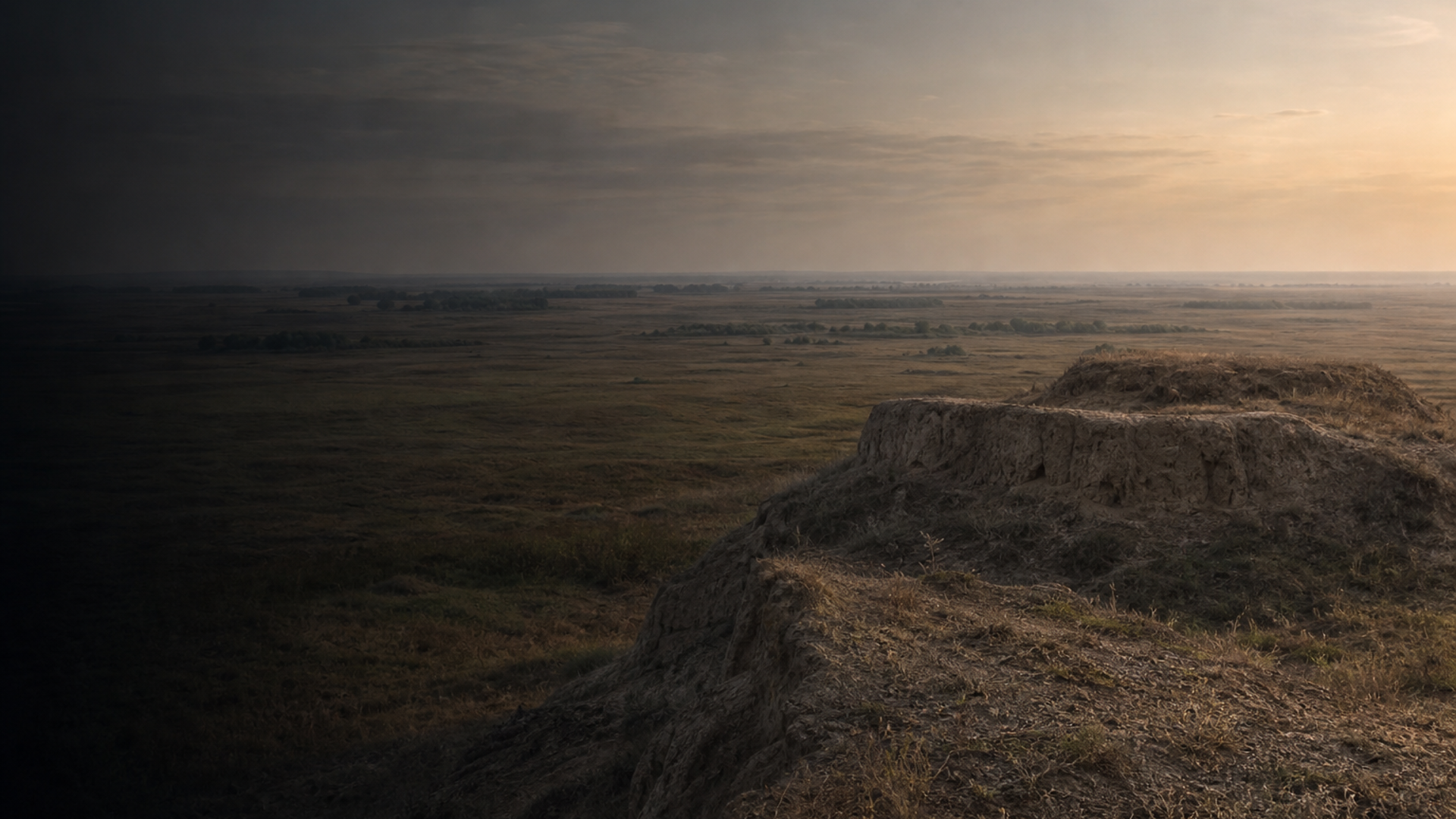
The Tiszadob group sits in the cinematic sweep of the Great Hungarian Plain between 5300 and 4855 BCE. Archaeological data indicates these communities belong to the Alföld Linear Pottery Culture (ALPc), a regional expression of the broader Linear Pottery phenomenon that carried early farming across Central Europe. Excavations at Tiszadob-Ó-Kenéz and the Hejőkürt industrial-area trench (Hejőkürt-Lidl logisztikai központ) have recovered pottery assemblages, settlement traces, and isolated burials that anchor the local sequence.

Material culture—long rectangular house plans, coarse and decorated ceramics, and domestic debris in shallow pits—evokes a settled, agrarian lifeway that archaeologists associate with Neolithic lifeways spreading from Anatolia into the Danubian basin. Radiocarbon dates cluster within the stated range, giving a tight temporal window for this local variant.

Genetically, the broader Neolithic expansion into Central Europe is known to carry Anatolian-derived farmer ancestry. Limited evidence from these six local samples is consistent with that framework, while archaeological variability suggests local adaptation and interaction with foraging groups. Interpretation must remain cautious: the dataset is small, and ongoing fieldwork may change our understanding of how the Tiszadob subgroup emerged from local and incoming populations.

  • Dates: 5300–4855 BCE (Middle Neolithic)
  • Key sites: Tiszadob-Ó-Kenéz; Hejőkürt-Lidl logisztikai központ
  • Cultural context: Alföld Linear Pottery Culture (ALPc), Tiszadob Group
Capítulo IV

Daily Life & Society

On the plain at dawn, archaeology paints a textured everyday: fields of emmer and einkorn, herds of domesticated cattle and sheep, pottery warmed by hearths, and flint tools worked at the edge of settlements. Excavations reveal house foundations, storage pits, and ceramic assemblages characteristic of ALPc communities—functional forms alongside painted or incised wares that likely marked identity or household practice.

Zooarchaeological and botanical remains from comparable ALPc contexts indicate mixed farming economies, and lithic toolkits suggest both agricultural work and craft specialization. Funerary traces in the region are variable; isolated burials and anthropological remains imply diverse mortuary practices, though the small number of secure graves at the named sites means interpretations are provisional.

Social structure can be glimpsed through settlement layout and artifact distribution: households appear to have been the primary economic units, connected by shared ceramic styles that signal group belonging. Contact with neighboring forager groups is archaeologically plausible, reflected in occasional adoption of wild-resource processing and hybrid artifact forms.

These reconstructions are drawn from material remains; direct statements about belief, language, or kinship systems exceed the evidence but can be explored cautiously via combined archaeological and genetic approaches.

  • Economy: Mixed cereal cultivation and animal husbandry
  • Material culture: ALPc ceramics, domestic architecture, lithics
Capítulo V

Genetic Profile

Genetic data from six individuals (Tiszadob-Ó-Kenéz and Hejőkürt) provide a tentative window into the biological makeup of this ALPc group. Y-chromosome haplogroups in this sample set include I (4 individuals) and H (1 individual). Mitochondrial lineages recorded are U (2), H7 (1), HV (1), J (1), and N (1).

These haplogroups suggest a mixed maternal and paternal heritage. Mitochondrial haplogroups H7, HV, J, and N are commonly found among Neolithic farmer-associated populations in Europe and the Near East, consistent with an Anatolian-derived maternal component typical of early European farmers. The presence of mtDNA U in two individuals is notable: haplogroup U is often associated with Mesolithic European hunter-gatherers, indicating maternal-line persistence or admixture with local foragers.

On the paternal side, haplogroup I is frequently detected in European Mesolithic and later populations and may reflect continuity or assimilation of local male lineages into farming communities. The single Y-H call is intriguing; Y-H is rare in prehistoric Central Europe and its presence here should be treated cautiously until corroborated by additional samples.

Crucially, the sample count is small (n = 6). Limited evidence suggests patterns of farmer ancestry admixed with local hunter-gatherers, but these conclusions are preliminary. Larger autosomal datasets and additional chronologically controlled samples are required to resolve the timing and extent of admixture, sex-biased processes, and population dynamics for the Tiszadob group.

  • Small sample caveat: only 6 individuals—interpretations are preliminary
  • Mixed signal: farmer-associated mtDNA alongside U-lineages indicating hunter-gatherer input
Capítulo VI

Legacy & Modern Connections

Fragments of pottery and single genomes whisper through millennia to modern genetic landscapes. Haplogroup I persists across Europe today, and mitochondrial H is one of the most common maternal lineages in modern Europe—links that illustrate continuity in some genetic lineages, though demographic events since the Neolithic have reshaped frequency and distribution.

Archaeologically, ALPc settlement patterns contributed to long-term land use and place-naming on the Great Hungarian Plain. Genetically, these early farming communities represent a foundational layer of ancestry in many contemporary European populations: a principal Neolithic component that combined with later migrations to form the genetic tapestry of the continent.

However, direct ancestry claims must be made cautiously. The small number of ancient samples from Tiszadob limits firm connections to specific modern populations. Ongoing sampling, ancient DNA studies, and secure archaeological contexts will refine how these early farmers contributed to later gene pools and cultural landscapes.

  • Some paternal and maternal lineages found here persist in modern Europe
  • Small dataset limits direct claims about modern population continuity
Con IA

Asistente de IA

Haz preguntas sobre la cultura Tiszadob ALPc Neolithic Farmers

Asistente de IA por DNAGENICS

Desbloquear esta función
Pregunta sobre la cultura Tiszadob ALPc Neolithic Farmers. El asistente con IA puede explicar hallazgos genéticos, contexto histórico, pruebas arqueológicas y conexiones modernas, con sus límites de interpretación.
Ejemplo de análisis con IA

La cultura Tiszadob ALPc Neolithic Farmers representa un capítulo de la historia humana...

El análisis genético permite estudiar similitudes con poblaciones anteriores y posibles adaptaciones. Las muestras de ADN antiguo aportan información para investigar patrones migratorios y relaciones entre poblaciones, con límites que dependen del estudio y del contexto arqueológico.

Esta es una vista previa del análisis con IA. Accede al asistente completo para explorar información sobre:

  • Composición y similitud genética
  • Patrones migratorios y orígenes
  • Vida cotidiana y prácticas culturales
  • Contexto genético moderno

Explora más culturas antiguas

Descubre la historia de civilizaciones de distintas partes del mundo antiguo